
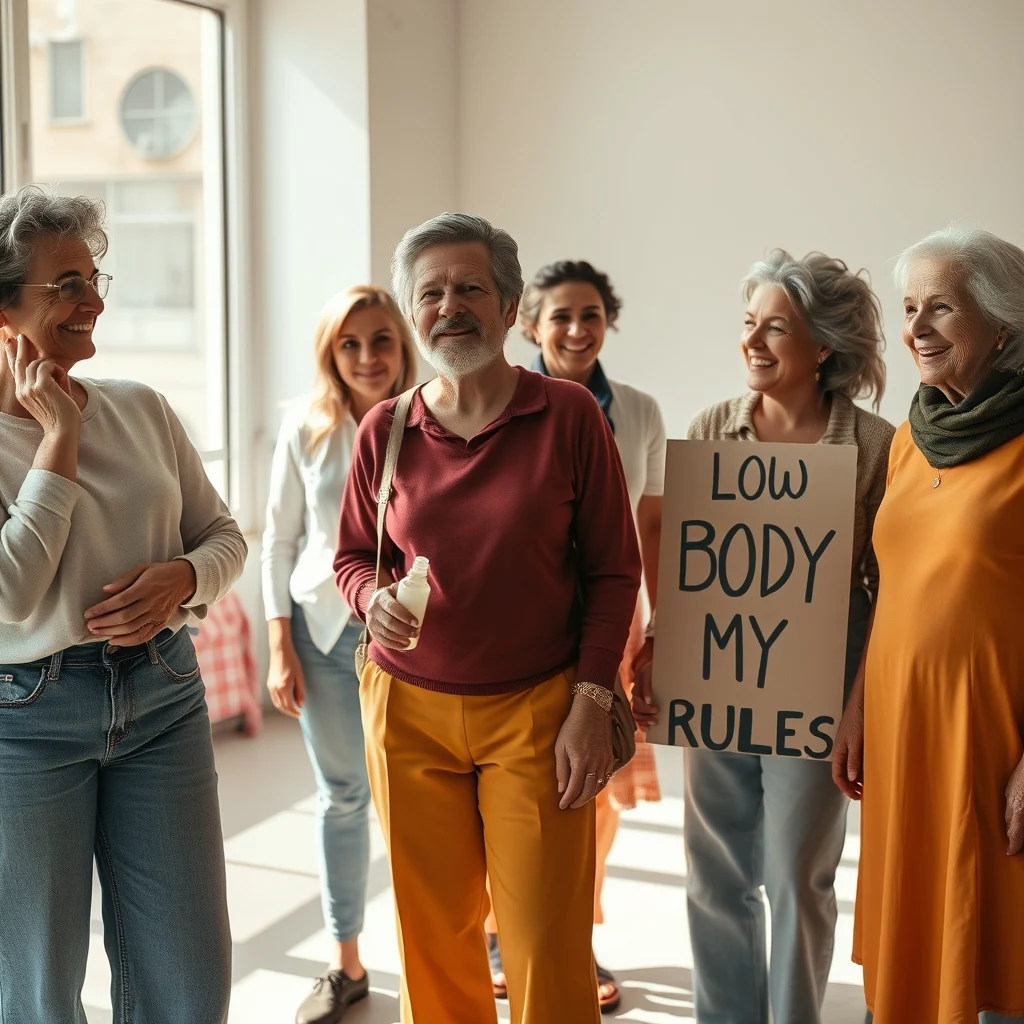
In 2024, the global conversation around aging has undergone a seismic shift, moving beyond traditional narratives of decline to embrace a more nuanced, empowering discourse. This transformation is not confined to any single demographic or region; it spans generations, industries, and cultures, redefining what it means to age with confidence. The movement, often referred to as “pro-aging” or “unapologetic aging,” is driven by a coalition of beauty brands, social media influencers, healthcare professionals, and individuals who reject ageist stereotypes in favor of self-acceptance and authenticity. The phenomenon is most visible in Western societies, particularly in the United States, the United Kingdom, and parts of Europe, where consumer spending on beauty and wellness products for those over 40 has surged by 42% since 2020, according to a report by McKinsey & Company. However, its influence is rapidly expanding into Asia and Latin America, where cultural attitudes toward aging are also evolving.
The current landscape is characterized by a paradox: while scientific advancements in dermatology, nutrition, and fitness extend lifespans and improve quality of life, societal pressures to maintain a youthful appearance persist. This tension has given rise to a new ethos—one that celebrates maturity while challenging the notion that beauty is synonymous with youth. The shift is not merely aesthetic; it is economic, psychological, and political. Brands like Dove, L’Oréal, and Estée Lauder have launched campaigns featuring models in their 50s, 60s, and beyond, while platforms like TikTok and Instagram amplify voices advocating for “gray hair confidence” and “self-love over forty.” Yet, despite these strides, ageism remains pervasive, with 64% of women over 50 reporting they have experienced age-based discrimination in the workplace, according to a 2023 AARP survey. The question is no longer whether aging can be redefined, but how this redefinition will unfold across different sectors and societies.
The Historical Context: From Stigma to Empowerment
The modern pro-aging movement is rooted in decades of cultural and economic shifts. In the early 20th century, aging was largely invisible in media and advertising, with youth culture dominating the narrative. The post-World War II era saw the rise of anti-aging products, fueled by the booming cosmetics industry and the medicalization of aging. By the 1980s and 1990s, the term “anti-aging” had entered the mainstream lexicon, with products and procedures promising to erase wrinkles, gray hair, and other visible signs of aging. This era was defined by a fear-based approach, where aging was framed as a problem to be solved rather than a natural part of life.
The turn of the 21st century marked a gradual but significant departure from this mindset. Key milestones in this evolution include:
- 2004: Dove’s “Real Beauty” campaign launched, featuring women of diverse ages, sizes, and ethnicities. While not exclusively focused on aging, the campaign challenged traditional beauty standards and laid the groundwork for later pro-aging narratives.
- 2012: The term “pro-aging” gained traction in academic and industry circles, with researchers like Dr. Christiane Northrup advocating for a holistic approach to aging that prioritizes well-being over appearance. Northrup’s book, Ageless: The Naked Truth About Bioidentical Hormones, became a bestseller, signaling a growing appetite for alternative perspectives on aging.
- 2016: Allure magazine announced it would ban the term “anti-aging” from its pages, a decision that sparked widespread debate and positioned the publication as a leader in the pro-aging movement. Editor-in-Chief Michelle Lee stated, “Whether we know it or not, we’re subtly reinforcing the message that aging is a condition we need to battle.”
- 2020: The COVID-19 pandemic accelerated the pro-aging movement, as lockdowns and social isolation prompted many to reflect on their priorities. A survey by the Global Wellness Institute found that 68% of respondents over 40 reported a renewed focus on self-care and mental well-being, with many rejecting societal pressures to “look young.”
- 2023: The first-ever “Silver Pride” event was held in London, celebrating LGBTQ+ individuals over 50 and challenging stereotypes about aging in the queer community. The event drew over 10,000 attendees and highlighted the intersectionality of the pro-aging movement.
These milestones reflect a broader cultural shift, one that is as much about societal values as it is about individual choices. The pro-aging movement is not monolithic; it encompasses a spectrum of perspectives, from those who embrace natural aging to those who use cosmetic procedures to enhance their appearance on their own terms. What unites these perspectives is a rejection of ageist stereotypes and a demand for greater representation and agency.
The Mechanics of the Pro-Aging Movement: How It Works
The pro-aging movement operates across multiple domains, each with its own set of stakeholders, strategies, and outcomes. At its core, the movement is about reframing aging as a dynamic, multifaceted process rather than a linear decline. This reframing occurs through three primary channels: media representation, product innovation, and community-building.
Media representation plays a pivotal role in shaping perceptions of aging. In 2023, a study by the Geena Davis Institute on Gender in Media found that only 5% of advertisements featured women over 50, despite this demographic controlling 70% of disposable income in the U.S. However, this is changing. Brands like Nike, with its “Dream Crazier” campaign, and CoverGirl, which named 69-year-old Maye Musk as a brand ambassador, are challenging the status quo. Social media platforms have also become powerful tools for pro-aging advocates. Hashtags like #SilverSisters and #GrayHairDontCare have amassed millions of posts, creating virtual communities where individuals share their journeys and challenge societal norms. Influencers like Lyn Slater (Accidental Icon) and Ari Seth Cohen (Advanced Style) have built careers by celebrating mature beauty, proving that there is a market for content that caters to older audiences.
Product innovation is another critical component of the pro-aging movement. The beauty industry, in particular, has responded to the demand for products that cater to mature skin without framing aging as a flaw. Brands like Drunk Elephant, Tatcha, and IT Cosmetics have developed skincare lines that focus on hydration, collagen production, and sun protection, rather than anti-aging. The language used in marketing these products is carefully curated to avoid ageist tropes. For example, terms like “age-defying” are being replaced with “age-supportive” or “skin-loving.” The global market for pro-aging beauty products is projected to reach $83.2 billion by 2027, according to a report by Grand View Research, driven by increasing consumer demand for transparency and authenticity.
Community-building is the third pillar of the pro-aging movement. Online and offline spaces are emerging where individuals can connect, share experiences, and advocate for change. Organizations like the Old School Anti-Ageism Clearinghouse and the Gray Panthers provide resources and support for those fighting ageism. Meanwhile, grassroots initiatives like the “100 Years of Beauty” project, which features individuals of all ages in its videos, celebrate the diversity of aging experiences. These communities are not just about solidarity; they are also about activism. In 2022, a coalition of pro-aging advocates successfully lobbied for the passage of the Protecting Older Workers Against Discrimination Act in the U.S., which strengthens protections against age-based discrimination in the workplace.
Quantitative Data: Measuring the Impact of the Pro-Aging Movement
The pro-aging movement is not just a cultural phenomenon; it is an economic and social force with measurable impacts. The following data points illustrate its reach and influence:
| Metric | 2020 | 2024 | Change | Source |
|---|---|---|---|---|
| Global spending on beauty products for consumers over 40 | $58.4 billion | $83.2 billion (projected) | +42.5% | Grand View Research |
| Percentage of women over 50 who feel pressured to look younger | 72% | 58% | -14% | AARP |
| Number of social media posts using pro-aging hashtags (#SilverSisters, #GrayHairDontCare, etc.) | 1.2 million | 4.7 million | +291.7% | Hootsuite |
| Percentage of advertisements featuring models over 50 | 3% | 8% | +166.7% | Geena Davis Institute |
| Consumer demand for “age-supportive” beauty products | 45% of surveyed consumers | 68% of surveyed consumers | +51.1% | McKinsey & Company |
The data reveals a clear trend: the pro-aging movement is gaining momentum, but it is not without its challenges. While consumer attitudes are shifting, systemic ageism persists in many areas, particularly in the workplace and healthcare. For example, a 2023 study by the World Health Organization found that 60% of people over 60 reported experiencing age-based discrimination when seeking medical care. This highlights the need for a more holistic approach to pro-aging advocacy, one that addresses structural inequalities as well as cultural perceptions.
Systemic Impacts: Beyond Beauty and Into Society
The pro-aging movement is not confined to the beauty industry; its implications extend into healthcare, employment, technology, and public policy. In healthcare, the movement is driving a shift toward preventive and holistic care for older adults. The concept of “aging well” is increasingly defined by metrics like mobility, cognitive function, and emotional well-being, rather than chronological age. The World Health Organization’s Decade of Healthy Ageing (2021-2030) initiative, for example, aims to improve the lives of older people by addressing ageism, creating age-friendly environments, and providing integrated care. Dr. John Beard, Director of Ageing and Life Course at the WHO, states, “Aging is not a problem to be solved; it is an opportunity to be embraced. The challenge is to create societies where people can age with dignity and purpose.”
In the workplace, the pro-aging movement is challenging long-held assumptions about productivity and innovation. A 2023 report by the Stanford Center on Longevity found that workers over 50 contribute $7.6 trillion to the U.S. economy annually, a figure that is expected to grow as the population ages. However, ageism remains a significant barrier to employment and career advancement. A survey by the Urban Institute found that 56% of workers over 50 have experienced age-based discrimination in hiring, promotions, or layoffs. The pro-aging movement is pushing for policy changes, such as stronger enforcement of anti-discrimination laws and incentives for companies to retain older workers. “Age diversity is just as important as gender or racial diversity,” says Ashton Applewhite, author of This Chair Rocks: A Manifesto Against Ageism. “Older workers bring experience, wisdom, and stability to the workplace. It’s time we recognize that.”
Technology is another area where the pro-aging movement is making an impact. From wearable devices that monitor health metrics to AI-driven platforms that connect older adults with social and recreational opportunities, technology is playing a key role in enabling independent and fulfilling aging. The global market for aging-related technology is projected to reach $1.4 trillion by 2025, according to a report by Aging2.0. However, there are concerns about accessibility and digital literacy. A 2023 Pew Research Center study found that 34% of adults over 65 do not use the internet, highlighting the need for inclusive design and education.
Competing Perspectives: The Debate Over Aging on Your Own Terms
While the pro-aging movement has gained widespread support, it is not without its critics. The debate centers on three key questions: Is the movement truly inclusive, or does it cater primarily to affluent, Western consumers? Does it risk replacing one set of beauty standards with another? And how does it address the intersectionality of aging, particularly for marginalized groups?
Critics argue that the pro-aging movement is often co-opted by corporations seeking to profit from a new market segment. “The beauty industry has a long history of creating insecurities and then selling solutions,” says Dr. Peggy Drexler, a research psychologist and author of Our Fathers, Ourselves: Daughters, Fathers, and the Changing American Family. “The pro-aging movement is no different. It’s rebranding aging as a lifestyle choice, but it’s still selling products and procedures that promise to make you look ‘better’ for your age.” This critique is particularly relevant in the context of cosmetic procedures, where the line between empowerment and conformity can be blurry. A 2023 study by the American Society of Plastic Surgeons found that 42% of women over 50 have considered or undergone cosmetic procedures, with many citing a desire to “look as young as they feel.”
Another point of contention is the movement’s focus on individualism. While the slogan “my body, my rules” resonates with many, it can also obscure the systemic barriers that prevent some from aging on their own terms. For example, low-income individuals, people of color, and those in rural areas often lack access to healthcare, nutritious food, and safe living environments, all of which are critical to aging well. “The pro-aging movement is a privilege,” says Dr. Louise Aronson, a geriatrician and author of Elderhood: Redefining Aging, Transforming Medicine, Reimagining Life. “It assumes that everyone has the resources and autonomy to make choices about how they age. That’s simply not the case.”
Intersectionality is another area where the pro-aging movement faces scrutiny. Aging experiences vary widely based on race, gender, sexual orientation, and socioeconomic status. For example, a 2023 study by the National Institute on Aging found that Black and Hispanic adults are more likely to experience age-based discrimination than their white counterparts. Similarly, LGBTQ+ individuals over 50 are more likely to face social isolation and lack of access to culturally competent healthcare. “The pro-aging movement must do more to center the voices of those who are marginalized,” says Serena Worthington, Director of National Field Initiatives at SAGE, an organization advocating for LGBTQ+ elders. “Aging is not a monolith, and neither should be the movement that seeks to redefine it.”
The future of the pro-aging movement will depend on its ability to address these critiques while maintaining its momentum. Upcoming regulatory milestones, such as the European Union’s proposed ban on age-based discrimination in digital advertising, could further shape the landscape. Meanwhile, market catalysts like the growing influence of Gen Z and millennial consumers, who are more likely to reject traditional beauty standards, will continue to drive demand for pro-aging products and narratives. The movement’s success will ultimately be measured not just by its cultural impact, but by its ability to create tangible improvements in the lives of older adults across the globe. The conversation is far from over, but the direction is clear: aging is no longer something to be feared or hidden, but a chapter of life to be lived with confidence and pride.
You may also like
-
Resveratrol in Age Defense: A Multidimensional Analysis of Antioxidant Science, Mechanisms, and Industry Evolution
-
The Comprehensive Science of Mature Skin Resilience: A Multidimensional Examination of Skincare Over Forty, Biological Adaptations, and Evidence-Based Innovations
-
The Strategic Framework of Mature Skin Resilience: A 360-Degree Examination of Skincare Over Forty, Biological Adaptations, and Evidence-Based Innovations
-
The Comprehensive Analysis of Individualistic Age Well Beauty: Autonomy, Confidence, and the Modern Reinterpretation of Aging
-
Sustainable Fashion: The Not-So-Trendy Truth Behind Eco-Friendly Couture