
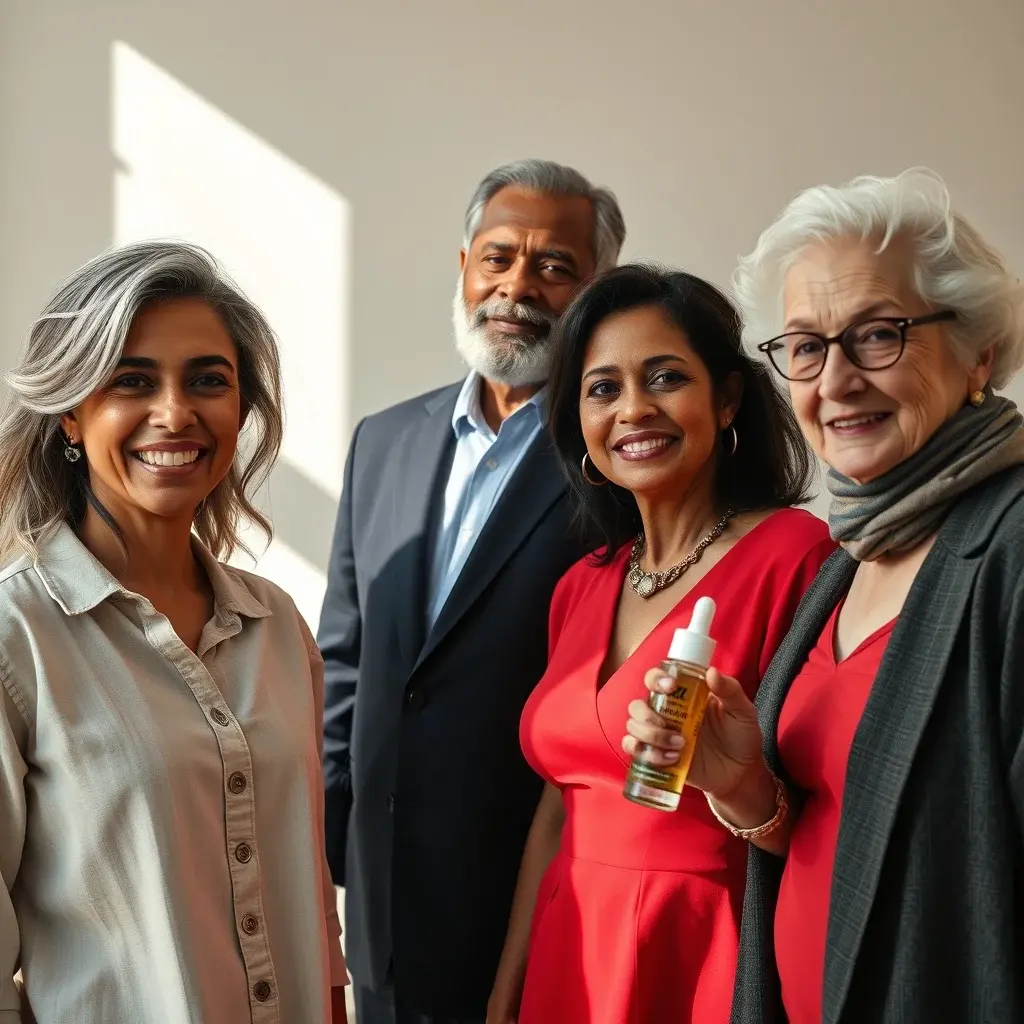
In 2024, the global discourse on aging has shifted from mere acceptance to active empowerment, with individuals over 40 increasingly rejecting traditional stereotypes and redefining beauty, confidence, and autonomy on their own terms. This movement, often referred to as “pro-aging” or “unapologetic aging,” is not confined to any single demographic or geographic region but spans cultures, socioeconomic backgrounds, and gender identities. It is driven by a confluence of factors: the rise of social media platforms amplifying diverse representations of aging, advancements in dermatological and wellness technologies, and a growing body of research challenging ageist narratives. The phenomenon is particularly visible in Western societies, where women over 50 are the fastest-growing demographic on platforms like Instagram and TikTok, but its influence extends to Asia, Latin America, and beyond, where local interpretations of mature beauty are gaining traction.
The current landscape of aging and beauty is characterized by a paradox: while societal expectations often pressure individuals to conceal signs of aging, a counter-movement is gaining momentum, advocating for visibility, authenticity, and self-acceptance. This tension is evident in the beauty industry, where global sales of anti-aging products reached $62.6 billion in 2023, according to Grand View Research, yet brands like Dove and Aerie are simultaneously launching campaigns celebrating gray hair, wrinkles, and mature bodies. The shift is not merely cosmetic but cultural, reflecting broader changes in how aging is perceived and experienced. Key stakeholders include beauty and wellness brands, healthcare providers, policymakers, media outlets, and, most critically, the individuals who navigate these expectations daily. Their perspectives vary widely, from those who embrace a “timeless self-confidence” approach to those who prioritize a “pro-aging mindset” as a form of resistance against societal norms.
The Historical Evolution of Mature Beauty Standards
The concept of beauty in aging has undergone significant transformation over the past century. In the early 1900s, aging was often romanticized in Western art and literature, with wrinkles and gray hair symbolizing wisdom and experience. However, the mid-20th century marked a turning point, as the rise of mass media and advertising began to equate youth with beauty, marginalizing older adults. By the 1980s and 1990s, the beauty industry had fully embraced the anti-aging narrative, with products and procedures designed to erase rather than celebrate signs of aging.
The 21st century has seen a gradual but notable reversal of this trend. Key milestones include:
- 2004: Dove’s “Real Beauty” campaign launched, featuring women of diverse ages, sizes, and ethnicities, challenging narrow beauty standards.
- 2015: The term “silver fox” entered mainstream lexicon, initially used to describe attractive older men but later adopted by women embracing their gray hair as a symbol of confidence.
- 2018: The World Health Organization published its Global Report on Ageism, highlighting the pervasive discrimination faced by older adults and calling for systemic change.
- 2020: The COVID-19 pandemic accelerated digital adoption among older adults, leading to a surge in online communities dedicated to “aging on your own terms.”
- 2023: The U.S. Food and Drug Administration approved the first over-the-counter topical retinoid for anti-aging, reflecting the growing demand for accessible skincare solutions while also sparking debates about the ethics of age-defying products.
These developments reflect a broader cultural shift, where aging is no longer viewed as a decline but as a distinct phase of life with its own beauty and value.
The Mechanics of Empowered Aging: Rituals, Products, and Mindsets
Empowered aging is not a monolithic experience but a spectrum of practices, products, and philosophies tailored to individual preferences. At its core, it involves a combination of self-care rituals, beauty routines, and psychological strategies designed to foster confidence and well-being. Dermatologists and beauty experts note that the most effective approaches are those that prioritize health and self-expression over conformity to external standards.
Skincare remains a cornerstone of mature beauty, but the focus has shifted from erasing wrinkles to enhancing skin health. A 2023 survey by the American Academy of Dermatology found that 68% of women over 40 prioritize hydration and sun protection over anti-aging treatments. Ingredients like hyaluronic acid, ceramides, and vitamin C are favored for their ability to nourish and protect the skin, while invasive procedures like Botox and fillers are increasingly viewed as optional rather than obligatory. “The goal is no longer to look younger but to look like the best version of yourself,” says Dr. Ava Shamban, a board-certified dermatologist and author of Heal Your Skin. “It’s about enhancing what you have, not erasing who you are.”
Haircare is another critical component, particularly for those embracing their natural gray. The global market for gray hair products is projected to reach $1.2 billion by 2027, according to Statista, driven by demand for shampoos, conditioners, and styling tools that enhance rather than conceal silver strands. Salons specializing in gray transitions, such as New York’s Gray & Glamorous, report a 40% increase in clients since 2020. “Gray hair is not a trend; it’s a statement,” says celebrity hairstylist Michael Dueñas. “People are tired of the upkeep and are choosing freedom over convention.”
Beyond physical routines, empowered aging is deeply rooted in mindset. Psychologists emphasize the role of self-compassion and resilience in navigating societal ageism. A 2022 study published in the Journal of Gerontology found that individuals who adopted a “growth mindset” toward aging—viewing it as an opportunity for learning and adaptation—reported higher levels of life satisfaction and lower rates of depression. “Confidence in aging is not about defying time but about redefining what it means to thrive,” notes Dr. Becca Levy, a professor of epidemiology at Yale University and author of Breaking the Age Code.
Quantitative Insights: Data on Aging, Beauty, and Confidence
The intersection of aging and beauty is not only a cultural phenomenon but also a quantifiable market and social force. Below are key statistics that illustrate the scope and impact of this movement:
| Metric | Data Point | Source |
|---|---|---|
| Global anti-aging market size (2023) | $62.6 billion | Grand View Research |
| Projected growth of gray hair product market (2027) | $1.2 billion | Statista |
| Percentage of women over 50 using social media (U.S.) | 73% | Pew Research Center (2023) |
| Increase in Google searches for “pro-aging” (2019-2023) | 240% | Google Trends |
| Percentage of adults over 60 reporting age discrimination | 82% | World Health Organization (2021) |
| Sales growth of “clean beauty” products for mature skin (2020-2023) | 35% | NPD Group |
These figures underscore the duality of the current landscape: while ageism remains pervasive, the demand for products and narratives that celebrate aging is surging. The data also highlights regional variations. For example, in South Korea, where the beauty industry is highly influential, the market for mature skincare grew by 18% in 2023, compared to 12% in the U.S. Meanwhile, in Brazil, the rise of “silver beauty” influencers on platforms like Instagram has led to a 25% increase in the use of gray-enhancing hair products since 2021.
Systemic Impacts: Media, Policy, and Industry Shifts
The redefinition of mature beauty has far-reaching implications for media representation, public policy, and industry practices. In media, the push for greater diversity in age representation has led to notable changes. A 2023 report by the Geena Davis Institute on Gender in Media found that only 5% of advertisements featured individuals over 50 in leading roles, but this marked a 3% increase from 2020. Brands like L’Oréal and Neutrogena have cast older models in high-profile campaigns, while magazines like Allure have banned the term “anti-aging” from their editorial content. “Representation matters because it shapes how we see ourselves and how others see us,” says Dr. Stacy Smith, founder of the Annenberg Inclusion Initiative. “When older adults are invisible in media, it reinforces the idea that aging is something to fear or hide.”
Policy changes are also beginning to address ageism in beauty and beyond. In 2022, the European Union introduced the Digital Services Act, which includes provisions to combat discriminatory advertising practices, including those targeting older adults. In the U.S., the Age Discrimination in Employment Act (ADEA) protects workers over 40 from bias, but advocates argue that enforcement remains inconsistent. “Legislation is a critical tool, but it’s not enough,” says Ashton Applewhite, author of This Chair Rocks: A Manifesto Against Ageism. “We need cultural shifts that challenge the stereotypes embedded in our language, media, and daily interactions.”
The beauty industry itself is undergoing a reckoning. While some brands continue to market anti-aging products, others are pivoting toward inclusive messaging. For example, Olay’s “Face Anything” campaign features women of all ages, including a 98-year-old model, while Fenty Beauty by Rihanna has expanded its foundation range to include shades for deeper and mature skin tones. However, critics argue that these efforts are often superficial, with many brands still prioritizing profit over genuine inclusivity. “The beauty industry has a long history of exploiting insecurities,” says beauty journalist Jessica DeFino. “True progress will require a fundamental shift in how we define beauty—not as something to be fixed but as something to be celebrated.”
Competing Perspectives: Stakeholders in the Aging and Beauty Debate
The conversation around aging and beauty is marked by diverse and often conflicting perspectives. For some, the pro-aging movement is a liberating force that challenges oppressive norms. For others, it risks replacing one set of expectations with another, creating new pressures to “age well” or “age gracefully.” Below are key stakeholder viewpoints:
1. Advocates for Unapologetic Aging: This group, which includes activists, influencers, and researchers, argues that aging should be embraced without apology. They reject the idea that beauty is tied to youth and advocate for systemic change to dismantle ageism. “Aging is not a problem to be solved but a natural part of life to be celebrated,” says Applewhite. “The goal is not to look younger but to live fully at every age.”
2. Beauty Industry Leaders: While some brands have embraced inclusive messaging, others continue to profit from anti-aging narratives. Industry executives often walk a fine line, acknowledging the demand for pro-aging products while maintaining their core customer base. “Our research shows that consumers want both,” says a spokesperson for Estée Lauder. “They want products that address their concerns, like fine lines and loss of elasticity, but they also want to feel seen and valued.”
3. Healthcare Providers: Dermatologists and gerontologists emphasize the importance of balancing self-acceptance with health. “We support patients in making informed choices,” says Dr. Shamban. “Whether someone chooses to use retinoids or embrace their wrinkles, the priority is skin health and overall well-being.”
4. Policymakers and Regulators: Government agencies are increasingly focused on combating age discrimination, but progress is slow. “Ageism is one of the last socially acceptable forms of bias,” says a representative from the U.S. Equal Employment Opportunity Commission. “We’re working to change that, but it requires collaboration across sectors.”
5. Consumers: The most critical stakeholders are the individuals navigating these expectations daily. Their perspectives vary widely. Some, like 52-year-old marketing executive Priya Mehta, embrace a “my body, my rules” approach. “I dye my hair, I use retinol, and I also love my laugh lines,” she says. “It’s not about conforming to any standard; it’s about what makes me feel good.” Others, like 65-year-old retiree David Chen, reject beauty routines altogether. “I don’t care about looking younger. I care about staying active and engaged.”
The future of aging and beauty will likely be shaped by ongoing debates about authenticity, health, and societal expectations. As the global population ages—with the number of people over 60 projected to reach 2.1 billion by 2050, according to the United Nations—the demand for narratives and products that reflect diverse experiences of aging will only grow. Regulatory bodies may introduce stricter guidelines on ageist advertising, while brands will continue to grapple with the balance between profitability and inclusivity. For individuals, the challenge will be navigating these shifts without losing sight of their own values and priorities. The movement toward empowered aging is not about rejecting beauty or self-care but about reclaiming agency in how it is defined and pursued.
You may also like
-
Resveratrol in Age Defense: A Multidimensional Analysis of Antioxidant Science, Mechanisms, and Industry Evolution
-
The Comprehensive Science of Mature Skin Resilience: A Multidimensional Examination of Skincare Over Forty, Biological Adaptations, and Evidence-Based Innovations
-
The Strategic Framework of Mature Skin Resilience: A 360-Degree Examination of Skincare Over Forty, Biological Adaptations, and Evidence-Based Innovations
-
The Comprehensive Analysis of Individualistic Age Well Beauty: Autonomy, Confidence, and the Modern Reinterpretation of Aging
-
Sustainable Fashion: The Not-So-Trendy Truth Behind Eco-Friendly Couture