
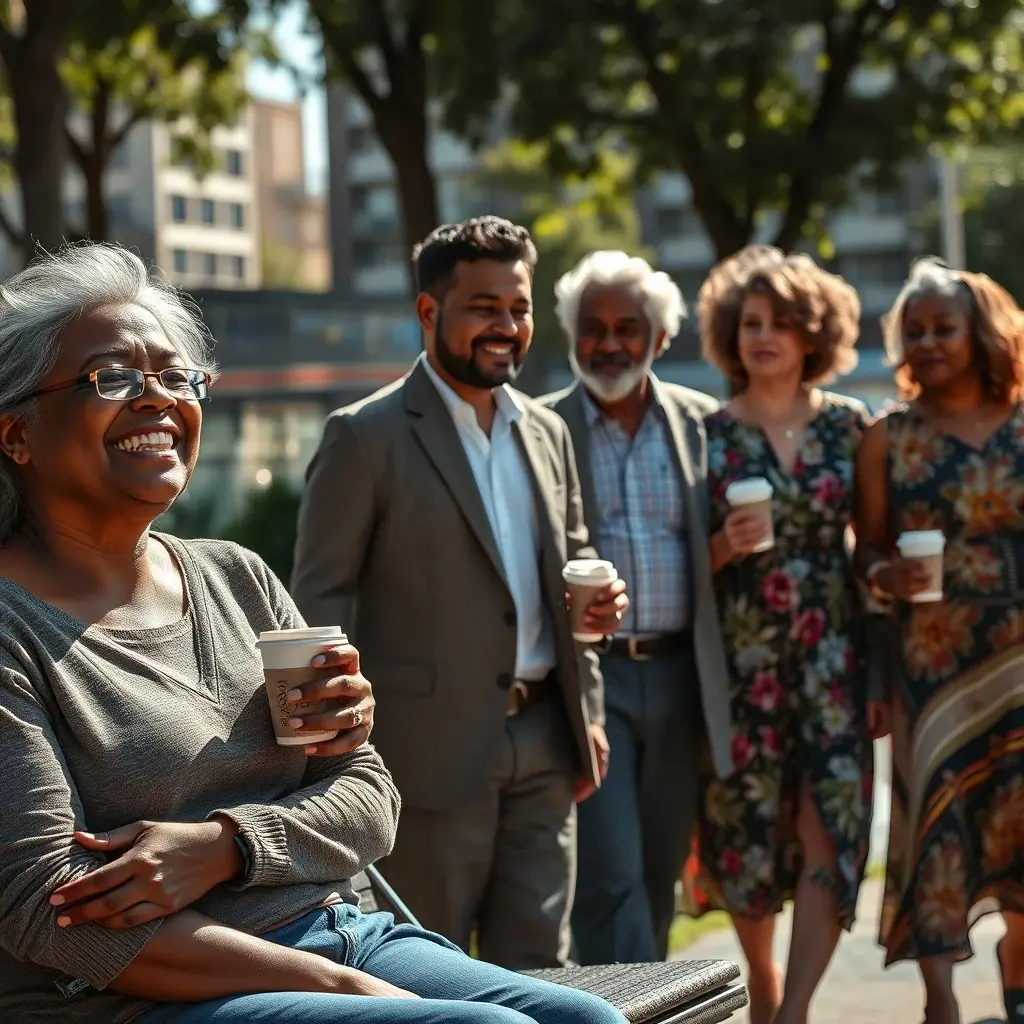
In the past decade, a quiet but profound cultural shift has taken root, challenging long-held assumptions about aging, beauty, and self-worth. This movement, often referred to as “pro-aging” or “confident aging,” is not confined to any single demographic or geographic region but spans generations, industries, and socioeconomic backgrounds. Its emergence coincides with the coming of age of the Baby Boomer generation, the first cohort to openly reject the notion that beauty and relevance diminish with time. Simultaneously, Gen X and older Millennials, now navigating their 40s and 50s, are redefining what it means to age on their own terms, leveraging social media, consumer activism, and scientific advancements to dismantle ageist stereotypes. The phenomenon is global, with visible traction in North America, Western Europe, and parts of East Asia, though its expression varies by cultural context. At its core, this shift is driven by a confluence of factors: the rise of digital platforms amplifying diverse voices, the commercialization of “mature beauty” by the cosmetics and wellness industries, and a growing body of research linking self-perception of aging to physical and mental health outcomes.
The Scope and Stakes of the Pro-Aging Movement
The pro-aging movement is not merely a reaction to youth-obsessed culture but a deliberate reconfiguration of beauty standards, health paradigms, and economic power. Historically, aging has been framed as a decline—a narrative reinforced by medical literature, marketing campaigns, and media representation. The 20th century saw the rise of anti-aging as a multi-billion-dollar industry, with products and procedures promising to erase wrinkles, restore vitality, and prolong youth. However, by the early 2010s, cracks began to form in this framework. A 2014 study published in The Gerontologist found that individuals with positive self-perceptions of aging lived an average of 7.5 years longer than those with negative views, independent of baseline health. This finding, among others, catalyzed a reevaluation of how societies perceive and treat aging populations. Today, the pro-aging movement encompasses three primary stakeholders: consumers demanding authenticity and representation, brands adapting their messaging and product lines, and policymakers addressing systemic ageism in healthcare, employment, and media.
Chronological Evolution: From Anti-Aging to Pro-Aging
The transition from anti-aging to pro-aging did not occur overnight. Key milestones mark its evolution:
- 1960s–1980s: The rise of the cosmetics industry’s anti-aging sector, with brands like Estée Lauder and L’Oréal introducing products targeting wrinkles and fine lines. The term “anti-aging” entered mainstream lexicon in the 1980s, coinciding with the fitness boom and the cultural glorification of youth.
- 1990s: The launch of Botox in 1992, approved by the FDA for cosmetic use in 2002, marked a turning point in medicalized anti-aging. The decade also saw the first wave of feminist critiques of beauty standards, though these rarely extended to aging women.
- 2006: The American Medical Association’s Council on Science and Public Health issued a report questioning the efficacy and ethics of anti-aging medicine, citing a lack of scientific evidence for many claims. This report, though largely ignored by the industry, planted early seeds of skepticism.
- 2012: The World Health Organization’s Global Report on Ageism highlighted the pervasive nature of age discrimination, linking it to poorer health outcomes and economic exclusion. The report called for a global shift in how aging is perceived and addressed.
- 2016: Allure magazine announced it would ban the term “anti-aging” from its editorial pages, a decision that reverberated across the beauty industry. Editor-in-Chief Michelle Lee stated, “Whether we know it or not, we’re subtly reinforcing the message that aging is a condition we need to battle.”
- 2019–2023: The #GrayHairDontCare movement gained momentum on social media, with celebrities like Andie MacDowell and Jamie Lee Curtis publicly embracing their natural hair. Brands like Dove and Pantene launched campaigns celebrating gray hair, while startups like Grayce & Co. emerged to cater specifically to the silver hair market.
Operational Mechanics: How the Pro-Aging Movement Functions
The pro-aging movement operates across three interconnected domains: cultural, commercial, and individual. Culturally, it challenges the dominance of youth-centric beauty standards by amplifying diverse representations of aging. Social media platforms, particularly Instagram and TikTok, have become battlegrounds for this shift. Hashtags like #ProAging and #AgePositivity have garnered millions of posts, featuring unfiltered images of wrinkles, gray hair, and mature bodies. Influencers such as Lyn Slater (Accidental Icon) and Sarah Jane Adams (Glamour Granny) have built followings by rejecting traditional beauty norms and advocating for self-acceptance.
Commercially, the movement has forced brands to adapt. The global beauty industry, valued at $511 billion in 2021, has seen a surge in products marketed as “pro-aging” or “age-inclusive.” A 2022 report by McKinsey & Company found that 42% of beauty consumers over 40 seek products that enhance rather than conceal their natural features. Brands like Olay and Neutrogena have rebranded their messaging to focus on “skin health” rather than “anti-aging,” while niche companies like Pause Well-Aging and Dieux Skin cater exclusively to mature skin. The wellness industry has also pivoted, with companies like Hum Nutrition and Ritual offering supplements targeting longevity and vitality rather than youth restoration.
Individually, the pro-aging movement encourages a shift in mindset. Dr. Becca Levy, a professor of epidemiology at Yale University and author of Breaking the Age Code, explains, “The way we think about aging has a direct impact on how we age. Positive age beliefs can reduce stress, improve cognitive function, and even lower the risk of Alzheimer’s disease.” This perspective is supported by a 2020 study in Nature Aging, which found that individuals with positive self-perceptions of aging had better memory performance and slower cognitive decline over time. The movement also intersects with broader conversations about body autonomy, with advocates emphasizing that aging is not a condition to be treated but a natural process to be embraced.
Quantitative Data: Measuring the Impact of Pro-Aging
The pro-aging movement’s influence is quantifiable across multiple metrics. The following table compares key indicators from 2010 to 2023:
| Metric | 2010 | 2023 | Change |
|---|---|---|---|
| Google searches for “anti-aging” (monthly average) | 1.2 million | 850,000 | -29% |
| Google searches for “pro-aging” (monthly average) | 5,000 | 150,000 | +2,900% |
| Percentage of beauty ads featuring models over 50 | 3% | 18% | +500% |
| Global market value of anti-aging products (USD) | $191 billion | $250 billion | +31% |
| Percentage of women over 40 who feel represented in beauty ads | 12% | 41% | +242% |
| Number of pro-aging or age-inclusive beauty brands launched | 8 | 120+ | +1,400% |
These figures underscore a broader cultural shift, though challenges remain. A 2023 survey by AARP found that 78% of adults over 50 still feel invisible in media and advertising, while 63% believe society values youth over experience. The disparity between representation and perception highlights the movement’s ongoing work.
Systemic Impacts: Beyond Beauty and Into Policy
The pro-aging movement’s implications extend far beyond beauty and personal empowerment. Ageism, defined by the WHO as “stereotypes, prejudice, and discrimination toward others or oneself based on age,” costs the U.S. economy an estimated $850 billion annually in lost productivity, healthcare expenses, and premature retirement. In response, policymakers and advocacy groups are pushing for systemic change. In 2021, the U.S. Equal Employment Opportunity Commission (EEOC) issued guidance on age discrimination in the workplace, citing a 2020 study that found 78% of older workers had experienced or witnessed age-related bias. The European Union has taken a more aggressive stance, with the European Parliament adopting a resolution in 2022 calling for stronger legal protections against ageism in employment, healthcare, and media.
Healthcare systems are also adapting. The WHO’s Decade of Healthy Ageing (2021–2030) initiative aims to improve the lives of older people by addressing ageism, creating age-friendly environments, and ensuring access to long-term care. Dr. Alana Officer, Unit Head of Demographic Change and Healthy Ageing at the WHO, states, “Ageism is not just a social issue; it’s a public health issue. It affects how we design policies, allocate resources, and even how we interact with older adults in clinical settings.” The initiative has gained traction, with 194 countries committing to its goals, though progress varies by region.
Stakeholder Perspectives: Conflict and Consensus
The pro-aging movement is not without its critics or internal tensions. Stakeholders across the spectrum offer divergent views on its goals, methods, and implications.
Advocates: Proponents argue that the movement is a necessary corrective to decades of ageist messaging. Ashton Applewhite, author of This Chair Rocks: A Manifesto Against Ageism, asserts, “Ageism is the last socially acceptable prejudice. The pro-aging movement isn’t about denying the realities of aging; it’s about rejecting the idea that those realities make us less valuable.” Advocates emphasize the movement’s potential to improve mental health, economic outcomes, and social cohesion by fostering intergenerational solidarity.
Industry Leaders: Beauty and wellness brands walk a fine line between capitalizing on the movement and co-opting its message. Some, like Dove, have aligned themselves with pro-aging values through campaigns like #ShowUs, which features diverse representations of beauty. Others, however, have been accused of “pro-aging washing”—using inclusive messaging while continuing to sell products that reinforce anti-aging ideals. Dr. Anita Bhappu, a professor of retailing and consumer sciences at the University of Arizona, notes, “Brands are responding to consumer demand, but there’s a risk of superficial engagement. True pro-aging marketing requires a fundamental shift in how products are developed and marketed.”
Medical Professionals: The medical community is divided. Some practitioners, like Dr. Peter Attia, a longevity expert, argue that the pro-aging movement should focus on healthspan—extending the number of years lived in good health—rather than lifespan. “Aging is the single biggest risk factor for chronic disease,” he says. “We should be pro-health, not pro-aging.” Others, like Dr. Levy, counter that the movement’s emphasis on positive self-perception aligns with public health goals. “The goal isn’t to ignore the biological realities of aging but to reframe them in a way that empowers individuals to take control of their health.”
Consumers: Opinions among consumers are equally varied. A 2023 survey by Ipsos found that 62% of adults over 40 support the pro-aging movement, while 28% view it as “unrealistic” or “dismissive of the challenges of aging.” Younger consumers, particularly Gen Z, are more likely to embrace pro-aging ideals, with 71% agreeing that society should celebrate aging. However, generational divides persist. “There’s a difference between accepting aging and glorifying it,” says 58-year-old marketing executive Linda Chen. “I don’t want to be told that wrinkles are beautiful. I want to be told that my worth isn’t tied to how I look.”
The pro-aging movement continues to evolve, shaped by technological advancements, demographic shifts, and cultural conversations. The rise of artificial intelligence in beauty, for instance, could either reinforce ageist stereotypes or dismantle them, depending on how it’s deployed. Regulatory bodies, such as the FDA and the EU’s European Medicines Agency, are increasingly scrutinizing anti-aging claims, which could accelerate the shift toward pro-aging messaging. Meanwhile, the global population of adults over 60 is projected to double by 2050, reaching 2.1 billion, according to the United Nations. This demographic shift will force industries, governments, and individuals to confront their biases and adapt. The movement’s success hinges on its ability to balance celebration with pragmatism, empowerment with realism, and individual choice with systemic change. Its legacy will be determined not by the products sold or the campaigns launched but by the tangible improvements in how societies value and support people as they age.
You may also like
-
Resveratrol in Age Defense: A Multidimensional Analysis of Antioxidant Science, Mechanisms, and Industry Evolution
-
The Comprehensive Science of Mature Skin Resilience: A Multidimensional Examination of Skincare Over Forty, Biological Adaptations, and Evidence-Based Innovations
-
The Strategic Framework of Mature Skin Resilience: A 360-Degree Examination of Skincare Over Forty, Biological Adaptations, and Evidence-Based Innovations
-
The Comprehensive Analysis of Individualistic Age Well Beauty: Autonomy, Confidence, and the Modern Reinterpretation of Aging
-
Sustainable Fashion: The Not-So-Trendy Truth Behind Eco-Friendly Couture