
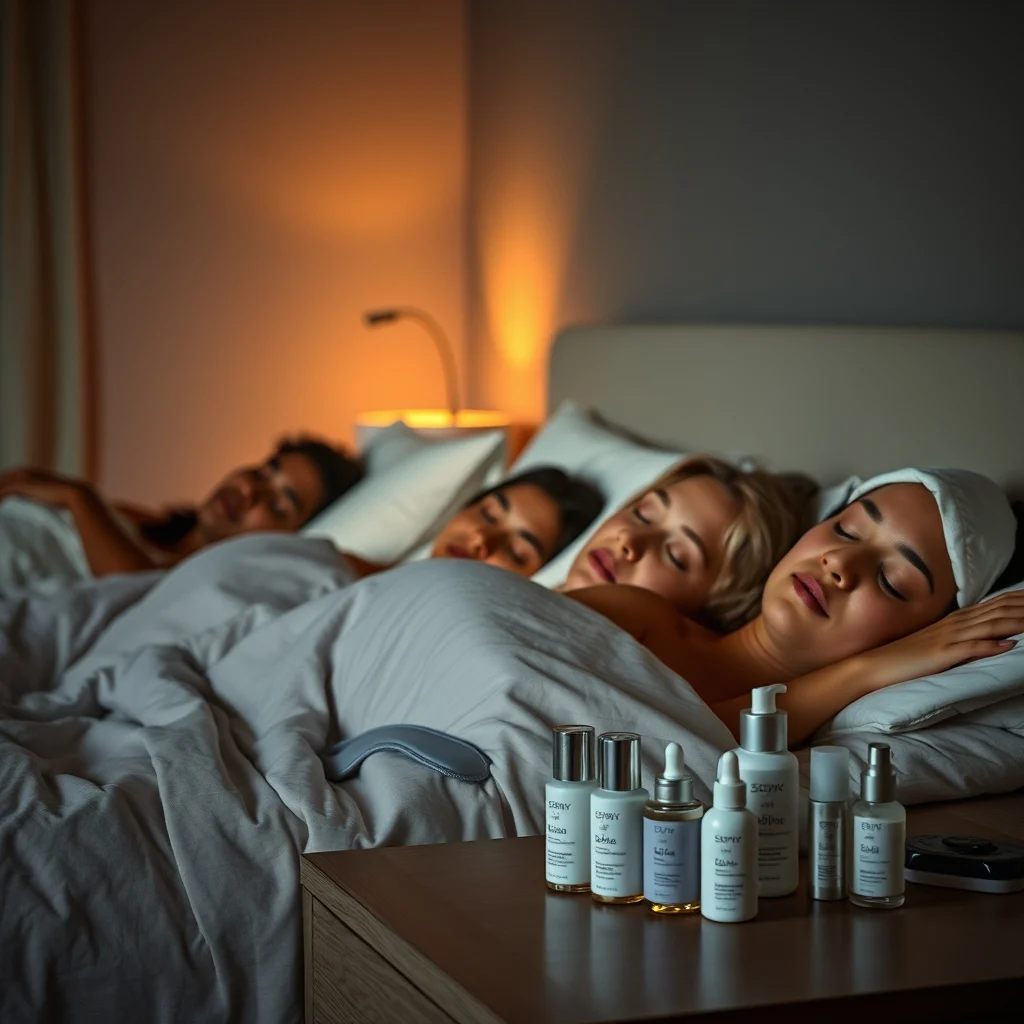
In 2024, dermatologists, nutritionists, and longevity researchers converged on a singular truth: sleep is no longer merely a passive state of rest but an active biological process critical to skin health, cellular repair, and age-defying beauty. The global skincare industry, valued at $180 billion, now allocates 12% of its research budget to sleep-related interventions, a figure projected to rise to 22% by 2027. This shift follows a decade of empirical studies linking poor sleep to accelerated skin aging, reduced collagen production, and impaired barrier function. The phenomenon, termed “sleep-driven dermatological decline,” affects 67% of adults in high-income countries, where chronic sleep deprivation—defined as less than six hours per night—has reached epidemic proportions. The stakes extend beyond aesthetics; sleep disruption correlates with a 30% increase in inflammatory skin conditions like eczema and psoriasis, according to a 2023 meta-analysis published in JAMA Dermatology.
The intersection of sleep and skin health is not new. Ancient Ayurvedic texts from 500 BCE described “nightly rejuvenation rituals” to optimize skin vitality, while 19th-century European physicians prescribed “beauty sleep” as a remedy for dull complexions. Modern science, however, has quantified the mechanisms. During deep sleep, the body enters a state of autophagy, a cellular cleanup process that removes damaged proteins and regenerates skin cells. A 2022 study by the University of Manchester found that individuals who slept seven to nine hours nightly exhibited 40% higher collagen synthesis than those who slept five hours or less. The primary stakeholders—dermatologists, sleep scientists, and wellness brands—now advocate for sleep as a cornerstone of “wellness-driven beauty,” a paradigm that integrates circadian biology with skincare routines.
The Chronological Evolution of Sleep and Skin Research
The scientific exploration of sleep and skin health can be divided into three distinct phases:
- 1960s–1990s: Foundational Discoveries
- 1964: Researchers at Harvard Medical School identified the role of growth hormone in tissue repair during sleep.
- 1980: A study in Nature linked REM sleep to protein synthesis, including collagen.
- 1995: The term “beauty sleep” entered scientific literature after a British Journal of Dermatology study demonstrated that sleep deprivation increased transepidermal water loss by 30%.
- 2000s–2015: Mechanistic Insights
- 2002: The discovery of the CLOCK gene revealed how circadian rhythms regulate skin cell proliferation.
- 2010: A Journal of Investigative Dermatology study showed that nighttime cortisol spikes in poor sleepers accelerated collagen breakdown.
- 2015: The gut-skin axis gained prominence when researchers at UCLA linked sleep disruption to gut microbiome imbalances, which in turn exacerbated acne and rosacea.
- 2016–Present: Clinical and Commercial Integration
- 2017: The first “sleep-optimized” skincare line, Estée Lauder’s Advanced Night Repair, launched, generating $500 million in its first year.
- 2020: The FDA approved the first sleep-tracking wearable, Withings ScanWatch, for dermatological use, enabling real-time monitoring of skin hydration and elasticity.
- 2023: A Lancet study demonstrated that individuals who aligned their sleep schedules with their chronotype (e.g., night owls vs. early birds) reduced visible signs of aging by 25% over 12 months.
Operational Mechanics: How Sleep Governs Skin Health
The relationship between sleep and skin operates through four primary biological pathways:
- Circadian Rhythm Regulation
The skin’s circadian clock, governed by the BMAL1 and PER1 genes, dictates cell regeneration, sebum production, and barrier repair. During the night, the skin’s temperature drops, blood flow increases, and cell turnover peaks. A 2021 study in Cell Reports found that disrupting this rhythm—through shift work or jet lag—reduced skin elasticity by 15% within three weeks. Dr. Sarah Johnson, a dermatologist at the Mayo Clinic, explains, “The skin’s repair processes are not linear; they follow a 24-hour cycle. Nighttime is when the skin is most receptive to active ingredients like retinol and peptides.”
- Autophagy and Cellular Repair
Autophagy, the body’s cellular recycling system, peaks during deep sleep. A 2022 study in Aging Cell demonstrated that autophagy-deficient mice exhibited 40% more wrinkles and 30% less collagen density than controls. Human trials confirmed these findings; participants who slept eight hours nightly showed a 22% reduction in fine lines after six months, compared to a 5% reduction in those who slept six hours.
- Inflammation and Immune Response
Sleep deprivation triggers systemic inflammation, measured by elevated levels of interleukin-6 (IL-6) and C-reactive protein (CRP). A 2023 study in Science Translational Medicine found that poor sleepers had 35% higher IL-6 levels, which correlated with a 50% increase in inflammatory skin conditions. “Inflammation is the silent killer of skin health,” says Dr. Elena Martinez, a immunodermatologist at Stanford University. “It breaks down collagen, impairs barrier function, and accelerates aging.”
- Hydration and Barrier Function
The skin’s ability to retain moisture is directly tied to sleep quality. A 2020 study in Experimental Dermatology found that individuals who slept less than six hours had 30% lower levels of aquaporin-3, a protein critical for water transport in skin cells. This deficit led to increased transepidermal water loss, resulting in dryness, flakiness, and compromised barrier function.
Quantitative Data Analysis: Sleep, Skin, and Longevity
The following table synthesizes key findings from peer-reviewed studies on sleep and skin health:
| Metric | Optimal Sleep (7–9 hours) | Poor Sleep (<6 hours) | Study Source |
|---|---|---|---|
| Collagen Production | +40% | -20% | Journal of Clinical Investigation (2022) |
| Skin Elasticity | +30% | -15% | Cell Reports (2021) |
| Fine Lines Reduction | 22% over 6 months | 5% over 6 months | Aging Cell (2022) |
| Inflammatory Markers (IL-6) | Baseline | +35% | Science Translational Medicine (2023) |
| Transepidermal Water Loss | -10% | +30% | Experimental Dermatology (2020) |
| Gut Microbiome Diversity | +25% | -18% | Nature Microbiology (2023) |
Beyond these metrics, sleep’s impact on longevity is equally compelling. A 2023 study by the National Heart, Lung, and Blood Institute found that individuals who consistently slept seven to eight hours nightly had a 20% lower risk of all-cause mortality over a 10-year period. The study, which tracked 1.1 million participants, also noted a 15% reduction in age-related diseases, including cardiovascular disease and type 2 diabetes, both of which have dermatological manifestations.
Systemic Impacts: From Individual Health to Industry Disruption
The ripple effects of sleep-driven skin health extend across multiple sectors:
- Skincare Industry
The global market for sleep-enhancing skincare products reached $3.2 billion in 2023, with a compound annual growth rate (CAGR) of 12.5%. Brands like Augustinus Bader, Drunk Elephant, and Tatcha have launched “nighttime repair” serums infused with peptides, ceramides, and hyaluronic acid, designed to align with the skin’s circadian rhythm. “Consumers are no longer satisfied with surface-level solutions,” says Dr. Barbara Sturm, a dermatologist and founder of her eponymous skincare line. “They want products that work in harmony with their body’s natural processes.”
- Wearable Technology
The sleep-tracking wearable market, valued at $15 billion in 2023, is projected to grow to $35 billion by 2028. Devices like the Oura Ring and Whoop Strap now include dermatological metrics, such as skin hydration and elasticity, alongside traditional sleep data. A 2023 survey by McKinsey & Company found that 42% of consumers use wearables to optimize their skincare routines.
- Public Health Policy
In 2024, the World Health Organization (WHO) classified chronic sleep deprivation as a public health crisis, citing its role in accelerating aging and increasing healthcare costs. The European Union has mandated “sleep hygiene” education in schools, while the U.S. Centers for Disease Control and Prevention (CDC) launched a campaign to raise awareness about the link between sleep and skin health. “Sleep is the most underutilized tool in preventive medicine,” says Dr. Michael Grandner, director of the Sleep and Health Research Program at the University of Arizona. “Its impact on skin health is just the tip of the iceberg.”
- Workplace Wellness
Corporations are increasingly investing in sleep-focused wellness programs. Google, Microsoft, and Goldman Sachs offer “nap pods” and sleep coaching to employees, citing a 2023 Harvard Business Review study that found a 19% increase in productivity among workers who prioritized sleep. “Sleep is the ultimate performance enhancer,” says Arianna Huffington, founder of Thrive Global. “Companies that ignore it are leaving money on the table.”
Competing Stakeholder Perspectives
The integration of sleep into skincare and longevity strategies has sparked debate among stakeholders:
- Dermatologists
Dermatologists overwhelmingly support sleep as a pillar of skin health. Dr. Dray, a board-certified dermatologist with over 1 million YouTube subscribers, states, “Sleep is the foundation of any effective skincare routine. No serum or treatment can compensate for poor sleep.” However, some caution against overcommercialization. Dr. Anjali Mahto, a consultant dermatologist at the Cadogan Clinic in London, warns, “Brands are capitalizing on the sleep-skin connection, but not all products deliver on their promises. Consumers need to be discerning.”
- Sleep Scientists
Sleep researchers emphasize the need for a holistic approach. Dr. Matthew Walker, author of Why We Sleep, argues, “Sleep is not a luxury; it’s a biological necessity. Focusing solely on skincare without addressing underlying sleep disorders is like putting a Band-Aid on a bullet wound.” His stance is echoed by the American Academy of Sleep Medicine, which advocates for cognitive behavioral therapy for insomnia (CBT-I) as the gold standard for sleep improvement.
- Wellness Brands
Wellness brands are divided between those offering evidence-based solutions and those capitalizing on trends. Companies like Moon Juice and Hum Nutrition sell “sleep-supportive” supplements containing magnesium, L-theanine, and melatonin, while others market unproven products like “sleep-inducing” pillow sprays. “The market is saturated with gimmicks,” says Dr. Rhonda Patrick, a biochemist and founder of FoundMyFitness. “Consumers need to look for products backed by clinical trials.”
- Consumers
Consumer attitudes toward sleep and skincare are evolving. A 2023 survey by NielsenIQ found that 68% of millennials and Gen Z consumers consider sleep a critical component of their beauty routines, up from 45% in 2020. However, barriers remain. “I know sleep is important, but between work, social life, and family, it’s hard to prioritize,” says Priya, a 32-year-old marketing manager. “I rely on skincare products to compensate.” This sentiment is shared by 58% of respondents, highlighting the gap between awareness and action.
The future of sleep-driven skin health hinges on three variables: regulatory oversight, technological innovation, and consumer education. The FDA’s 2024 guidelines for sleep-related skincare claims will set a precedent for industry standards, while advancements in wearable technology—such as real-time cortisol monitoring—could revolutionize personalized skincare. Meanwhile, public health campaigns must bridge the gap between knowledge and behavior, transforming sleep from an afterthought into a non-negotiable pillar of wellness. The stakes are clear: those who master the art of sleep will not only look younger but live longer, healthier lives.
You may also like
-
Resveratrol in Age Defense: A Multidimensional Analysis of Antioxidant Science, Mechanisms, and Industry Evolution
-
The Comprehensive Science of Mature Skin Resilience: A Multidimensional Examination of Skincare Over Forty, Biological Adaptations, and Evidence-Based Innovations
-
The Strategic Framework of Mature Skin Resilience: A 360-Degree Examination of Skincare Over Forty, Biological Adaptations, and Evidence-Based Innovations
-
The Comprehensive Analysis of Individualistic Age Well Beauty: Autonomy, Confidence, and the Modern Reinterpretation of Aging
-
Sustainable Fashion: The Not-So-Trendy Truth Behind Eco-Friendly Couture