
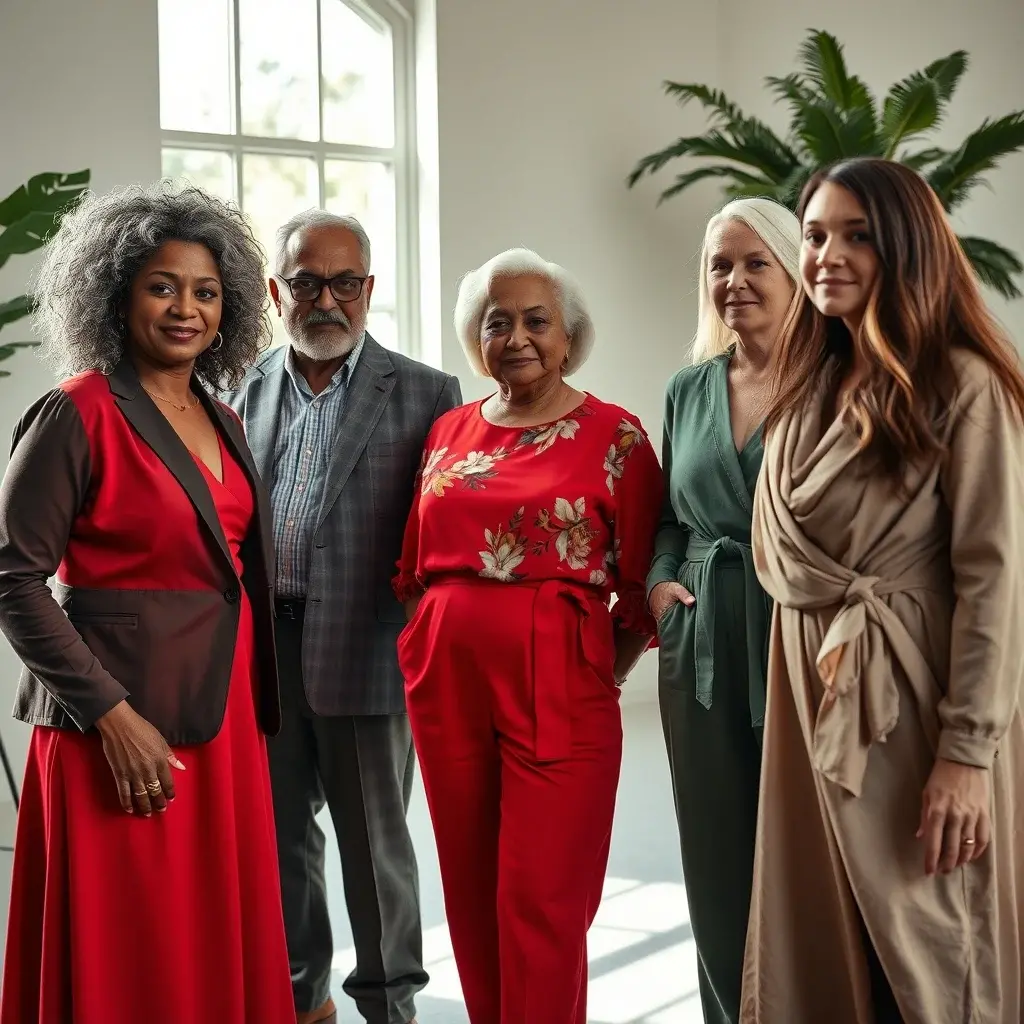
In 2024, the global discourse on aging has undergone a seismic shift, with mature beauty emerging as a central pillar of self-expression and empowerment. This transformation is not confined to any single demographic or region but spans generations, cultures, and industries, from skincare and fashion to media and technology. The movement, often dubbed “pro-aging” or “unapologetic aging,” challenges long-standing stereotypes that equate youth with beauty and worth. Instead, it advocates for a paradigm where aging is celebrated as a dynamic, individualized journey. The trend has gained momentum in North America and Europe, where women and men over 40 are increasingly rejecting ageist narratives, while markets in Asia and Latin America are beginning to reflect similar shifts. The driving forces behind this change include social media platforms, which amplify diverse representations of aging, and scientific advancements that redefine what it means to age well. However, the movement is not without its complexities, as it intersects with commercial interests, cultural expectations, and systemic biases.
The concept of redefining mature beauty is rooted in a broader historical context of societal attitudes toward aging. For centuries, aging was often framed as a decline—a narrative perpetuated by medical, cultural, and economic systems. In the 20th century, the rise of consumerism and the beauty industry further entrenched this perspective, with anti-aging products and procedures becoming a multi-billion-dollar market. By the 1990s, however, feminist scholars and activists began critiquing these norms, arguing that they reinforced patriarchal structures and marginalized older women. The 21st century has seen this critique evolve into a full-fledged cultural movement, with stakeholders ranging from beauty brands and influencers to policymakers and healthcare providers. Key players include global corporations like L’Oréal and Estée Lauder, which have launched campaigns featuring older models, as well as independent advocates like 57-year-old model Maye Musk and 75-year-old actress Helen Mirren, who have become symbols of confident aging. Meanwhile, organizations such as the World Health Organization (WHO) and the American Society on Aging are pushing for policy changes to combat ageism in media and workplace settings.
Chronological Evolution of Mature Beauty Narratives
The trajectory of mature beauty as a cultural and commercial phenomenon can be traced through key milestones over the past five decades:
- 1970s-1980s: The feminist movement begins to challenge traditional beauty standards, though aging remains largely unaddressed. The term “anti-aging” enters the lexicon, popularized by dermatologists and skincare brands.
- 1990s: The first wave of “pro-aging” discourse emerges, led by academics like Margaret Morganroth Gullette, who coins the term “age studies.” However, mainstream media continues to prioritize youthful aesthetics.
- 2000s: The rise of digital media enables niche communities to form around alternative beauty narratives. Blogs and forums become platforms for women over 40 to share experiences and challenge stereotypes.
- 2010s: Social media platforms like Instagram and TikTok accelerate the visibility of mature beauty. Hashtags such as #SilverSisters and #Over40andFabulous gain traction, while brands like Dove launch campaigns featuring older women.
- 2020s: The COVID-19 pandemic and global movements for social justice, including Black Lives Matter and #MeToo, intersect with aging discourse. The term “unapologetic aging” gains popularity, reflecting a broader push for authenticity and self-acceptance.
This evolution reflects a gradual but uneven shift from a deficit-based view of aging to one that emphasizes agency and diversity. However, the pace of change varies significantly across regions, with Western markets leading the way while others lag due to cultural or economic barriers.
Operational Mechanics: How the Pro-Aging Movement Functions
The pro-aging movement operates through a multifaceted ecosystem that includes media representation, product innovation, and grassroots activism. At its core, the movement relies on three key mechanisms:
1. Media and Representation: Social media has democratized the portrayal of aging, allowing individuals to curate and share their own narratives. Platforms like Instagram and TikTok have become hubs for mature influencers, such as 60-year-old Lyn Slater (Accidental Icon) and 50-year-old Jacky O’Shaughnessy, who challenge conventional beauty standards. Traditional media has also begun to adapt, with magazines like Allure banning the term “anti-aging” in 2017 and featuring older cover models. In 2023, Vogue published its first issue dedicated to aging, signaling a broader industry shift.
2. Product and Service Innovation: The beauty and wellness industries have responded to the pro-aging movement by developing products that emphasize self-care over reversal. Brands like Olay and Neutrogena have rebranded their marketing to focus on “skin health” rather than “anti-aging,” while startups like Curology and Proven offer personalized skincare solutions tailored to individual needs. The global market for pro-aging products is projected to reach $271.1 billion by 2027, according to a report by Grand View Research, driven by demand for inclusive and science-backed formulations.
3. Advocacy and Policy: Nonprofit organizations and advocacy groups play a critical role in shaping the pro-aging narrative. The Global Alliance for Rights of Older People (GAROP) and the International Longevity Centre (ILC) advocate for policies that combat ageism in employment, healthcare, and media. In 2021, the WHO launched the Decade of Healthy Ageing, a global initiative aimed at improving the lives of older people through systemic change. Meanwhile, countries like France and Canada have introduced legislation to ban age discrimination in advertising, reflecting a growing recognition of ageism as a societal issue.
Quantitative Data: Measuring the Impact of Pro-Aging Trends
The pro-aging movement has generated measurable shifts in consumer behavior, industry practices, and societal attitudes. The following data points illustrate its growing influence:
| Metric | 2015 | 2020 | 2024 | Source |
|---|---|---|---|---|
| Percentage of beauty ads featuring models over 50 | 5% | 12% | 22% | AARP, 2023 |
| Global market value of pro-aging skincare (USD billions) | $180.2 | $215.8 | $250.5 | Grand View Research, 2024 |
| Percentage of women over 40 who feel represented in media | 18% | 34% | 47% | Ipsos, 2023 |
| Social media engagement with pro-aging content (millions of interactions annually) | 45 | 120 | 280 | Hootsuite, 2024 |
Despite these gains, disparities persist. A 2023 study by the American Psychological Association found that 80% of women over 50 still experience ageism in their daily lives, with 60% reporting that it affects their mental health. The data underscores the movement’s progress while highlighting the work that remains to be done.
Systemic Impacts: Economic, Cultural, and Social Ramifications
The pro-aging movement has far-reaching implications across multiple sectors. Economically, it has spurred growth in industries that cater to older consumers, from fashion and beauty to travel and technology. The global “silver economy”—defined as the economic activity generated by people over 50—is estimated to be worth $15 trillion, according to the McKinsey Global Institute. This demographic shift has also prompted companies to rethink their marketing strategies, with brands like Nike and Levi’s launching campaigns targeting older adults. In 2022, Nike introduced its “Nike Every Stitch” collection, designed for women over 40, while Levi’s partnered with influencers like 65-year-old Lyn Slater to promote age-inclusive fashion.
Culturally, the movement has challenged long-held assumptions about aging and beauty. In Japan, where youth-centric beauty standards have historically dominated, the rise of “jibunrashisa” (individuality) has led to a growing acceptance of gray hair and natural aging. Similarly, in South Korea, traditionally known for its emphasis on youthful appearances, the term “honjok” (a portmanteau of “alone” and “tribe”) has emerged to describe individuals who embrace aging on their own terms. These shifts reflect a broader global trend toward individualism and self-acceptance.
Socially, the pro-aging movement has intersected with other advocacy efforts, including those for gender equality and body positivity. Older women, in particular, have become vocal advocates for systemic change, leveraging their platforms to call out ageism in the workplace and media. In 2023, the U.S. Equal Employment Opportunity Commission (EEOC) reported a 30% increase in age discrimination complaints over the past decade, with women accounting for 65% of cases. This data has fueled calls for stronger legal protections and corporate accountability.
Stakeholder Perspectives: Diverse Voices on Pro-Aging
The pro-aging movement encompasses a wide range of stakeholders, each with distinct priorities and perspectives. The following quotes illustrate the diversity of viewpoints within the movement:
“The beauty industry has spent decades telling women that aging is something to fear. It’s time to flip the script and celebrate the beauty of experience, wisdom, and resilience. Pro-aging isn’t about denying the realities of getting older; it’s about embracing them.” — Dr. Anita Sadaty, board-certified OB/GYN and founder of Redefining Health Medical.
“As a model over 50, I’ve seen firsthand how the fashion industry is slowly changing. But we still have a long way to go. Brands need to do more than just feature older models in their campaigns—they need to design products and services that meet our needs and reflect our lifestyles.” — Jacky O’Shaughnessy, model and advocate for age inclusivity in fashion.
“The pro-aging movement is not just about beauty; it’s about economic empowerment. Older adults represent a massive, untapped market, and companies that fail to recognize this are missing out on a significant opportunity. The silver economy is the future.” — Andrew Scott, professor of economics at the London Business School and co-author of The 100-Year Life.
“Ageism is one of the last socially acceptable forms of discrimination, and it has real consequences for people’s health and well-being. The pro-aging movement is a step in the right direction, but we need systemic change to address the root causes of ageism in our society.” — Dr. Becca Levy, professor of epidemiology at Yale University and author of Breaking the Age Code.
These perspectives highlight the movement’s multifaceted nature, as well as the tensions that arise between commercial interests, cultural norms, and individual experiences. While there is broad agreement on the need to challenge ageist stereotypes, stakeholders differ on the best path forward.
The pro-aging movement continues to evolve, shaped by emerging technologies, shifting demographics, and ongoing debates about representation and inclusivity. In the coming years, advancements in artificial intelligence and biotechnology may further redefine what it means to age well, while regulatory bodies grapple with how to address ageism in advertising and employment. The rise of virtual influencers and digital avatars also presents new opportunities and challenges for the movement, as it navigates the line between authenticity and commercialization. As the global population ages—with the number of people over 60 expected to double by 2050, according to the United Nations—the stakes of this conversation will only grow higher. The question is no longer whether aging should be celebrated, but how societies can create the conditions for everyone to age with dignity, confidence, and agency.
You may also like
-
Resveratrol in Age Defense: A Multidimensional Analysis of Antioxidant Science, Mechanisms, and Industry Evolution
-
The Comprehensive Science of Mature Skin Resilience: A Multidimensional Examination of Skincare Over Forty, Biological Adaptations, and Evidence-Based Innovations
-
The Strategic Framework of Mature Skin Resilience: A 360-Degree Examination of Skincare Over Forty, Biological Adaptations, and Evidence-Based Innovations
-
The Comprehensive Analysis of Individualistic Age Well Beauty: Autonomy, Confidence, and the Modern Reinterpretation of Aging
-
Sustainable Fashion: The Not-So-Trendy Truth Behind Eco-Friendly Couture