
The contemporary fashion industry moves at a velocity once considered impossible. Trends emerge overnight, proliferate across social media ecosystems within hours, and dissipate before traditional retail cycles can react. Within this hyper-accelerated environment, few brands have transformed the landscape as dramatically as Fashion Nova.
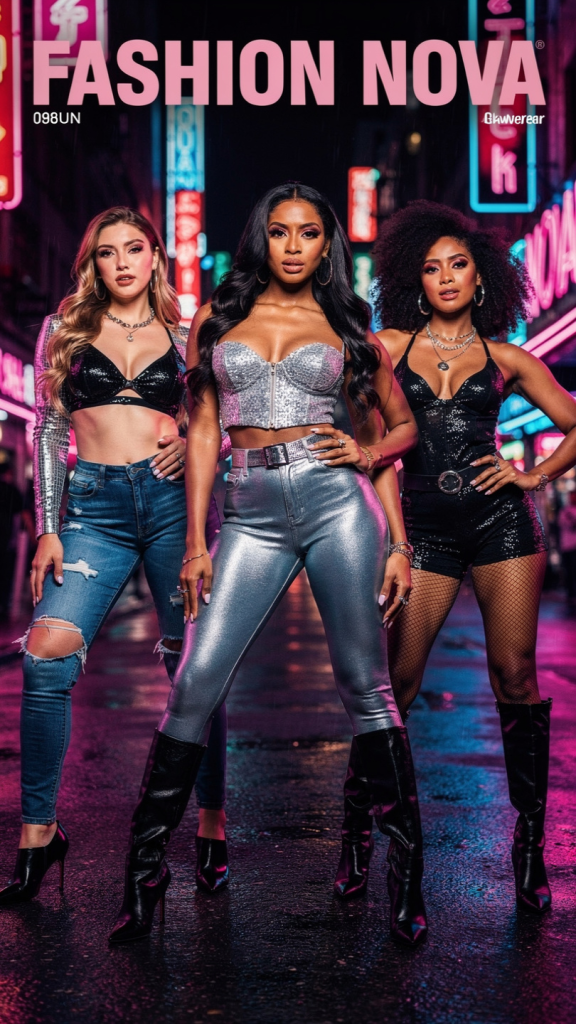
Once perceived merely as an online clothing retailer targeting social-media-savvy consumers, the company has evolved into a cultural phenomenon with extraordinary influence over digital fashion behavior, influencer marketing, trend acceleration, and modern consumer psychology. The rise of Fashion Nova illustrates far more than commercial success. It reveals a profound transformation in how fashion is marketed, consumed, and culturally disseminated in the age of algorithmic visibility.
Unlike heritage luxury houses built upon exclusivity and scarcity, Fashion Nova thrives on immediacy, accessibility, and relentless adaptability. The brand does not wait for fashion cycles to unfold organically. Instead, it actively participates in creating and accelerating them.
Its influence stretches beyond clothing alone. It touches music culture, celebrity branding, body image discourse, influencer economics, and the broader democratization of fashion visibility.
The Emergence of a Digital Fashion Giant
The trajectory of Fashion Nova reflects the changing mechanics of retail itself. Traditional fashion companies historically depended upon magazine editorials, runway shows, department store partnerships, and seasonal collection calendars. These systems required substantial lead times and centralized gatekeeping.
Social media disrupted that structure completely.
Instagram, TikTok, and influencer culture created an entirely new pathway for fashion exposure — one governed not by editorial institutions but by engagement metrics and viral visibility. Fashion Nova recognized this shift earlier and more aggressively than many competitors.
The brand understood a crucial truth: modern consumers no longer merely observe fashion trends; they participate in them instantaneously.
This realization transformed the company’s operational philosophy. Instead of adhering to slow production cycles, Fashion Nova embraced rapid-response manufacturing capable of translating digital trends into purchasable products at astonishing speed.
The result was unprecedented relevance within online culture.
The Power of Social Media Integration
Perhaps the most defining characteristic of Fashion Nova is its unparalleled mastery of social media marketing.
Many fashion brands use social platforms as promotional tools. Fashion Nova operates as though social media itself is the primary retail environment. This distinction is significant.
The brand’s digital presence feels immersive, constant, and algorithmically omnipresent. Its strategy relies heavily upon influencer ecosystems, celebrity partnerships, and high-frequency visual exposure.
Consumers scrolling through Instagram or TikTok encounter Fashion Nova repeatedly through:
- Sponsored influencer content
- Celebrity endorsements
- Viral styling videos
- Fashion hauls
- Outfit transformations
- User-generated content
- Trend replication posts
This perpetual visibility creates extraordinary cultural saturation.
Importantly, the brand rarely presents itself through distant luxury aesthetics. Instead, its imagery emphasizes accessibility, confidence, sensuality, and aspirational lifestyle fantasy.
This approach resonates deeply within digital attention economies.
Celebrity Influence and Cultural Visibility
The meteoric growth of Fashion Nova cannot be separated from celebrity culture. High-profile collaborations and endorsements played a pivotal role in transforming the brand from a niche online retailer into a globally recognizable name.
Celebrities associated with music, reality television, and social media became instrumental in amplifying the brand’s visibility. Their immense online followings allowed Fashion Nova to access audiences traditional advertising campaigns could never reach with comparable efficiency.
This strategy proved especially effective because it aligned naturally with contemporary parasocial consumer behavior.
Fans increasingly seek to emulate the lifestyles of public figures they admire. Fashion becomes one of the most accessible pathways toward that emulation. Purchasing clothing associated with celebrities creates an illusion of proximity to glamour and influence.
Fashion Nova capitalized on this phenomenon masterfully.
Rather than cultivating exclusivity, the brand encourages participatory aspiration. Consumers feel invited into the aesthetic rather than excluded from it.
Fast Fashion Reimagined for the Algorithm Era
Fast fashion existed long before Fashion Nova, but the brand redefined the concept for the social media age.
Traditional fast-fashion companies relied upon runway-inspired adaptation cycles measured in weeks or months. Fashion Nova accelerated this process dramatically.
The company monitors digital trends in real time. Viral aesthetics, celebrity outfits, influencer styles, and internet fashion moments often appear reflected within product offerings almost immediately.
This responsiveness creates a sense of perpetual novelty.
Consumers no longer shop seasonally. They shop continuously, driven by rapidly changing online aesthetics and algorithmic trend exposure.
Within this environment, Fashion Nova functions almost like a fashion search engine for viral desirability.
Body Inclusivity and Visual Representation
Another major factor behind the brand’s popularity involves representation.
Historically, mainstream fashion industries often promoted narrow beauty standards and limited body diversity. Fashion Nova distinguished itself by embracing a wider spectrum of body types within its marketing imagery.
Curvier silhouettes, body-conscious designs, and figure-accentuating garments became central to the brand’s identity.
This emphasis contributed significantly to the emotional connection many consumers developed with Fashion Nova. Shoppers frequently perceived the brand as more representative of real-world diversity compared to traditional fashion campaigns dominated by highly standardized aesthetics.
The company’s approach to fit and presentation also aligned effectively with social media visual culture, where confidence and self-display play central roles.
The Aesthetic Language of Fashion Nova
The visual identity associated with Fashion Nova is immediately recognizable.
Several stylistic characteristics define the brand’s aesthetic ecosystem:
- Body-contouring silhouettes
- Monochromatic coordination
- Glamorous athleisure
- Distressed denim
- Matching sets
- Cutout detailing
- Bold neutral palettes
- Curve-enhancing tailoring
- Streetwear-inspired casualwear
- High-visibility nightlife fashion
This aesthetic prioritizes visual impact. Clothing is designed not merely for physical wear but for digital presentation.
Photogenic fashion has become increasingly important in the social media era. Garments must perform effectively within images, videos, and short-form content.
Fashion Nova understands this dynamic profoundly.
Influencer Culture and Democratized Modeling
One of the most revolutionary aspects of Fashion Nova lies in its relationship with influencers.
Traditional fashion marketing historically depended upon elite models and inaccessible editorial campaigns. Fashion Nova embraced micro-influencers, everyday creators, and user-generated content long before many luxury brands recognized their cultural power.
This democratization altered fashion marketing fundamentally.
Consumers no longer perceive fashion solely through professionally curated magazine imagery. They experience it through relatable personalities documenting daily life online.
The strategy creates stronger emotional relatability.
Followers often trust influencers more than traditional advertising because the content feels personal rather than corporate. Fashion Nova leveraged this trust ecosystem with extraordinary effectiveness.
The brand transformed ordinary social media users into powerful marketing conduits.
The Psychology of Accessibility
Luxury fashion traditionally depends upon scarcity. Fashion Nova thrives on accessibility.
Its pricing structure allows consumers to experiment with trends frequently without catastrophic financial commitment. This affordability encourages impulse purchasing and aesthetic experimentation.
The psychological impact is significant.
Consumers feel liberated to participate in rapidly changing fashion movements because the perceived economic risk remains relatively low.
This accessibility contributes heavily to the mass appeal of Fashion Nova among younger demographics immersed in fast-moving digital culture.
Fashion becomes fluid rather than permanent.
Identity becomes iterative.
Trend Cycles and Hyper-Speed Consumption
Modern trend cycles move with astonishing rapidity. Aesthetic movements emerge, peak, and fade within weeks rather than years.
Fashion Nova operates exceptionally well within this environment because its infrastructure prioritizes responsiveness over permanence.
The company’s product ecosystem reflects current online aesthetics almost instantaneously. This adaptability creates a powerful perception of cultural relevance.
Consumers increasingly associate the brand with immediacy itself.
However, this acceleration also raises broader questions regarding sustainability, consumption habits, and the psychological consequences of perpetual trend turnover.
Criticism and Controversy
Despite its extraordinary success, Fashion Nova has faced substantial criticism across multiple dimensions.
Fast fashion as an industry frequently encounters scrutiny regarding:
- Environmental sustainability
- Labor practices
- Overconsumption
- Waste generation
- Disposable consumer culture
As one of the most visible fast-fashion brands globally, Fashion Nova inevitably occupies a central position within these debates.
Critics argue that hyper-accelerated production contributes to ecological strain and encourages unsustainable purchasing behavior. Others question the long-term social implications of algorithm-driven trend consumption.
Yet even critics often acknowledge the brand’s undeniable cultural influence.
The conversations surrounding Fashion Nova reflect broader tensions within contemporary capitalism, digital culture, and consumer psychology.
The Relationship Between Fashion and Identity
One reason Fashion Nova resonates so powerfully lies in its understanding of fashion as emotional performance.
Modern consumers increasingly use clothing to construct digital identities. Outfits are no longer experienced solely in physical spaces; they are curated for online visibility and social validation.
Within this context, fashion becomes intertwined with self-branding.
Fashion Nova designs clothing specifically for this reality. Many garments emphasize strong visual silhouettes, high photographic impact, and social-media-friendly styling.
The clothing performs effectively on camera.
That distinction is crucial.
Digital culture has transformed fashion from a primarily tactile experience into a visual communication system optimized for screens.
The Influence on Competing Brands
The success of Fashion Nova fundamentally altered industry behavior.
Competing retailers rapidly adapted similar strategies involving:
- Influencer partnerships
- Accelerated production timelines
- Social-media-centric marketing
- Body-inclusive campaigns
- High-frequency product releases
- Celebrity collaborations
The brand effectively demonstrated that digital relevance could rival or even surpass traditional fashion prestige.
Many companies now emulate operational models pioneered or popularized by Fashion Nova.
The Future of Digital Fashion Retail
The continued evolution of fashion technology will likely intensify many dynamics already associated with Fashion Nova.
Artificial intelligence, predictive trend analysis, virtual fitting technologies, and algorithm-driven personalization may further accelerate retail responsiveness.
Future fashion ecosystems could become even more individualized and immediate.
Consumers may increasingly expect brands to adapt instantaneously to microtrends emerging from online communities.
In many ways, Fashion Nova anticipated this future before much of the industry fully understood its implications.
Sustainability Versus Speed
One of the most important questions facing modern fashion concerns the tension between accessibility and sustainability.
Consumers increasingly desire:
- Affordable pricing
- Constant novelty
- Ethical production
- Environmental responsibility
Meeting all these expectations simultaneously presents enormous challenges.
The future success of companies like Fashion Nova may depend upon their ability to reconcile rapid production systems with evolving ecological consciousness.
Sustainable innovation will likely become increasingly important as consumers grow more environmentally aware.
Cultural Legacy and Long-Term Influence
Regardless of future industry transformations, the cultural impact of Fashion Nova is already undeniable.
The brand helped redefine:
- Influencer marketing strategies
- Digital retail behavior
- Trend acceleration mechanisms
- Social-media-driven fashion visibility
- Accessible glamour aesthetics
- Body-positive representation in fast fashion
Its influence extends beyond commerce into the broader architecture of digital consumer culture itself.
Fashion today operates differently because of brands like Fashion Nova.
Conclusion
Fashion Nova represents far more than a successful online retailer. It embodies the transformation of fashion within the algorithmic age.
The brand’s rise reflects profound shifts in consumer psychology, celebrity influence, digital identity construction, and social media marketing dynamics. By prioritizing accessibility, immediacy, and visual relevance, Fashion Nova established itself as one of the defining fashion phenomena of the modern internet era.
Its mastery of influencer ecosystems, body-inclusive representation, trend responsiveness, and digital visibility reshaped industry expectations permanently.
At the same time, the controversies surrounding fast fashion, sustainability, and hyper-consumption continue complicating its legacy. The brand exists at the intersection of empowerment and excess, accessibility and environmental concern, democratization and disposability.
Yet perhaps that complexity explains its enduring fascination.
Fashion Nova is not simply a fashion company. It is a reflection of contemporary culture itself — fast-moving, image-driven, aspirational, contradictory, and perpetually evolving within the relentless momentum of the digital world.
You may also like
-
Resveratrol in Age Defense: A Multidimensional Analysis of Antioxidant Science, Mechanisms, and Industry Evolution
-
The Comprehensive Science of Mature Skin Resilience: A Multidimensional Examination of Skincare Over Forty, Biological Adaptations, and Evidence-Based Innovations
-
The Strategic Framework of Mature Skin Resilience: A 360-Degree Examination of Skincare Over Forty, Biological Adaptations, and Evidence-Based Innovations
-
The Comprehensive Analysis of Individualistic Age Well Beauty: Autonomy, Confidence, and the Modern Reinterpretation of Aging
-
Sustainable Fashion: The Not-So-Trendy Truth Behind Eco-Friendly Couture