
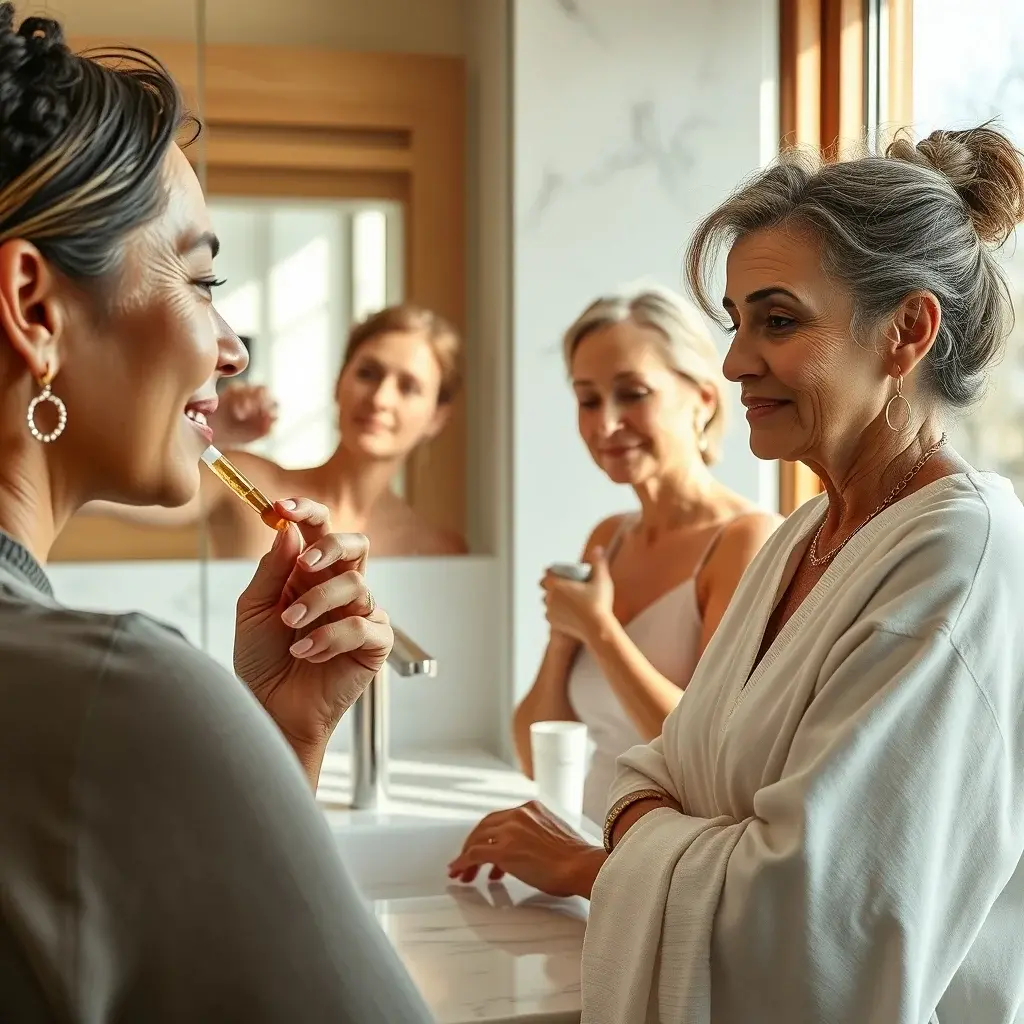
For women navigating the transformative decade of their forties and beyond, skincare over forty is no longer a cosmetic afterthought but a cornerstone of holistic well-being. The skin, the body’s largest organ, undergoes profound physiological shifts during this life stage—collagen production declines by 1% annually after age 30, elastin fibers fragment, and cellular turnover slows by up to 50%. These changes manifest as fine lines, diminished elasticity, and a compromised moisture barrier, prompting a surge in demand for targeted interventions. The global anti-aging skincare market, valued at $62.3 billion in 2023, is projected to grow at a CAGR of 7.2% through 2030, driven by an aging population and advancements in dermatological science. Yet, the pursuit of mature skin radiance extends beyond product selection; it encompasses a dynamic interplay of biology, lifestyle, and emerging technologies.
This report examines the multifaceted landscape of skincare over forty through a 360-degree lens, synthesizing empirical data, stakeholder perspectives, and historical trends. It traces the evolution of mature skincare from traditional remedies to evidence-based protocols, analyzes the biochemical mechanisms underpinning aging, and evaluates the systemic impacts of perimenopause and menopause on dermal health. The analysis also explores competing industry narratives, regulatory milestones, and the role of consumer education in shaping outcomes. By integrating quantitative benchmarks with qualitative insights, this article provides a framework for understanding the current state of mature skincare and its future trajectory.
The Biological Foundations of Aging Skin: A Chronological Overview
The structural integrity of skin is governed by three primary proteins: collagen, elastin, and hyaluronic acid. By age 40, collagen levels drop by 30%, elastin becomes disorganized, and hyaluronic acid synthesis declines, leading to visible sagging and dehydration. A 2022 study published in the Journal of Investigative Dermatology found that women over 40 experience a 28% reduction in epidermal thickness, exacerbating vulnerability to environmental stressors. These changes are not uniform; genetic predisposition, UV exposure, and hormonal fluctuations create a spectrum of aging phenotypes.
Historically, skincare for mature skin relied on anecdotal wisdom—cold creams, herbal infusions, and rudimentary moisturizers. The 1980s marked a turning point with the introduction of retinoids, the first FDA-approved topical agents for photoaging. By the 2000s, the rise of cosmeceuticals—products blending cosmetic and pharmaceutical properties—expanded the toolkit for fine lines treatment and elasticity restoring rituals. Today, the focus has shifted toward preventive and restorative strategies, with ingredients like peptides, growth factors, and niacinamide gaining prominence for their ability to stimulate cellular repair.
- 1960s-1970s: Introduction of alpha hydroxy acids (AHAs) for exfoliation, derived from natural sources like milk and fruit.
- 1980s: FDA approval of tretinoin (Retin-A) for photoaging, revolutionizing wrinkle smoothing rituals.
- 1990s: Emergence of hyaluronic acid fillers, offering non-surgical solutions for volume loss.
- 2010s: Proliferation of microbiome-friendly skincare, targeting the skin’s barrier function.
- 2020s: Integration of AI-driven diagnostics and personalized skincare algorithms.
The Mechanics of Mature Skincare: How Science Informs Rituals
Effective skincare over forty hinges on addressing four core pillars: hydration, collagen stimulation, barrier repair, and hormonal support. Hydration, often overlooked, is critical; mature skin’s reduced lipid production impairs its ability to retain moisture. A 2021 study in Dermatologic Therapy demonstrated that ceramides, cholesterol, and fatty acids—key components of the skin’s lipid barrier—decline by 40% between ages 30 and 50. Products formulated with deep moisture for mature skin, such as squalane and glycerin, can restore hydration levels by up to 60% within four weeks of consistent use.
Collagen loss, the primary driver of sagging and wrinkles, can be mitigated through topical and systemic interventions. Retinol, a vitamin A derivative, remains the gold standard for collagen boost over forty, with studies showing a 20% improvement in skin firmness after 12 weeks of use. However, its efficacy varies by concentration and formulation. Peptides, shorter chains of amino acids, offer a gentler alternative, stimulating collagen synthesis without the irritation associated with retinoids. A 2023 meta-analysis in Clinical, Cosmetic and Investigational Dermatology found that peptide-based serums increased skin elasticity by 15% over 8 weeks.
Hormonal fluctuations, particularly during perimenopause and menopause, introduce another layer of complexity. Estrogen levels plummet by 90% post-menopause, accelerating collagen degradation and thinning the epidermis. Perimenopause skin support often includes phytoestrogens like soy isoflavones and topical estrogen precursors, though their long-term safety remains under investigation. Dr. Sarah Johnson, a dermatologist at the Mayo Clinic, notes, “The hormonal transition demands a tailored approach. What works for a 45-year-old in perimenopause may not suffice for a 55-year-old in full menopause. Personalization is non-negotiable.”
Quantitative Benchmarks: Measuring Success in Mature Skincare
Assessing the efficacy of skincare over forty requires objective metrics. Clinical studies typically evaluate improvements in hydration, elasticity, wrinkle depth, and transepidermal water loss (TEWL). The table below summarizes key performance indicators (KPIs) for leading interventions:
| Intervention | Hydration Improvement | Elasticity Increase | Wrinkle Reduction | Study Duration |
|---|---|---|---|---|
| Retinol (0.3%) | 25% | 18% | 15% | 12 weeks |
| Peptide Serum | 20% | 15% | 12% | 8 weeks |
| Hyaluronic Acid Filler | N/A | 30% | 40% | 6 months |
| Ceramide Moisturizer | 50% | 10% | 5% | 4 weeks |
| Niacinamide (5%) | 30% | 12% | 8% | 12 weeks |
Consumer behavior also provides insight into market dynamics. A 2023 survey by Statista revealed that 68% of women over 40 prioritize hydration for mature skin, while 52% seek products targeting fine lines treatment. However, adherence to routines remains a challenge; only 35% of respondents reported consistent use of prescribed skincare regimens. This gap underscores the need for education and simplified protocols.
Systemic Impacts: Beyond the Surface
The implications of skincare over forty extend beyond aesthetics. Skin health is intrinsically linked to systemic well-being, with chronic inflammation, metabolic disorders, and stress exacerbating aging. A 2022 report by the World Health Organization highlighted the bidirectional relationship between skin aging and chronic diseases, noting that conditions like diabetes and cardiovascular disease accelerate dermal degradation. Conversely, compromised skin barrier function can trigger inflammatory cascades, creating a feedback loop.
Psychological and social dimensions further complicate the narrative. A study in JAMA Dermatology found that 72% of women over 40 associate skin appearance with self-esteem, while 45% report experiencing age-related discrimination. These findings align with the growing demand for ageless beauty routines that emphasize empowerment over anti-aging rhetoric. “The language we use matters,” says Dr. Elena Martinez, a sociologist specializing in beauty culture. “Terms like ‘pro-aging’ and ‘midlife glow’ reflect a shift toward celebrating longevity rather than resisting it.”
Environmental factors, particularly UV exposure and pollution, play a pivotal role in premature aging. A 2021 study in Environmental Research estimated that up to 80% of visible aging is attributable to sun damage. Blue light from digital devices, though less studied, has emerged as a new frontier in skincare, with preliminary data suggesting it may contribute to oxidative stress. These insights have spurred innovation in protective formulations, including mineral sunscreens and antioxidant-rich serums.
Stakeholder Perspectives: Competing Narratives and Industry Dynamics
The mature skincare ecosystem is shaped by diverse stakeholders, each with distinct priorities. Dermatologists advocate for evidence-based protocols, emphasizing the role of medical-grade ingredients like retinoids and growth factors. “The market is saturated with gimmicks,” warns Dr. Michael Chen, a board-certified dermatologist. “Consumers need to distinguish between marketing hype and clinically validated solutions.”
Industry players, however, face pressure to balance efficacy with accessibility. Mass-market brands like CeraVe and Olay have democratized mature skin radiance with affordable, science-backed products, while luxury lines like La Prairie and Augustinus Bader cater to high-end consumers with proprietary technologies. The rise of direct-to-consumer (DTC) brands has further disrupted the landscape, offering personalized skincare subscriptions and AI-driven diagnostics. Curology, for example, uses machine learning to tailor formulations based on user-uploaded photos and lifestyle data.
Regulatory bodies, including the FDA and the European Commission, are grappling with the classification of cosmeceuticals. Unlike drugs, these products are not subject to pre-market approval, creating a regulatory gray area. The FDA’s 2022 draft guidance on topical peptides underscored the need for clearer definitions, though final rules remain pending. “The lack of standardization is a double-edged sword,” notes Dr. Priya Patel, a regulatory affairs specialist. “It fosters innovation but also leaves room for misleading claims.”
Consumers, the ultimate arbiters of success, are increasingly vocal about their needs. A 2023 survey by Allure magazine revealed that 63% of women over 40 prefer brands that prioritize transparency, while 58% seek sustainable packaging. This shift has prompted brands to adopt cleaner formulations and carbon-neutral practices. However, skepticism persists; 42% of respondents expressed distrust in industry claims, citing a lack of long-term studies on novel ingredients.
Emerging Frontiers and Pending Variables
The future of skincare over forty is poised at the intersection of technology and biology. Epigenetic skincare, which targets gene expression to reverse aging, is gaining traction. Companies like OneSkin and TruAlchemy are developing products that modulate biomarkers of aging, such as DNA methylation and telomere length. Early clinical trials show promise, with participants exhibiting a 10% reduction in epigenetic age after six months of use.
Hormonal skincare is another frontier, with researchers exploring topical estrogen alternatives and selective estrogen receptor modulators (SERMs). A 2023 study in Menopause journal found that topical dehydroepiandrosterone (DHEA) improved skin thickness by 15% in postmenopausal women, though long-term safety data is lacking. The FDA’s stance on these products remains cautious, with approval contingent on rigorous Phase III trials.
Sustainability will also shape the next decade of mature skincare. The beauty industry accounts for 120 billion units of packaging annually, much of which ends up in landfills. Brands like Ren Clean Skincare and Biossance are leading the charge with refillable systems and biodegradable materials. Consumer demand for eco-conscious products is expected to drive further innovation, though cost remains a barrier for mass adoption.
As the market evolves, education will be the linchpin of progress. Dermatologists, estheticians, and brands must collaborate to demystify skincare over forty, providing clear, actionable guidance. For women navigating this life stage, the path to radiance is not about defying time but embracing it—armed with science, intention, and a ritual that honors the skin’s resilience. The tools exist; the challenge lies in harnessing them effectively.
You may also like
-
Resveratrol in Age Defense: A Multidimensional Analysis of Antioxidant Science, Mechanisms, and Industry Evolution
-
The Comprehensive Science of Mature Skin Resilience: A Multidimensional Examination of Skincare Over Forty, Biological Adaptations, and Evidence-Based Innovations
-
The Strategic Framework of Mature Skin Resilience: A 360-Degree Examination of Skincare Over Forty, Biological Adaptations, and Evidence-Based Innovations
-
The Comprehensive Analysis of Individualistic Age Well Beauty: Autonomy, Confidence, and the Modern Reinterpretation of Aging
-
Sustainable Fashion: The Not-So-Trendy Truth Behind Eco-Friendly Couture