
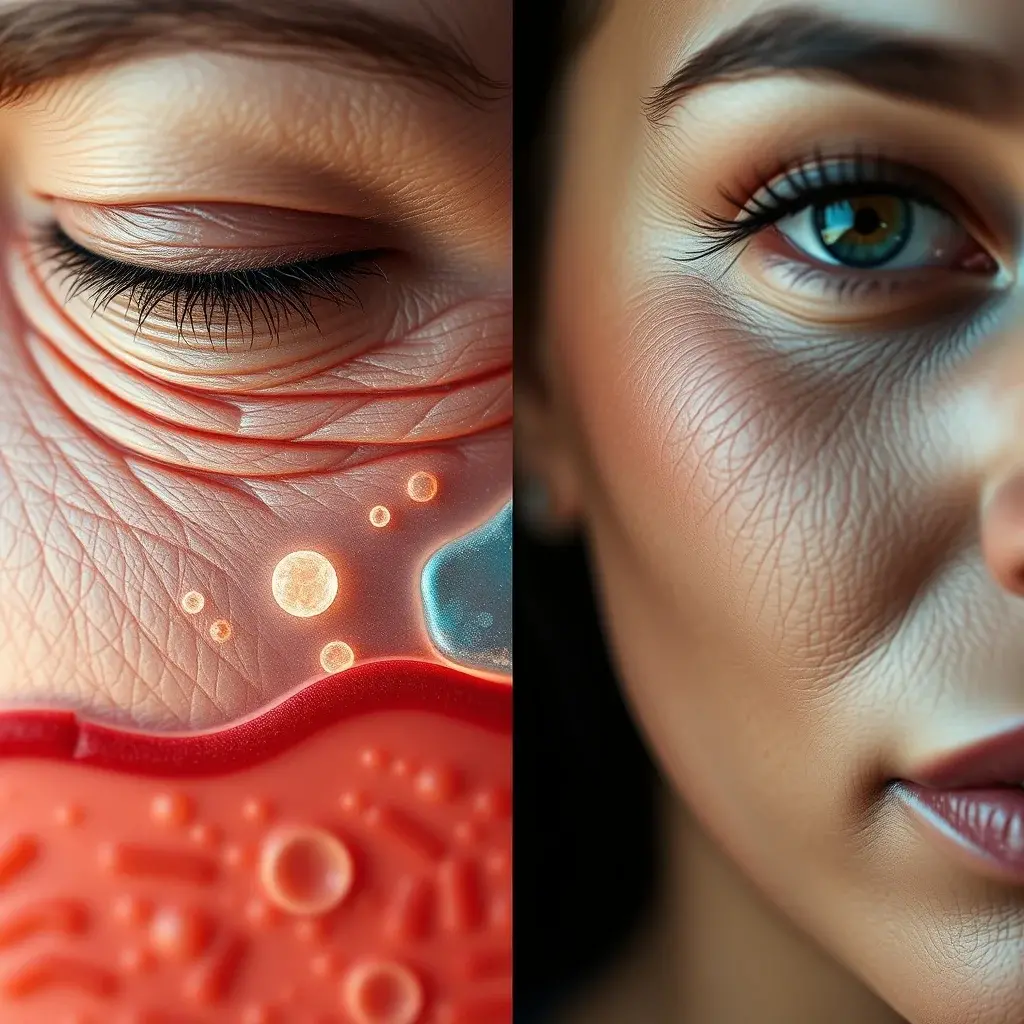
Hyaluronic acid (HA) has emerged as a cornerstone of modern skincare, driven by its unparalleled capacity to retain moisture and support skin elasticity. The global market for HA-based products reached $9.8 billion in 2023, with projections indicating a compound annual growth rate (CAGR) of 7.2% through 2030, according to Grand View Research. This surge reflects a confluence of scientific validation, consumer demand for non-invasive anti-aging solutions, and advancements in biotechnology that enable precise molecular customization. HA’s role extends beyond topical applications, with injectable formulations and oral supplements expanding its utility in dermatology and aesthetic medicine.
Executive Summary
Hyaluronic acid, a glycosaminoglycan naturally produced by the human body, functions as a humectant, drawing water into the skin’s extracellular matrix. Its decline with age—beginning as early as the mid-20s—correlates with visible signs of dehydration, fine lines, and reduced plumpness. The skincare industry has responded by integrating HA into serums, creams, masks, and dermal fillers, with formulations ranging from low-molecular-weight variants for deep penetration to high-molecular-weight versions for surface hydration. Regulatory bodies, including the U.S. Food and Drug Administration (FDA) and the European Medicines Agency (EMA), classify HA as a medical device when used in injectables, while topical applications fall under cosmeceutical regulations. Stakeholders span biotech firms like Genzyme and Allergan, dermatologists advocating for evidence-based protocols, and consumers increasingly prioritizing ingredient transparency.
Historical Context and Evolution
The discovery of hyaluronic acid dates to 1934, when biochemists Karl Meyer and John Palmer isolated it from bovine vitreous humor. Early applications focused on ophthalmology, particularly in cataract surgery. By the 1980s, HA’s viscoelastic properties led to its adoption in orthopedic treatments for joint lubrication. Its transition into skincare began in the late 1990s, following studies demonstrating its biocompatibility and efficacy in wound healing. Key milestones include:
- 1996: FDA approval of Restylane, the first HA-based dermal filler, developed by Q-Med.
- 2003: Introduction of cross-linked HA formulations, enhancing durability in injectables.
- 2010: Rise of multi-weight HA serums, combining short- and long-chain molecules for layered hydration.
- 2018: Launch of HA-infused microneedle patches, enabling transdermal delivery without injections.
- 2022: Expansion of fermented HA production, reducing reliance on animal-derived sources and improving sustainability.
Today, HA is synthesized via bacterial fermentation (e.g., Streptococcus zooepidemicus), a process that yields higher purity and consistency compared to traditional extraction methods. This shift aligns with the industry’s push toward vegan and cruelty-free formulations.
Mechanisms of Action
Hyaluronic acid’s hydration mechanism hinges on its unique molecular structure. Each gram of HA can bind up to six liters of water, creating a reservoir within the skin’s dermis. Its efficacy varies by molecular weight:
| Molecular Weight (kDa) | Penetration Depth | Primary Function | Typical Applications |
|---|---|---|---|
| <50 | Deep dermal | Stimulates fibroblast activity, collagen synthesis | Serums, injectables |
| 50–200 | Mid-dermal | Enhances moisture retention, reduces inflammation | Creams, masks |
| >200 | Epidermal surface | Forms protective film, prevents transepidermal water loss | Toners, moisturizers |
HA’s interaction with the skin’s CD44 receptors further amplifies its benefits. These receptors, expressed on keratinocytes and fibroblasts, facilitate cellular signaling that promotes tissue repair and regeneration. A 2021 study published in the Journal of Cosmetic Dermatology found that topical HA increased skin hydration by 96% after eight weeks of use, while also improving elasticity by 20%. However, its hydrophilic nature can pose challenges in humid environments, where excessive moisture absorption may lead to a sticky residue, prompting formulators to combine HA with occlusive agents like squalane or ceramides.
Quantitative Market Analysis
The HA skincare market is segmented by application, source, and region. Topical products dominate, accounting for 65% of revenue in 2023, followed by injectables (25%) and supplements (10%). Key drivers include:
- Asia-Pacific: The largest market, fueled by South Korea’s K-beauty trends and Japan’s aging population. HA-infused sheet masks alone generated $1.2 billion in sales in 2022.
- North America: Projected to grow at a CAGR of 6.8%, driven by FDA approvals for new HA-based devices and rising demand for minimally invasive procedures.
- Europe: Stringent regulations limit claims for topical HA, but injectables like Juvederm and Belotero remain popular, with Germany and France leading consumption.
Price points vary widely. A 30ml HA serum from The Ordinary retails for $6.80, while premium brands like SkinCeuticals charge $100 for a 30ml bottle. Injectable treatments range from $600 to $1,200 per session, with results lasting 6–18 months. The oral supplement market, though smaller, is expanding, with brands like NeoCell and Sports Research marketing HA capsules for joint and skin health. A 2020 meta-analysis in Dermatologic Therapy concluded that oral HA at doses of 120–240 mg daily improved skin hydration by 19% over 12 weeks, though long-term efficacy remains under investigation.
Systemic Impacts and Stakeholder Perspectives
HA’s ubiquity has sparked debates among stakeholders. Dermatologists emphasize its safety profile but caution against overuse. Dr. Whitney Bowe, a New York-based dermatologist, notes, “Hyaluronic acid is one of the few ingredients with near-universal tolerability, but its benefits are dose-dependent. Overloading the skin with high-molecular-weight HA in dry climates can create a barrier that traps dirt and bacteria, exacerbating acne.”
Industry leaders highlight innovation as a differentiator. L’Oréal’s 2023 annual report states, “Our research into HA derivatives, such as acetylated HA and sodium acetylated hyaluronate, has yielded formulations that penetrate 40% deeper than conventional HA, addressing the needs of mature skin.” Meanwhile, biotech startups like Hyasynth Bio are exploring microbial fermentation to produce HA with tailored molecular weights, reducing production costs by 30%.
Consumer advocacy groups, however, raise concerns about marketing claims. A 2022 report by the Environmental Working Group (EWG) found that 42% of HA products contained misleading labels, such as “clinically proven” without citing peer-reviewed studies. The EWG’s senior scientist, Dr. Carla Burns, asserts, “While HA is generally safe, the lack of standardized testing for topical formulations leaves room for exaggerated efficacy claims. Consumers should prioritize products with third-party certifications.”
Regulatory bodies are also scrutinizing HA’s role in combination therapies. The FDA’s 2023 draft guidance on dermal fillers emphasizes the need for post-market surveillance to monitor rare adverse events, such as delayed-onset nodules or vascular occlusion. In the EU, the Scientific Committee on Consumer Safety (SCCS) is evaluating the safety of nano-sized HA particles, which may penetrate deeper into the skin but raise questions about systemic absorption.
Competing Formulations and Emerging Alternatives
While HA dominates the hydration market, competing ingredients are gaining traction. Polyglutamic acid (PGA), a biopolymer derived from fermented soybeans, binds water at four times the rate of HA and forms a breathable film on the skin. A 2021 study in International Journal of Cosmetic Science found PGA increased hydration by 25% more than HA over 24 hours. Similarly, glycerin, a cost-effective humectant, remains a staple in drugstore formulations, though its lower molecular weight limits its long-term efficacy.
Innovations in delivery systems are also reshaping HA’s applications. Liposomal HA, encapsulated in phospholipid vesicles, enhances stability and penetration. A 2023 clinical trial by Amorepacific demonstrated that liposomal HA serums improved hydration by 35% compared to traditional formulations. Microneedle patches, such as those developed by Zosano Pharma, enable HA delivery without injections, offering a pain-free alternative for consumers averse to needles.
Despite these advancements, HA’s versatility ensures its dominance. Its compatibility with other active ingredients—such as vitamin C for brightening or retinol for cellular turnover—makes it a linchpin in multi-step skincare routines. The challenge lies in balancing innovation with accessibility, as premium HA products remain out of reach for many consumers. As the market evolves, the interplay between scientific rigor, regulatory oversight, and consumer education will determine whether HA’s reign as the gold standard of hydration persists or gives way to next-generation alternatives.
The next 18 months will be pivotal. The FDA’s final guidance on HA-based fillers, expected in late 2024, could introduce stricter labeling requirements, while the EU’s ban on animal-tested ingredients may accelerate the shift toward synthetic HA production. Meanwhile, clinical trials for oral HA supplements targeting gut-skin axis health are underway, with preliminary data suggesting a potential link between gut microbiome composition and HA absorption. These developments underscore the ingredient’s enduring relevance, even as the skincare landscape grows increasingly crowded with novel compounds and technologies.
You may also like
-
Resveratrol in Age Defense: A Multidimensional Analysis of Antioxidant Science, Mechanisms, and Industry Evolution
-
The Comprehensive Science of Mature Skin Resilience: A Multidimensional Examination of Skincare Over Forty, Biological Adaptations, and Evidence-Based Innovations
-
The Strategic Framework of Mature Skin Resilience: A 360-Degree Examination of Skincare Over Forty, Biological Adaptations, and Evidence-Based Innovations
-
The Comprehensive Analysis of Individualistic Age Well Beauty: Autonomy, Confidence, and the Modern Reinterpretation of Aging
-
Sustainable Fashion: The Not-So-Trendy Truth Behind Eco-Friendly Couture