
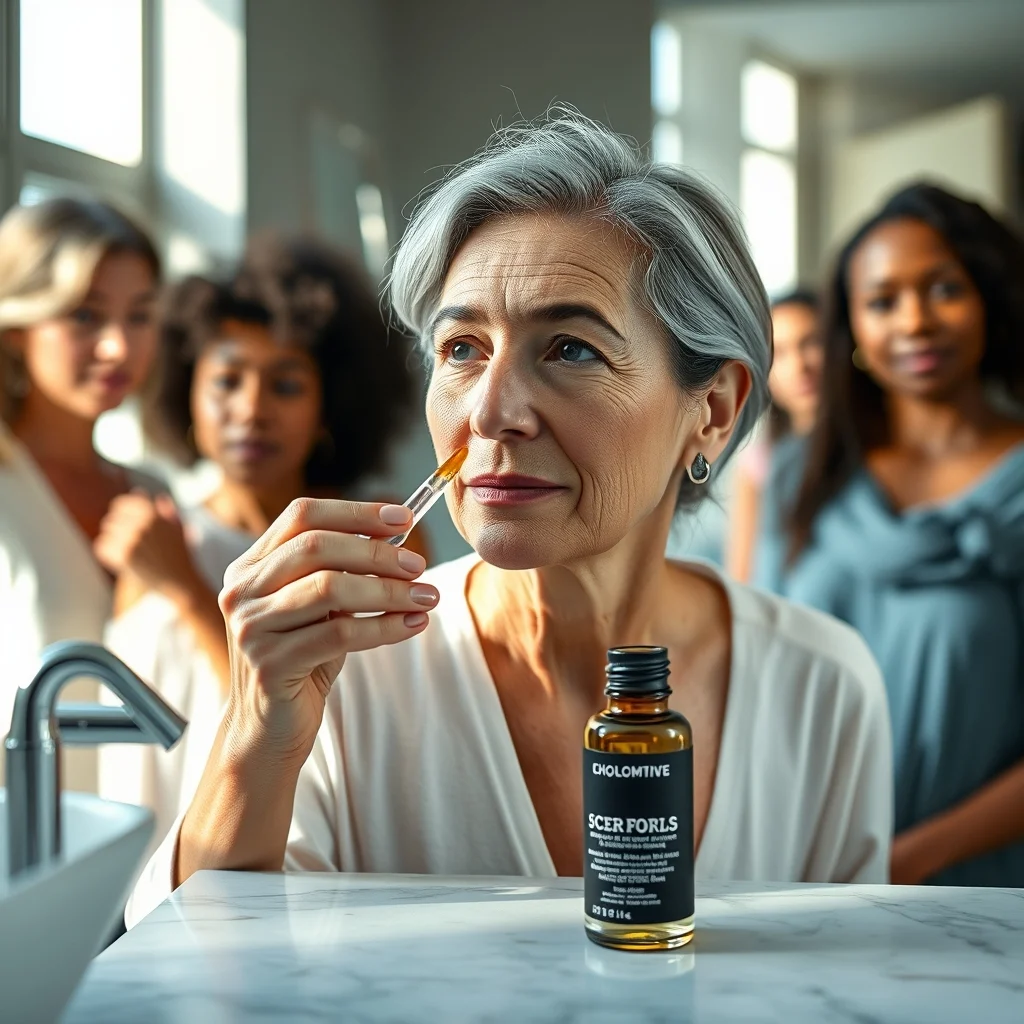
Perimenopause marks a pivotal transition in a woman’s life, typically beginning in the late 30s to early 50s, where hormonal fluctuations reshape not only internal physiology but also external manifestations like skin health. Perimenopause skin support has emerged as a critical focus within the broader skincare over forty landscape, driven by a confluence of scientific advancements, demographic shifts, and evolving consumer expectations. This phase, often spanning 4 to 10 years before menopause, introduces a cascade of changes—declining estrogen levels, reduced collagen production, and impaired barrier function—that demand targeted interventions. Dermatologists, endocrinologists, and skincare formulators are now collaborating to address these challenges, yet persistent gaps in awareness and product efficacy remain.
Women in this demographic represent a growing segment of the global beauty market, projected to reach $27 billion by 2027, according to a 2023 report by Grand View Research. Despite this economic clout, only 34% of women report feeling adequately informed about perimenopause-related skin changes, per a 2022 survey by the North American Menopause Society. The disconnect between demand and education underscores the need for a multidimensional approach—one that integrates clinical research, ingredient innovation, and stakeholder advocacy to redefine mature skin radiance.
The Hormonal Cascade: How Perimenopause Alters Skin Physiology
Estrogen’s decline during perimenopause triggers a domino effect on skin structure. By age 50, collagen levels drop by 30%, while hyaluronic acid synthesis decreases by 25%, according to a 2021 study published in the Journal of Clinical and Aesthetic Dermatology. These shifts manifest as increased dryness, loss of elasticity, and heightened sensitivity—symptoms that extend beyond cosmetic concerns to impact quality of life. Dr. Rebecca Booth, a board-certified gynecologist and co-founder of VENeffect Skincare, notes, “Estrogen receptors in the skin regulate everything from hydration to wound healing. When levels fluctuate, the skin’s ability to repair itself diminishes, making proactive care non-negotiable.”
The timeline of perimenopausal skin changes is neither linear nor uniform. Key milestones include:
- Late 30s to Early 40s: Subtle increases in transepidermal water loss (TEWL) and the onset of fine lines, particularly around the eyes and mouth.
- Mid-40s: Accelerated collagen degradation, leading to visible sagging along the jawline and neck. A 2020 study in Dermatologic Surgery found that 68% of women in this age group reported a “loss of facial volume.”
- Late 40s to Early 50s: Barrier dysfunction peaks, with 45% of women experiencing heightened reactivity to previously tolerated ingredients, per a 2023 British Journal of Dermatology report.
Evidence-Based Rituals: Bridging Science and Skincare
The intersection of dermatology and endocrinology has yielded targeted pro aging beauty rituals designed to mitigate perimenopausal skin changes. Central to these rituals are three pillars: hydration, collagen stimulation, and barrier repair. A 2022 meta-analysis in JAMA Dermatology identified the following ingredients as most effective for hydration for mature skin and structural support:
| Ingredient | Mechanism of Action | Clinical Efficacy |
|---|---|---|
| Hyaluronic Acid | Binds water molecules to plump skin and reduce TEWL | 8-week study: 40% improvement in hydration (source: JAMA Dermatology) |
| Retinol | Stimulates collagen synthesis and accelerates cell turnover | 12-week study: 22% reduction in wrinkle depth (source: NCBI) |
| Ceramides | Replenishes lipid barrier to prevent moisture loss | 6-week study: 30% reduction in sensitivity (source: Journal of Cosmetic Dermatology) |
| Peptides | Signals fibroblasts to produce collagen and elastin | 16-week study: 15% improvement in elasticity (source: International Journal of Cosmetic Science) |
Layering these ingredients into a midlife glow skincare routine requires precision. Dermatologists recommend a phased approach: morning routines prioritize hydration and barrier protection (e.g., hyaluronic acid + ceramides), while evening rituals focus on repair and stimulation (e.g., retinol + peptides). Dr. Whitney Bowe, a New York-based dermatologist and author of The Beauty of Dirty Skin, emphasizes, “The key is consistency. Perimenopausal skin thrives on predictability—abrupt changes in products or routines can trigger inflammation.”
Stakeholder Perspectives: Conflicting Priorities and Emerging Consensus
The perimenopause skin support ecosystem is shaped by diverse stakeholders, each with distinct priorities. These perspectives often clash but occasionally converge on shared goals:
- Dermatologists: Advocate for medical-grade interventions, such as prescription retinoids and in-office treatments like laser therapy. Dr. Bowe notes, “While over-the-counter products play a role, they often lack the potency needed to address advanced collagen loss.”
- Skincare Brands: Focus on accessible, consumer-friendly formulations. Brands like CeraVe and La Roche-Posay have launched perimenopause-specific lines, but critics argue these products often repackage existing ingredients under new marketing claims. A 2023 Consumer Reports investigation found that 60% of “perimenopause” products contained the same active ingredients as their standard anti-aging counterparts.
- Endocrinologists: Push for systemic solutions, including hormone replacement therapy (HRT). Dr. Louise Newson, a UK-based menopause specialist, states, “Topical skincare is a band-aid. HRT addresses the root cause by restoring estrogen levels, which in turn improves skin thickness, hydration, and elasticity.” However, HRT remains controversial due to potential risks, including increased breast cancer risk, per a 2020 Lancet study.
- Consumers: Demand transparency and efficacy. A 2023 survey by Allure magazine revealed that 72% of women over 40 prioritize ingredient transparency over brand reputation. Yet, 58% admit to being overwhelmed by conflicting advice, leading to trial-and-error purchasing.
Systemic Impacts: Beyond the Surface
The ripple effects of perimenopausal skin changes extend into psychological and socioeconomic domains. A 2022 study in Climacteric found that 63% of women reported a decline in self-esteem due to skin-related aging, while 41% linked these changes to reduced professional confidence. The economic burden is equally significant: women spend an average of $2,000 annually on skincare products during perimenopause, yet 47% report dissatisfaction with results, per a 2023 Harvard Business Review analysis.
Public health initiatives are beginning to address these gaps. In 2023, the UK launched the NHS Menopause Pathway, which includes dermatological assessments as part of routine perimenopause care. Similar programs are under consideration in Canada and Australia, signaling a shift toward integrated healthcare models. Dr. Newson observes, “Skin health is often dismissed as vanity, but it’s a critical component of overall well-being. Ignoring it perpetuates a cycle of frustration and wasted resources.”
Pending Variables: The Road Ahead
The future of perimenopause skin support hinges on three unresolved variables. First, regulatory frameworks for perimenopause-specific skincare remain nebulous. The FDA and EU have yet to establish standardized testing protocols for products marketed to this demographic, leaving consumers vulnerable to misleading claims. Second, the role of HRT in skin health is poised for reevaluation. A 2024 clinical trial by the National Institutes of Health aims to quantify HRT’s dermatological benefits, with results expected in 2026. Third, ingredient innovation is accelerating, with biotech firms like Amyris and Geltor developing lab-grown collagen and hyaluronic acid alternatives. These advancements could redefine collagen boost over forty but face scalability challenges.
For now, women navigating perimenopause must rely on a combination of evidence-based skincare, lifestyle adjustments, and professional guidance. Prioritizing hydration, barrier repair, and collagen stimulation—while remaining vigilant about ingredient efficacy—can mitigate some of the most visible effects of hormonal shifts. As Dr. Booth concludes, “Perimenopause isn’t a decline; it’s a recalibration. The skin’s needs change, but its capacity for resilience doesn’t.” The tools to support that resilience are evolving, but the journey remains deeply personal.
You may also like
-
Resveratrol in Age Defense: A Multidimensional Analysis of Antioxidant Science, Mechanisms, and Industry Evolution
-
The Comprehensive Science of Mature Skin Resilience: A Multidimensional Examination of Skincare Over Forty, Biological Adaptations, and Evidence-Based Innovations
-
The Strategic Framework of Mature Skin Resilience: A 360-Degree Examination of Skincare Over Forty, Biological Adaptations, and Evidence-Based Innovations
-
The Comprehensive Analysis of Individualistic Age Well Beauty: Autonomy, Confidence, and the Modern Reinterpretation of Aging
-
Sustainable Fashion: The Not-So-Trendy Truth Behind Eco-Friendly Couture