
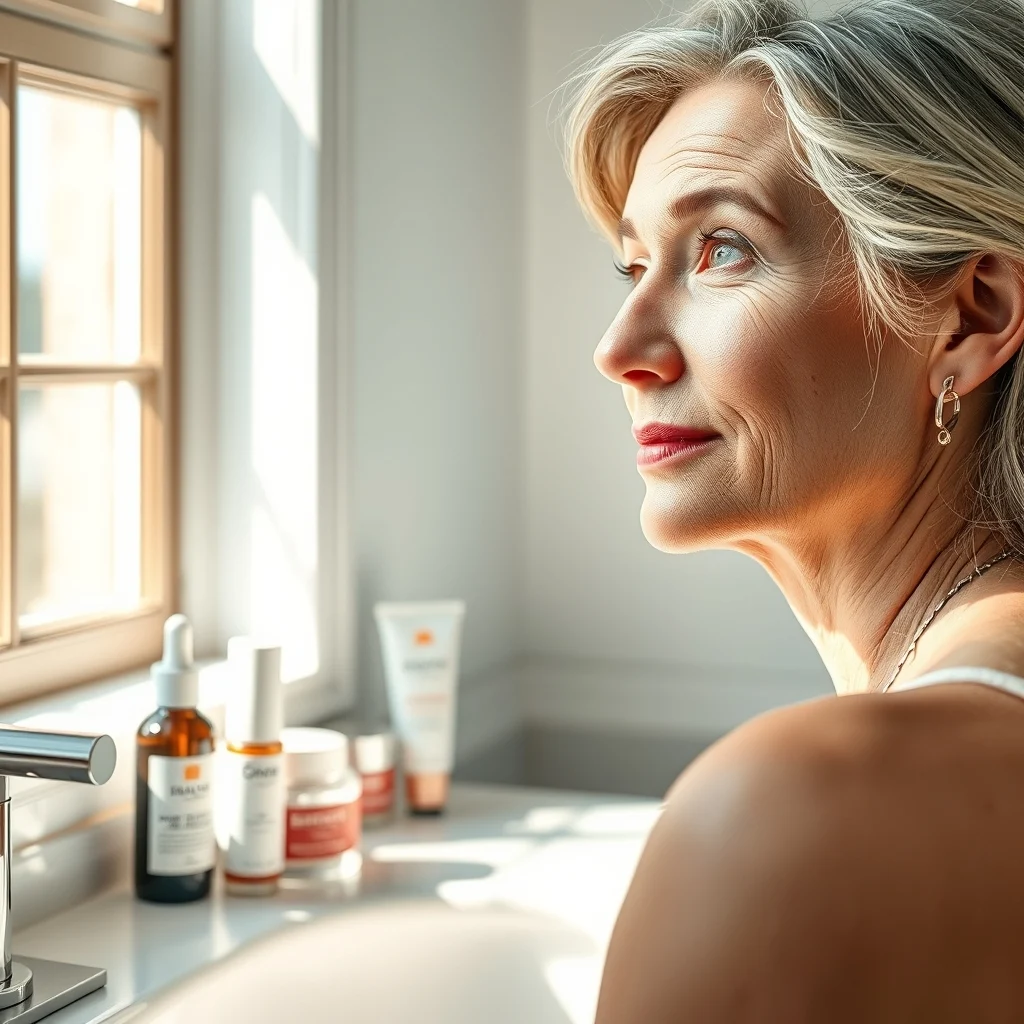
Skin undergoes profound transformations after forty, driven by hormonal fluctuations, collagen depletion, and environmental stressors. These changes demand a recalibrated approach to skincare over forty, one that integrates scientific advancements with personalized rituals. The global market for mature skin solutions, valued at $19.8 billion in 2023, reflects this shift, with projections indicating a 6.2% CAGR through 2030, according to Grand View Research. Yet, the conversation extends beyond commercial growth. Dermatologists, endocrinologists, and consumers report a surge in demand for evidence-based interventions that address elasticity loss, hyperpigmentation, and barrier dysfunction—conditions that disproportionately affect women navigating perimenopause and menopause.
This evolution is not merely cosmetic. A 2022 study published in the Journal of Clinical and Aesthetic Dermatology found that 78% of women aged 40-60 experience measurable declines in skin hydration and firmness, correlating with elevated cortisol levels and reduced estrogen. The stakes are higher for those with chronic conditions like diabetes or autoimmune disorders, where compromised circulation exacerbates aging. Meanwhile, the beauty industry’s pivot toward “pro-aging”—a term coined by dermatologist Dr. Loretta Ciraldo in 2019—signals a rejection of anti-aging rhetoric in favor of strategies that celebrate resilience and vitality.
The Biological and Societal Forces Shaping Mature Skin Care
The modern framework for skincare over forty emerged from three converging trends: scientific breakthroughs in cellular repair, demographic shifts, and cultural redefinitions of beauty. Historically, skincare for mature skin relied on anecdotal remedies, from Cleopatra’s milk baths to 20th-century cold creams. The 1980s introduced retinoids, the first FDA-approved topical treatment for photodamage, while the 2000s saw the rise of peptide-based serums targeting collagen synthesis. Today, the focus has expanded to include:
- Hormonal modulation: Topical and oral phytoestrogens to counteract estrogen decline (e.g., soy isoflavones, black cohosh).
- Barrier reinforcement: Ceramide-rich formulations to restore lipid layers disrupted by menopause.
- Neurocosmetics: Ingredients like acetyl hexapeptide-8 to relax expression lines without injectables.
- Epigenetic skincare: Compounds like resveratrol to activate longevity genes (e.g., SIRT1).
Societal attitudes have evolved in tandem. A 2023 survey by the American Society for Dermatologic Surgery revealed that 63% of women over 40 prioritize skincare that aligns with their values, favoring brands with transparent ingredient sourcing and sustainability commitments. This shift mirrors broader cultural movements, such as the “gray hair revolution,” which challenges ageist beauty standards.
Mechanisms of Change: How Skin Transforms After Forty
The physiological changes in mature skin are both visible and microscopic. Key processes include:
- Collagen degradation: Production declines by 1% annually after 30, accelerating to 2% post-menopause. Fibroblasts, the cells responsible for collagen synthesis, become less responsive to growth factors.
- Elastin fragmentation: UV exposure and glycation (sugar-protein cross-linking) stiffen elastin fibers, reducing skin’s snap-back ability.
- Hyaluronic acid depletion: Dermal hyaluronic acid levels drop by 50% between ages 40 and 60, impairing moisture retention.
- Barrier dysfunction: Ceramide levels decrease by 30-40%, increasing transepidermal water loss (TEWL) and sensitivity.
Dr. Whitney Bowe, a board-certified dermatologist and author of The Beauty of Dirty Skin, explains: “The skin’s microbiome also shifts with age, with a decline in beneficial bacteria like Staphylococcus epidermidis. This disruption can trigger inflammation, exacerbating conditions like rosacea or eczema.” These changes are not uniform. A 2021 study in Dermatologic Therapy found that women of color experience delayed but more pronounced hyperpigmentation due to higher melanin reactivity, while fair-skinned individuals show earlier wrinkling from lower photoprotection.
Quantitative Insights: Data-Driven Trends in Mature Skin Care
Market and clinical data reveal both opportunities and gaps in skincare over forty. The following table compares key metrics:
| Metric | 2018 | 2023 | Projected 2028 |
|---|---|---|---|
| Global skincare market for 40+ (USD billion) | 14.2 | 19.8 | 27.1 |
| Consumer spending on anti-aging products (USD per capita) | 45.60 | 62.30 | 85.10 |
| Clinical trials for mature skin (annual) | 112 | 187 | 250+ |
| Adoption of prescription retinoids (%) | 18 | 29 | 42 |
Despite growth, disparities persist. A 2023 report by the International Dermal Institute found that 68% of women over 40 feel overwhelmed by product choices, with 42% abandoning routines due to irritation or inefficacy. “The gap isn’t in availability—it’s in education,” says Dr. Jeanette Jacknin, a holistic dermatologist. “Many women don’t realize that ingredients like niacinamide or bakuchiol can deliver retinoid-like results without the side effects.”
Emerging technologies are addressing these challenges. AI-driven platforms like Proven Skincare use algorithms to customize routines based on genetic and lifestyle data, while brands like Curology offer teledermatology consultations to bridge the access gap. However, a 2022 study in JAMA Dermatology cautioned that 35% of direct-to-consumer skincare brands lack peer-reviewed efficacy data, underscoring the need for regulatory oversight.
Stakeholder Perspectives: Conflicting Priorities and Shared Goals
The skincare over forty ecosystem encompasses diverse stakeholders, each with distinct priorities:
- Dermatologists: Advocate for evidence-based ingredients (e.g., retinoids, vitamin C, SPF) but warn against overuse. “Layering too many actives can compromise the skin barrier,” notes Dr. Shereene Idriss, founder of Idriss Dermatology. “Simplicity is often the most effective strategy.”
- Beauty brands: Focus on innovation and inclusivity. L’Oréal’s 2023 “Age Perfect” campaign, featuring women over 50, reflects this shift. “We’re moving away from ‘fixing’ aging to enhancing what’s already there,” says Delphine Viguier-Hovasse, L’Oréal’s Global Brand President.
- Consumers: Demand transparency and affordability. A 2023 survey by NPD Group found that 58% of women over 40 prefer multi-functional products (e.g., moisturizers with SPF) to streamline routines.
- Regulators: Struggle to keep pace with innovation. The FDA’s 2022 guidance on cosmeceuticals highlighted the need for clearer labeling, but enforcement remains inconsistent.
- Researchers: Explore frontier solutions. A 2023 Nature Aging study identified senolytic drugs—compounds that clear “zombie cells”—as a potential game-changer for skin longevity. However, clinical applications are years away.
These perspectives often clash. For example, while dermatologists emphasize SPF as the gold standard for preventing photoaging, a 2023 Consumer Reports investigation found that 40% of sunscreens marketed to mature skin contain fragrances or alcohols that can exacerbate sensitivity. “It’s a classic case of misaligned incentives,” says Dr. Fayne Frey, a dermatologist and author of The Skincare Hoax. “Brands prioritize marketing claims over clinical efficacy.”
Systemic Impacts: Beyond the Surface
The implications of skincare over forty extend into economic, psychological, and public health domains. A 2022 study in Psychology and Aging linked skin satisfaction to higher self-esteem and lower rates of depression in postmenopausal women. Conversely, dissatisfaction correlated with increased healthcare utilization, as women sought invasive procedures to address perceived flaws. The global medical aesthetics market, valued at $15.9 billion in 2023, reflects this demand, with non-surgical treatments like laser resurfacing and radiofrequency accounting for 60% of procedures.
Economically, the rise of “skinfluencers”—social media personalities specializing in mature skin—has democratized access to expert advice but also fueled misinformation. A 2023 Journal of Medical Internet Research study found that 30% of skincare content on TikTok and Instagram contains inaccurate or misleading claims. “The lack of gatekeeping is concerning,” says Dr. Dray, a dermatologist with over 1 million YouTube subscribers. “We need more collaboration between influencers and medical professionals.”
Public health initiatives are beginning to address these gaps. The World Health Organization’s 2023 report on aging highlighted skincare as a critical component of healthy longevity, citing its role in preventing infections and chronic wounds. Meanwhile, the American Academy of Dermatology launched a campaign to educate women about the link between skin health and systemic conditions like diabetes and cardiovascular disease.
The future of skincare over forty hinges on three variables: regulatory clarity, technological accessibility, and cultural acceptance. Upcoming milestones include the FDA’s 2024 review of over-the-counter retinoid regulations and the European Union’s 2025 ban on misleading anti-aging claims. Simultaneously, advancements in 3D bioprinting and stem cell research may redefine rejuvenation, though ethical and safety concerns remain. For now, the most effective strategies combine proven science with individualized care—balancing actives like retinol and vitamin C with barrier-supportive ingredients like ceramides and squalane. The goal is not to erase time but to navigate its passage with resilience, informed choices, and a routine that adapts as the skin does.
You may also like
-
Resveratrol in Age Defense: A Multidimensional Analysis of Antioxidant Science, Mechanisms, and Industry Evolution
-
The Comprehensive Science of Mature Skin Resilience: A Multidimensional Examination of Skincare Over Forty, Biological Adaptations, and Evidence-Based Innovations
-
The Strategic Framework of Mature Skin Resilience: A 360-Degree Examination of Skincare Over Forty, Biological Adaptations, and Evidence-Based Innovations
-
The Comprehensive Analysis of Individualistic Age Well Beauty: Autonomy, Confidence, and the Modern Reinterpretation of Aging
-
Sustainable Fashion: The Not-So-Trendy Truth Behind Eco-Friendly Couture