
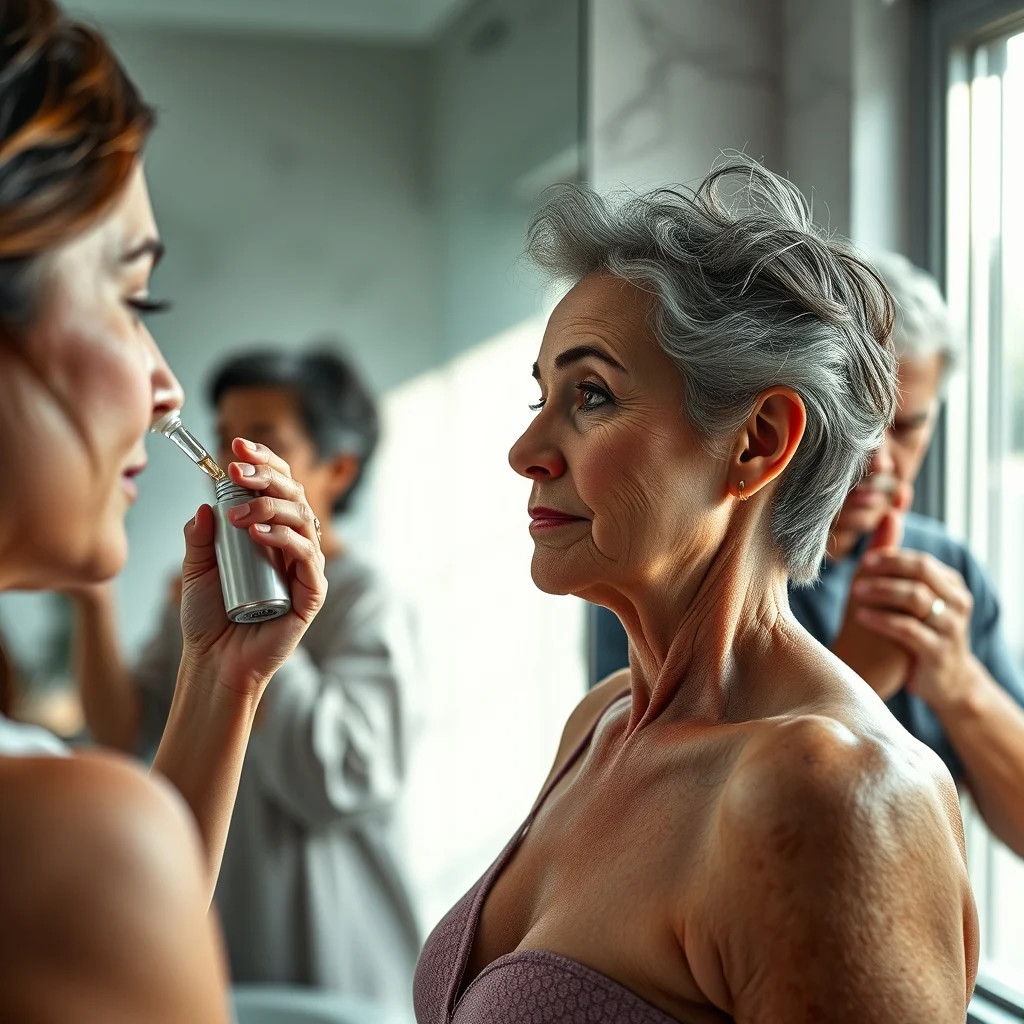
Skin after forty undergoes a transformative shift, demanding a recalibration of beauty rituals to address evolving physiological needs. Pro aging beauty rituals have emerged as a cornerstone of modern skincare, blending scientific innovation with evidence-based practices to sustain radiance, elasticity, and hydration. This shift is not merely cosmetic; it reflects a deeper understanding of how hormonal fluctuations, collagen depletion, and environmental stressors reshape skin biology. Women and men navigating this life stage are increasingly turning to targeted solutions, from collagen-boosting serums to barrier-repairing moisturizers, to counteract the visible signs of aging while preserving skin health.
The global market for mature skin care has expanded rapidly, driven by demographic trends and heightened consumer awareness. By 2025, the anti-aging skincare sector is projected to reach $83.2 billion, with a compound annual growth rate of 6.7%, according to Grand View Research. This growth is fueled by a confluence of factors: longer lifespans, delayed parenthood, and a cultural pivot toward proactive aging. Yet, the landscape remains fragmented, with stakeholders ranging from dermatologists and biochemists to indie beauty brands and multinational corporations advocating divergent approaches. The challenge lies in distinguishing between marketing hype and clinically validated interventions.
The Biological Foundations of Mature Skin
Skin after forty experiences a cascade of biological changes that alter its structure and function. Collagen production declines by approximately 1% per year after the age of 20, accelerating after menopause due to estrogen depletion. A study published in the Journal of Investigative Dermatology found that postmenopausal women lose up to 30% of their dermal collagen within the first five years of menopause. This loss manifests as fine lines, sagging, and reduced elasticity, while diminished sebum production leads to dryness and a compromised moisture barrier.
Hormonal shifts also play a pivotal role. Perimenopause, which typically begins in the late 30s or early 40s, triggers fluctuations in estrogen and progesterone levels, exacerbating skin sensitivity and uneven tone. Dr. Zoe Diana Draelos, a consulting professor of dermatology at Duke University, notes, “The hormonal rollercoaster of perimenopause doesn’t just affect mood and metabolism—it directly impacts skin’s ability to retain moisture and repair itself. This is why a one-size-fits-all approach to skincare over forty is ineffective.”
Environmental factors further compound these changes. Cumulative sun exposure accounts for up to 80% of visible aging, according to the Skin Cancer Foundation. Pollution and blue light from digital devices generate free radicals that degrade collagen and elastin fibers, accelerating the formation of wrinkles and hyperpigmentation. These multifaceted challenges necessitate a holistic approach to pro aging beauty rituals, one that addresses both intrinsic and extrinsic aging.
The Evolution of Pro Aging Beauty Rituals
The concept of aging gracefully has undergone a radical transformation over the past century. In the early 1900s, skincare for mature women was largely reactive, focusing on concealing rather than preventing signs of aging. Cold creams and heavy powders dominated the market, with little emphasis on active ingredients. The mid-20th century saw the introduction of retinoids, initially developed to treat acne but later recognized for their anti-aging properties. By the 1980s, the first over-the-counter retinol products emerged, marking a shift toward evidence-based skincare.
The 21st century has ushered in an era of precision skincare, where ingredients are tailored to specific biological pathways. Key milestones include:
- 2000s: The rise of peptides, which stimulate collagen production and improve skin firmness. Brands like The Ordinary and Drunk Elephant democratized access to these ingredients, making them accessible to a broader audience.
- 2010s: The advent of microbiome-friendly skincare, recognizing the role of skin’s bacterial ecosystem in maintaining barrier function. Probiotics and prebiotics became staples in formulations targeting mature skin.
- 2020s: The integration of AI and personalized skincare. Companies like Curology and Proven Skincare use algorithms to analyze individual skin concerns and recommend customized routines. This data-driven approach has redefined pro aging beauty rituals, shifting the focus from generic solutions to bespoke regimens.
Dr. Barbara Sturm, a molecular immunologist and founder of her eponymous skincare line, emphasizes the importance of this evolution: “We’ve moved beyond the era of ‘anti-aging’—a term that implies aging is something to fight. Today, the conversation is about supporting skin’s natural resilience and adapting to its changing needs. This requires a deep understanding of cellular biology, not just surface-level fixes.”
Evidence-Based Solutions for Mature Skin
Pro aging beauty rituals are increasingly grounded in scientific research, with a growing body of evidence supporting the efficacy of specific ingredients and practices. Below is a breakdown of the most well-studied interventions for mature skin, along with their mechanisms of action and supporting data.
| Ingredient/Practice | Mechanism of Action | Clinical Evidence |
|---|---|---|
| Retinol | Stimulates collagen production, accelerates cell turnover, and reduces hyperpigmentation. | A 2016 study in the Journal of Cosmetic Dermatology found that 0.3% retinol improved fine lines and skin texture in 80% of participants after 12 weeks. |
| Hyaluronic Acid | Binds water molecules to the skin, improving hydration and plumping fine lines. | Research in the Journal of Clinical and Aesthetic Dermatology demonstrated that topical hyaluronic acid increased skin hydration by 96% after eight weeks. |
| Vitamin C | Neutralizes free radicals, brightens skin, and boosts collagen synthesis. | A 2020 meta-analysis in Dermatologic Surgery confirmed that vitamin C serums reduced wrinkles and improved skin firmness in 75% of studies reviewed. |
| Peptides | Signal fibroblasts to produce collagen and elastin, improving skin elasticity. | A 2019 study in International Journal of Cosmetic Science showed that a peptide complex reduced wrinkle depth by 30% after 56 days. |
| Ceramides | Restore the skin barrier, preventing moisture loss and reducing sensitivity. | Clinical trials published in Journal of Drugs in Dermatology found that ceramide-based moisturizers improved barrier function in 90% of participants with mature skin. |
Beyond topical treatments, lifestyle modifications play a critical role in pro aging beauty rituals. A study in the British Journal of Dermatology found that participants who followed a Mediterranean diet—rich in antioxidants, omega-3 fatty acids, and polyphenols—exhibited 35% fewer wrinkles than those with a standard Western diet. Hydration, sleep, and stress management also directly impact skin health, with chronic stress accelerating collagen breakdown through elevated cortisol levels.
Stakeholder Perspectives: Conflicting Priorities and Shared Goals
The pro aging beauty industry is shaped by a diverse array of stakeholders, each with distinct priorities and perspectives. Dermatologists and scientists advocate for evidence-based solutions, while beauty brands often prioritize marketability and consumer appeal. Regulatory bodies, such as the FDA and the European Commission, grapple with balancing innovation and safety, particularly in the realm of emerging technologies like stem cell therapy and gene editing.
Dr. Shereene Idriss, a New York-based dermatologist and founder of Idriss Dermatology, highlights the tension between science and marketing: “The skincare industry is rife with pseudoscience. Terms like ‘clean beauty’ and ‘natural’ are often used as marketing ploys, with little regard for efficacy. For mature skin, this can be particularly damaging, as consumers may forgo proven ingredients like retinol in favor of trendy but unproven alternatives.”
Consumer advocacy groups, such as the Environmental Working Group (EWG), push for greater transparency in ingredient labeling and stricter regulations on potentially harmful substances. Their Skin Deep database provides safety ratings for thousands of skincare products, empowering consumers to make informed choices. However, critics argue that the EWG’s methodology is overly cautious, leading to the demonization of safe and effective ingredients.
Indie beauty brands, which have gained traction in recent years, often position themselves as disruptors of the traditional skincare industry. These brands emphasize sustainability, inclusivity, and ingredient transparency, catering to consumers who prioritize ethical consumption. However, their smaller scale can limit access to cutting-edge research and clinical testing, raising questions about the efficacy of their products.
Multinational corporations, such as L’Oréal and Estée Lauder, dominate the mature skincare market, leveraging their extensive research and development capabilities. These companies invest heavily in clinical trials and patented technologies, such as L’Oréal’s Pro-Xylane and Estée Lauder’s Tri-Peptide Complex. While their products are often backed by robust data, their pricing can be prohibitive for many consumers, exacerbating disparities in access to high-quality skincare.
Quantitative Insights: The Economic and Social Impact of Pro Aging Beauty Rituals
The economic impact of pro aging beauty rituals extends beyond the skincare industry, influencing sectors such as healthcare, technology, and wellness. A 2023 report by McKinsey & Company found that the global wellness market, which includes skincare, is valued at $1.5 trillion, with mature consumers driving a significant portion of this growth. Below are key statistics that illustrate the scale and scope of this phenomenon:
- Market Growth: The global anti-aging market is projected to grow from $62.6 billion in 2023 to $83.2 billion by 2025, with skincare accounting for 45% of this value (Grand View Research).
- Consumer Spending: Women over 40 spend an average of $2,000 annually on skincare products, compared to $1,200 for women under 40 (NPD Group).
- Employment: The beauty and personal care industry employs over 6.5 million people globally, with a significant portion of jobs tied to mature skincare product development and marketing (IBISWorld).
- Social Media Influence: Hashtags like #SkincareOverForty and #AgelessBeauty have garnered over 1.2 billion views on TikTok, reflecting the growing digital engagement of mature consumers (TikTok Internal Data, 2023).
- Healthcare Savings: A study in the Journal of the American Academy of Dermatology found that preventive skincare, including sun protection and hydration, can reduce the incidence of skin cancer by up to 50%, leading to significant healthcare cost savings.
Despite this growth, disparities in access to pro aging beauty rituals persist. A 2022 survey by the AARP found that 60% of women over 50 in the U.S. feel that skincare products are too expensive, with 40% reporting that they prioritize other financial obligations over skincare. This economic barrier is particularly pronounced among marginalized communities, where access to dermatological care and high-quality products is limited.
The Future of Pro Aging Beauty Rituals: Emerging Trends and Unresolved Questions
The next decade of pro aging beauty rituals will be shaped by technological advancements, regulatory changes, and shifting consumer expectations. One of the most promising areas of innovation is the integration of biotechnology into skincare. Companies like Amorepacific and Shiseido are investing in stem cell research and epigenetic modulation to develop products that target the root causes of aging at the cellular level. These technologies, while still in their infancy, could revolutionize the way mature skin is treated, moving beyond symptom management to true biological rejuvenation.
Another emerging trend is the rise of menopause-specific skincare. Brands like Pause Well-Aging and Menopause Skin are developing products tailored to the unique needs of women undergoing hormonal transitions. These products often combine traditional skincare ingredients with adaptogens and phytoestrogens to address symptoms like hot flashes, dryness, and sensitivity. Dr. Louise Newson, a menopause specialist and founder of the Newson Health Menopause Society, underscores the importance of this shift: “Menopause is a life stage, not a medical condition, and skincare should reflect that. We need products that support women through this transition, not just mask its effects.”
Regulatory changes will also play a critical role in shaping the future of pro aging beauty rituals. In 2023, the FDA announced plans to update its guidelines for over-the-counter skincare products, with a focus on improving ingredient transparency and efficacy claims. This move could lead to stricter standards for terms like “clinically proven” and “dermatologist-recommended,” which are often used loosely in marketing. Additionally, the European Union’s ban on animal testing for cosmetics has accelerated the development of alternative testing methods, such as 3D skin models and AI-driven predictive analytics.
Despite these advancements, several unresolved questions remain. The long-term safety of emerging ingredients, such as exosomes and senolytic compounds, is still under investigation. Exosomes, which are extracellular vesicles derived from stem cells, have shown promise in preclinical studies for their ability to regenerate skin tissue. However, their efficacy and safety in humans have yet to be fully established. Similarly, senolytic drugs, which target and eliminate senescent cells—aged cells that contribute to inflammation and tissue dysfunction—are being explored for their potential to reverse aging. While early results are encouraging, these therapies are not yet approved for cosmetic use.
Another area of uncertainty is the role of genetics in pro aging beauty rituals. Companies like 23andMe and AncestryDNA have popularized genetic testing for ancestry and health risks, but the application of genetic data to skincare is still in its early stages. Some brands, such as SkinGenie and Geneu, offer DNA-based skincare recommendations, claiming to tailor products to an individual’s genetic predispositions. However, the scientific validity of these claims is debated, with critics arguing that skin aging is influenced by a complex interplay of genetic, environmental, and lifestyle factors that cannot be reduced to a single genetic profile.
As the pro aging beauty industry continues to evolve, one thing is clear: the demand for evidence-based, personalized solutions will only grow. Consumers are increasingly savvy, seeking out products that deliver measurable results rather than empty promises. For those navigating skincare over forty, the key lies in adopting a proactive, informed approach—one that combines the best of scientific innovation with a deep understanding of their skin’s unique needs. Whether through collagen-boosting serums, barrier-repairing moisturizers, or lifestyle modifications, the goal remains the same: to age not just gracefully, but vibrantly.
You may also like
-
Resveratrol in Age Defense: A Multidimensional Analysis of Antioxidant Science, Mechanisms, and Industry Evolution
-
The Comprehensive Science of Mature Skin Resilience: A Multidimensional Examination of Skincare Over Forty, Biological Adaptations, and Evidence-Based Innovations
-
The Strategic Framework of Mature Skin Resilience: A 360-Degree Examination of Skincare Over Forty, Biological Adaptations, and Evidence-Based Innovations
-
The Comprehensive Analysis of Individualistic Age Well Beauty: Autonomy, Confidence, and the Modern Reinterpretation of Aging
-
Sustainable Fashion: The Not-So-Trendy Truth Behind Eco-Friendly Couture