
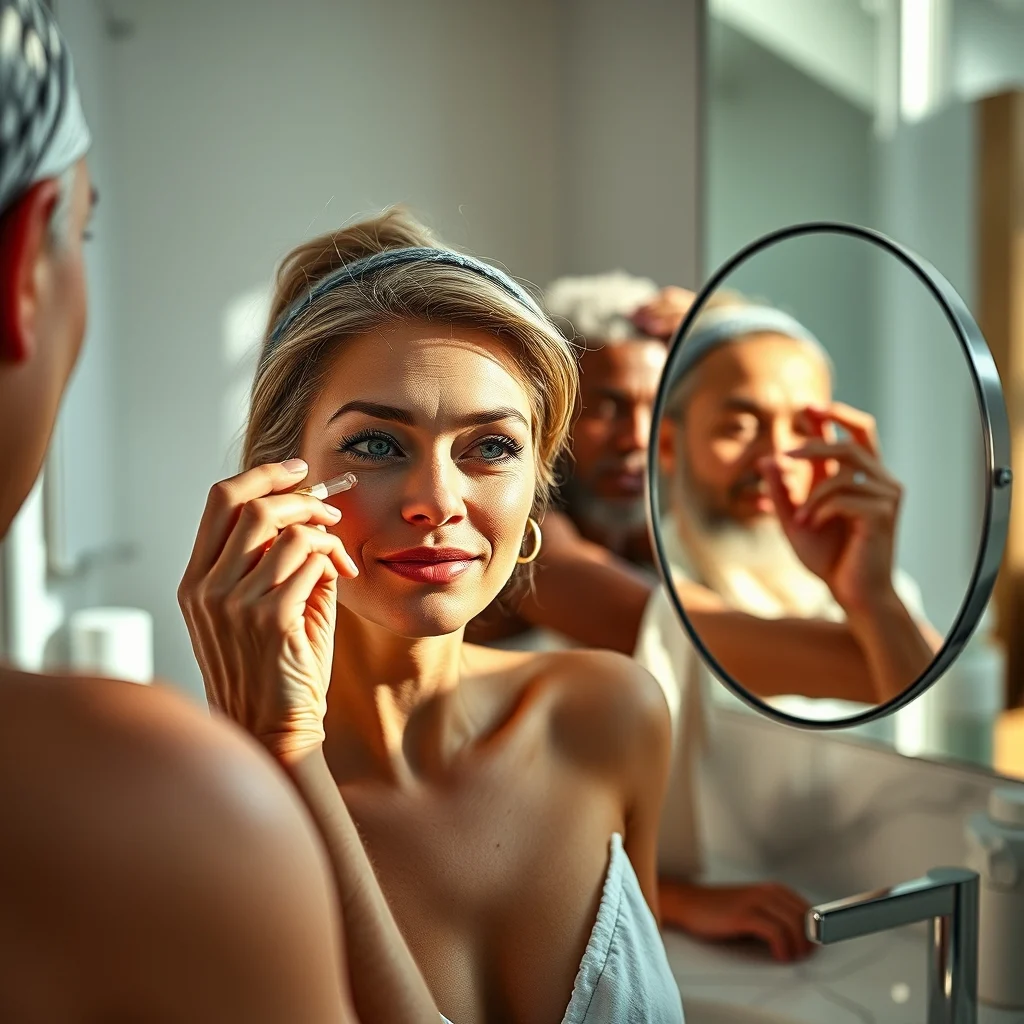
Skin undergoes profound transformations after forty, driven by hormonal shifts, environmental exposure, and intrinsic aging. For millions of women and men navigating this phase, skincare over forty is no longer a cosmetic concern but a biological imperative. Recent data from the American Academy of Dermatology reveals that collagen production declines by 1% annually after age thirty, accelerating fine lines, reduced elasticity, and heightened sensitivity. These changes demand a recalibrated approach—one that merges scientific innovation with personalized rituals to sustain mature skin radiance.
This shift is not merely aesthetic. A 2023 study published in the Journal of Clinical and Aesthetic Dermatology found that 72% of individuals over forty report skin dryness as their primary concern, while 64% cite uneven texture. The stakes extend beyond appearance: compromised skin barriers increase susceptibility to irritation, infection, and chronic conditions like rosacea. The pro aging beauty ritual has thus evolved from a luxury to a necessity, integrating dermatological advancements with lifestyle adaptations to address these multifaceted challenges.
The Biological and Societal Drivers of Skincare Over Forty
The need for targeted skincare over forty stems from a confluence of biological and societal factors. Hormonal fluctuations during perimenopause and menopause deplete estrogen, a key regulator of collagen synthesis and skin hydration. By age fifty, estrogen levels may drop by 50%, correlating with a 30% reduction in skin thickness, according to research from the North American Menopause Society. Concurrently, cumulative UV exposure—responsible for up to 80% of visible aging—manifests as hyperpigmentation, deep wrinkles, and loss of firmness.
Societal expectations amplify these pressures. A 2022 survey by the International Dermal Institute found that 68% of women over forty feel pressured to maintain a youthful appearance, with 45% reporting increased anxiety about skin aging. This cultural emphasis has spurred a $14.3 billion global market for mature skin care, projected to grow at a 6.2% CAGR through 2030, per Grand View Research. Yet, the proliferation of products has also led to confusion, with 53% of consumers unsure which ingredients are evidence-backed for their needs.
Historical Evolution of Mature Skin Care: From Tradition to Technology
The approach to skincare over forty has undergone dramatic shifts over the past century. Early 20th-century rituals relied on simple moisturizers and cold creams, with little scientific validation. The 1960s introduced retinoids, initially developed for acne, which later became the gold standard for wrinkle reduction. By the 1990s, antioxidants like vitamin C and peptides entered the market, targeting free radical damage and collagen degradation.
Key milestones in mature skin care include:
- 1971: FDA approval of tretinoin (Retin-A) for acne, later recognized for its anti-aging properties.
- 1995: Introduction of hyaluronic acid fillers, revolutionizing in-office treatments for volume loss.
- 2006: Launch of the first topical growth factors (e.g., SkinMedica’s TNS Recovery Complex), designed to stimulate cellular repair.
- 2015: Rise of microbiome-focused skincare, addressing barrier dysfunction in mature skin.
- 2020: Emergence of senolytic compounds, which target aging cells to improve skin resilience.
Today, the focus has expanded beyond topicals to include systemic interventions. Oral supplements like collagen peptides and polypodium leucotomos extract are gaining traction for their ability to enhance skin density and photoprotection from within. “The future of mature skin radiance lies in the synergy between internal and external therapies,” notes Dr. Whitney Bowe, a board-certified dermatologist and author of The Beauty of Dirty Skin. “We’re moving toward a model where skincare is not just about what you put on your face, but how you nourish your body and manage stress.”
The Mechanics of Effective Skincare Over Forty: Ingredients and Rituals
An evidence-based pro aging beauty ritual for mature skin prioritizes ingredients with proven efficacy in addressing collagen loss, hydration, and barrier repair. The following table outlines key actives, their mechanisms, and clinical outcomes:
| Ingredient | Mechanism of Action | Clinical Outcome (Source) |
|---|---|---|
| Retinol | Stimulates collagen production, accelerates cell turnover | 30% reduction in wrinkles after 12 weeks (Journal of Cosmetic Dermatology, 2016) |
| Hyaluronic Acid | Binds water to skin cells, plumps fine lines | 96% improvement in hydration after 8 weeks (Dermatologic Surgery, 2011) |
| Vitamin C | Neutralizes free radicals, brightens hyperpigmentation | 52% reduction in dark spots after 16 weeks (Journal of Clinical and Aesthetic Dermatology, 2017) |
| Peptides | Signal fibroblasts to produce collagen | 27% improvement in skin firmness after 2 months (International Journal of Cosmetic Science, 2019) |
| Ceramides | Repair lipid barrier, reduce transepidermal water loss | 45% reduction in dryness after 4 weeks (Journal of Drugs in Dermatology, 2018) |
Layering these ingredients requires strategic timing. Dermatologists recommend a “sandwich method” for hydration for mature skin: applying a humectant (e.g., hyaluronic acid) to damp skin, followed by an emollient (e.g., ceramides) to lock in moisture, and topped with an occlusive (e.g., squalane) to prevent evaporation. Nighttime rituals often incorporate retinol or peptides, while daytime routines prioritize antioxidants and SPF 30+ to combat photoaging.
“The biggest mistake I see is overcomplicating routines,” says Dr. Shereene Idriss, a New York-based dermatologist. “Mature skin thrives on consistency, not complexity. A simplified regimen with 3-4 powerhouse ingredients is far more effective than a 10-step routine that leads to irritation.”
Quantitative Data: The Economic and Psychological Impact of Mature Skin Care
The skincare over forty market is not only vast but deeply intertwined with economic and psychological well-being. A 2023 report by McKinsey & Company highlights the following trends:
- Market Growth: The global anti-aging skincare market is valued at $62.6 billion, with North America accounting for 40% of revenue.
- Consumer Spending: Women over forty spend an average of $2,100 annually on skincare, compared to $1,200 for those under thirty.
- Product Efficacy: 67% of consumers prioritize clinical validation when selecting products, yet only 28% trust brand claims without third-party research.
- Psychological Benefits: A study in Dermatologic Therapy found that individuals using evidence-based mature skin care reported a 34% increase in self-esteem and a 22% reduction in anxiety about aging.
These figures underscore the dual role of skincare as both a personal investment and a societal phenomenon. “The demand for pro aging beauty rituals reflects a broader cultural shift toward proactive health,” explains Dr. Jeanette Graf, a dermatologist and assistant clinical professor at Mount Sinai School of Medicine. “People are no longer waiting for signs of aging to appear—they’re taking preventive action in their thirties and forties.”
Stakeholder Perspectives: Conflicting Priorities and Emerging Consensus
The skincare over forty ecosystem involves diverse stakeholders, each with distinct priorities. Dermatologists advocate for evidence-based solutions, while brands emphasize innovation and accessibility. Consumers, meanwhile, seek efficacy, affordability, and transparency.
Dermatologists: “The focus should be on ingredients with robust clinical data,” says Dr. Bowe. “Retinol, sunscreen, and barrier-repairing ceramides are non-negotiables. Everything else is secondary.”
Brands: “We’re seeing a surge in demand for multifunctional products,” notes Sarah Brown, CEO of Pai Skincare. “Consumers want solutions that address hydration, firming, and brightening in a single step.”
Consumers: “I need products that work with my skin, not against it,” says Maria Lopez, a 48-year-old marketing executive. “I’ve tried everything from drugstore serums to luxury creams, but what finally made a difference was simplifying my routine and focusing on hydration and SPF.”
Regulators: The FDA has yet to establish standardized guidelines for anti-aging claims, leading to discrepancies in product labeling. “There’s a need for clearer regulations to protect consumers from misleading marketing,” argues Dr. Rajani Katta, a dermatologist and author of Glow: The Dermatologist’s Guide to a Whole Foods Younger Skin Diet.
Systemic Challenges and Future Directions
Despite advancements, skincare over forty faces systemic challenges. One of the most pressing is the lack of diversity in clinical trials. A 2021 analysis in JAMA Dermatology found that 85% of skincare studies focus on fair-skinned individuals, leaving gaps in understanding how ingredients perform on deeper skin tones. This disparity can lead to adverse effects, such as post-inflammatory hyperpigmentation, which is more prevalent in melanin-rich skin.
Another hurdle is the environmental impact of skincare. The beauty industry generates 120 billion units of packaging annually, much of which is non-recyclable. Brands like Ren Clean Skincare and Biossance are pioneering refillable and biodegradable solutions, but adoption remains limited. “Sustainability is no longer optional,” says Brown. “Consumers are demanding transparency about sourcing, packaging, and carbon footprints.”
Looking ahead, emerging technologies are poised to redefine mature skin radiance. Personalized skincare, driven by AI and genetic testing, is gaining traction. Companies like Curology and Proven Skincare use algorithms to tailor routines based on individual skin profiles. Meanwhile, senotherapeutics—compounds that target senescent cells—are being explored for their potential to reverse aging at the cellular level. “The next frontier is precision skincare,” predicts Dr. Graf. “We’re moving toward treatments that are as unique as the individual using them.”
For those navigating skincare over forty, the path forward lies in balancing innovation with pragmatism. Prioritizing evidence-backed ingredients, simplifying routines, and addressing both internal and external factors can yield transformative results. As the market evolves, the most effective strategies will be those that adapt to the skin’s changing needs while remaining grounded in science. The journey to age well beauty forty plus is not about defying time, but about embracing it with informed, intentional care.
You may also like
-
Resveratrol in Age Defense: A Multidimensional Analysis of Antioxidant Science, Mechanisms, and Industry Evolution
-
The Comprehensive Science of Mature Skin Resilience: A Multidimensional Examination of Skincare Over Forty, Biological Adaptations, and Evidence-Based Innovations
-
The Strategic Framework of Mature Skin Resilience: A 360-Degree Examination of Skincare Over Forty, Biological Adaptations, and Evidence-Based Innovations
-
The Comprehensive Analysis of Individualistic Age Well Beauty: Autonomy, Confidence, and the Modern Reinterpretation of Aging
-
Sustainable Fashion: The Not-So-Trendy Truth Behind Eco-Friendly Couture