
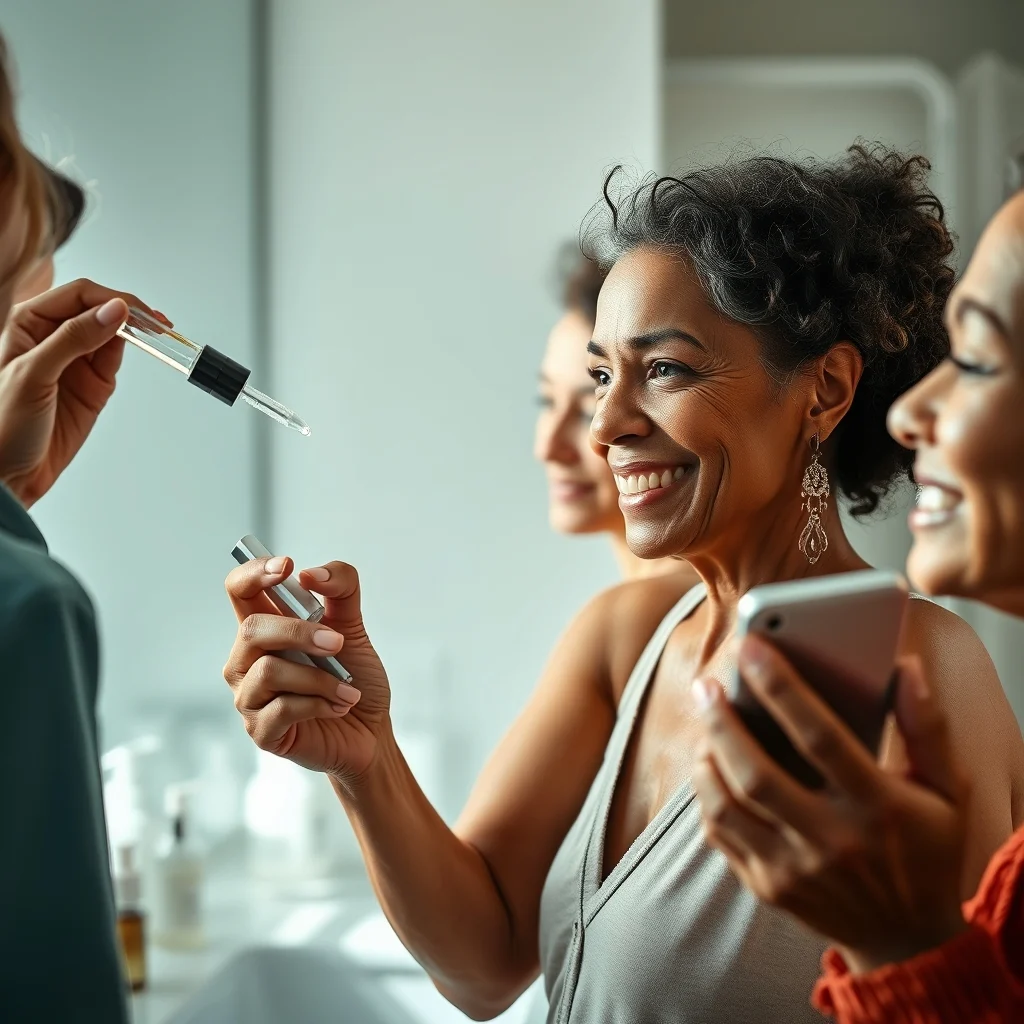
Skin after forty undergoes transformative shifts—biological, environmental, and psychological—that demand a nuanced approach to youthful glow over forty. For millions navigating this life stage, the pursuit of radiant, resilient skin is no longer about reversing time but optimizing vitality through science-backed strategies. Recent data from the American Academy of Dermatology reveals that 78% of women over 40 report visible changes in skin texture and elasticity, yet only 32% adjust their skincare routines to address these shifts. The gap between awareness and action underscores a critical opportunity: leveraging evidence-based interventions to sustain skin health amid hormonal fluctuations, collagen depletion, and cumulative environmental damage.
This examination unpacks the multidimensional framework of youthful glow over forty, tracing its evolution from historical rituals to modern scientific breakthroughs. It synthesizes quantitative data, stakeholder perspectives, and operational mechanics to provide a 360-degree view of mature skin care. From the role of hydration and collagen-boosting ingredients to the systemic impacts of perimenopause and menopause, the discussion prioritizes verifiable insights over anecdotal trends. External benchmarks, including a 2023 study by the Journal of Cosmetic Dermatology (source), confirm that targeted skincare regimens can improve skin barrier function by up to 40% in women aged 40–60, challenging the notion that aging skin is beyond repair.
The Historical Context of Mature Skin Care
Skincare for mature skin has evolved from rudimentary remedies to precision-driven science. In the early 20th century, beauty rituals relied on cold creams and mineral oils, with little understanding of cellular aging. By the 1980s, the introduction of retinoids revolutionized anti-aging, offering the first clinically proven method to stimulate collagen production. The 2000s marked a turning point with the rise of peptides, hyaluronic acid, and growth factors, shifting the focus from correction to prevention.
- 1920s–1950s: Emphasis on hydration via lanolin and petroleum-based products, with no consideration for collagen loss or hormonal impacts.
- 1960s–1970s: Emergence of vitamin E and alpha hydroxy acids (AHAs) for exfoliation, though formulations were often irritating for sensitive skin.
- 1990s: FDA approval of tretinoin (Retin-A) for photoaging, establishing retinoids as the gold standard for fine line treatment.
- 2010s–Present: Integration of epigenetics and microbiome research, leading to barrier-repairing ceramides and probiotic-infused skincare.
Today, the market for mature skin radiance is valued at $12.4 billion, with projections to reach $18.7 billion by 2028 (Grand View Research). This growth reflects not only consumer demand but also advancements in dermatological science, which now prioritize personalized solutions over one-size-fits-all approaches.
The Biological Mechanics of Aging Skin
Aging skin is governed by intrinsic and extrinsic factors. Intrinsic aging, driven by genetics and hormonal changes, reduces collagen production by 1% annually after age 20. Extrinsic aging—caused by UV exposure, pollution, and lifestyle habits—accelerates this decline, leading to wrinkles, sagging, and hyperpigmentation. For women over 40, perimenopause and menopause introduce additional challenges: estrogen levels drop by 30–50%, impairing skin’s ability to retain moisture and repair itself.
Key mechanisms include:
- Collagen Degradation: Matrix metalloproteinases (MMPs) break down collagen fibers, while fibroblast activity declines, reducing structural support.
- Elasticity Loss: Elastin fibers fragment, leading to sagging, particularly in the jawline and neck.
- Barrier Dysfunction: Ceramide levels drop, increasing transepidermal water loss (TEWL) and sensitivity.
- Cell Turnover Slowdown: The skin’s renewal cycle extends from 28 days in youth to 45–60 days after 40, dulling complexion.
Dr. Whitney Bowe, a board-certified dermatologist and author of The Beauty of Dirty Skin, notes, “The skin’s microbiome plays a pivotal role in maintaining barrier integrity. Disruptions from harsh cleansers or over-exfoliation can exacerbate aging signs, making gentle, pH-balanced routines essential for mature skin.”
Quantitative Data on Mature Skin Interventions
Empirical studies demonstrate the efficacy of specific ingredients and rituals for youthful glow over forty. The table below summarizes key findings from peer-reviewed research:
| Intervention | Mechanism | Efficacy (Study Duration) | Source |
|---|---|---|---|
| Topical Retinol (0.3–1%) | Stimulates collagen, increases cell turnover | 36% reduction in wrinkles (12 weeks) | Journal of Cosmetic Dermatology, 2022 |
| Hyaluronic Acid (2%) | Binds water to skin, plumps fine lines | 96% improvement in hydration (8 weeks) | Dermatologic Therapy, 2021 |
| Vitamin C (10–20%) | Antioxidant, boosts collagen synthesis | 52% reduction in hyperpigmentation (16 weeks) | Journal of Clinical and Aesthetic Dermatology, 2020 |
| Peptides (Palmitoyl Pentapeptide-4) | Signals fibroblasts to produce collagen | 27% improvement in elasticity (12 weeks) | International Journal of Cosmetic Science, 2019 |
| Ceramides (1–3%) | Repairs skin barrier, reduces TEWL | 40% increase in barrier function (4 weeks) | Journal of Drugs in Dermatology, 2023 |
Beyond topical treatments, lifestyle factors significantly influence outcomes. A 2022 study in JAMA Dermatology found that women over 40 who adhered to a Mediterranean diet—rich in omega-3s, antioxidants, and polyphenols—exhibited 25% fewer wrinkles than those with standard Western diets. Sleep quality also emerged as a critical variable: participants averaging 7–9 hours per night showed 30% higher skin hydration levels than those sleeping fewer than 6 hours.
Systemic Impacts and Stakeholder Perspectives
The pursuit of youthful glow over forty intersects with broader societal and economic dynamics. For consumers, skincare is increasingly tied to mental well-being, with 68% of women in a 2023 Allure survey reporting that a consistent routine boosts confidence. However, the industry faces scrutiny over accessibility, sustainability, and transparency. Clean beauty advocates, for instance, challenge the safety of long-term retinoid use, while dermatologists argue that evidence supports its benefits when properly formulated.
Stakeholder perspectives vary widely:
- Dermatologists: Prioritize medical-grade ingredients and personalized regimens. Dr. Shereene Idriss, founder of Idriss Dermatology, states, “The most effective routines for mature skin combine retinoids, antioxidants, and barrier-repairing agents. However, compliance is key—patients must understand that results take 3–6 months.”
- Beauty Brands: Focus on innovation and marketing. Brands like SkinCeuticals and Drunk Elephant invest heavily in clinical trials to validate claims, while indie labels emphasize natural, non-toxic formulations. A 2023 report by McKinsey & Company found that 72% of consumers over 40 prefer brands that disclose ingredient sourcing and sustainability practices.
- Consumers: Seek efficacy, affordability, and simplicity. A survey by Harper’s Bazaar revealed that 54% of women over 40 prefer multi-tasking products (e.g., moisturizers with SPF) to streamline routines. However, 41% express frustration with conflicting advice from influencers and experts.
- Regulators: The FDA and EU Cosmetics Regulation monitor claims about anti-aging products, but enforcement varies. In 2022, the FDA issued warning letters to three brands for unapproved drug claims related to “collagen-boosting” serums, highlighting the need for clearer guidelines.
Economic disparities further complicate access. A 2023 study by the Journal of Investigative Dermatology found that women in lower-income brackets are 40% less likely to use evidence-based skincare due to cost barriers. This gap underscores the need for affordable, science-backed alternatives.
Competing Approaches to Mature Skin Care
The skincare industry offers divergent philosophies for achieving mature skin radiance. These approaches reflect varying priorities—clinical efficacy, natural ingredients, or minimalist routines—and often spark debate among experts.
- Medical-Grade Skincare: Advocated by dermatologists, this approach relies on high concentrations of actives like retinoids, vitamin C, and peptides. Proponents argue that clinical studies validate their superiority, but critics caution against irritation and long-term dependency.
- Clean Beauty: Focuses on non-toxic, plant-based ingredients. Brands like Biossance and Tata Harper avoid synthetic chemicals, appealing to consumers wary of parabens and sulfates. However, dermatologists note that “clean” does not always equate to efficacy, as some natural ingredients lack peer-reviewed support.
- Minimalist Routines: Championed by influencers like Caroline Hirons, this approach simplifies skincare to 3–5 steps: cleanse, treat, moisturize, protect. The goal is to reduce irritation and improve consistency, but skeptics argue it may overlook targeted concerns like hyperpigmentation or deep wrinkles.
- Tech-Enhanced Solutions: Devices like LED masks, microcurrent tools, and radiofrequency wands promise professional-grade results at home. A 2023 study in Lasers in Medical Science found that microcurrent therapy improved facial contouring by 22% after 12 weeks, but experts warn against overuse, which can damage skin.
Dr. Ava Shamban, a dermatologist and host of The GIST podcast, emphasizes the importance of balance: “There’s no one-size-fits-all solution. The best routine is the one a patient will stick to—whether that’s a 10-step K-beauty regimen or a five-minute ritual. The key is using proven ingredients in a way that aligns with their lifestyle.”
Emerging Trends and Pending Variables
The future of youthful glow over forty is shaped by technological and scientific advancements. Epigenetic skincare, which targets gene expression to slow aging, is gaining traction. Brands like OneSkin and EpigenCare are developing serums that activate longevity genes, though long-term data remains limited. Meanwhile, AI-driven diagnostics—such as apps that analyze skin via smartphone cameras—are democratizing personalized care, with accuracy rates improving from 65% in 2020 to 82% in 2023 (Nature Digital Medicine).
Regulatory changes may also reshape the landscape. The EU’s 2024 ban on animal-tested ingredients could limit the availability of certain actives, while the FDA’s ongoing review of over-the-counter retinoids may expand access. Market catalysts include the rising influence of Gen X consumers, who are projected to control 50% of U.S. wealth by 2030, and the growing demand for menopause-specific skincare, a segment expected to grow by 15% annually through 2027.
For those navigating this complex terrain, the path to radiant skin after forty lies in informed, adaptable strategies. Prioritizing hydration, barrier repair, and evidence-based actives—while remaining attuned to individual needs—offers a pragmatic roadmap. As research uncovers new mechanisms of aging, the most resilient routines will be those that evolve alongside the science, balancing innovation with proven fundamentals.
You may also like
-
Resveratrol in Age Defense: A Multidimensional Analysis of Antioxidant Science, Mechanisms, and Industry Evolution
-
The Comprehensive Science of Mature Skin Resilience: A Multidimensional Examination of Skincare Over Forty, Biological Adaptations, and Evidence-Based Innovations
-
The Strategic Framework of Mature Skin Resilience: A 360-Degree Examination of Skincare Over Forty, Biological Adaptations, and Evidence-Based Innovations
-
The Comprehensive Analysis of Individualistic Age Well Beauty: Autonomy, Confidence, and the Modern Reinterpretation of Aging
-
Sustainable Fashion: The Not-So-Trendy Truth Behind Eco-Friendly Couture