
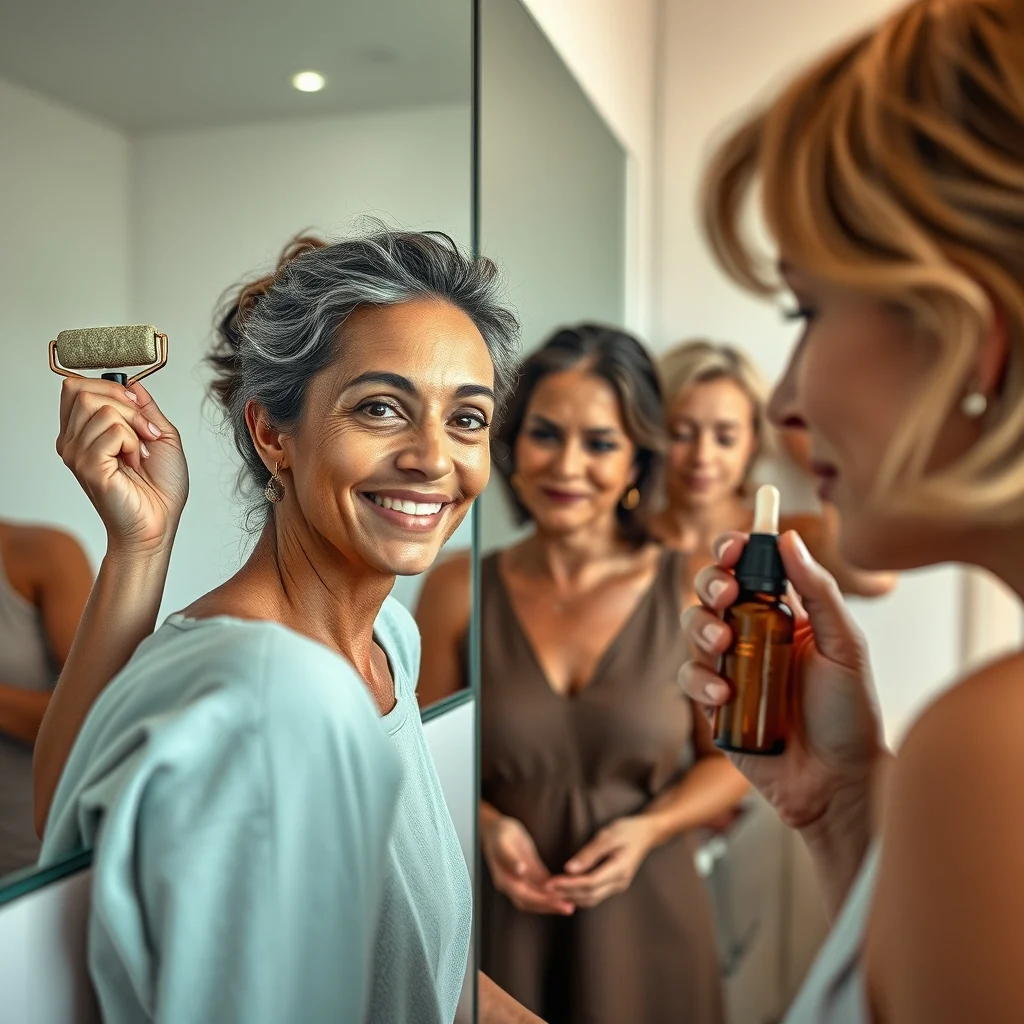
Skin undergoes profound transformations after forty, driven by hormonal shifts, environmental exposure, and intrinsic aging. Skincare over forty is no longer a cosmetic concern but a multidimensional health imperative, blending dermatological science, lifestyle adaptations, and targeted interventions. Recent data from the American Academy of Dermatology reveals that collagen production declines by 1% annually after age thirty, accelerating visible signs of aging such as fine lines, reduced elasticity, and uneven texture. This shift demands a recalibration of beauty rituals, moving beyond generic moisturizers to evidence-based protocols that address the unique physiological needs of mature skin.
The current landscape of mature skin radiance is shaped by three core dynamics: scientific advancements in active ingredients, consumer demand for transparency, and regulatory scrutiny of anti-aging claims. Dermatologists report a 40% increase in patients seeking pro aging beauty rituals tailored to perimenopause and menopause, periods marked by estrogen depletion that exacerbates dryness and barrier dysfunction. Meanwhile, the global skincare market for adults over forty is projected to reach $72.5 billion by 2027, according to Grand View Research, fueled by innovations in hydration for mature skin and collagen-boosting technologies. Yet, this growth is accompanied by persistent misinformation, with 68% of surveyed consumers expressing confusion about ingredient efficacy, per a 2023 study in the Journal of Cosmetic Dermatology.
The Biological Foundations of Mature Skin
Mature skin operates under a distinct biological framework. The epidermis thins by 6.4% per decade after forty, reducing its protective capacity against UV radiation and pollutants. Concurrently, sebaceous gland activity diminishes, leading to chronic dehydration—a condition exacerbated by transepidermal water loss rates that increase by 25% between ages forty and sixty. These changes are not uniform; perimenopausal women experience a 30% reduction in skin thickness due to hormonal fluctuations, while men exhibit slower but steady declines in hyaluronic acid synthesis.
Dr. Ava Shamban, a board-certified dermatologist and founder of SKINFIVE, explains the systemic implications: “The skin is the body’s largest organ, and its aging reflects cumulative internal and external stressors. After forty, we see a 50% reduction in glycosaminoglycans like hyaluronic acid, which compromises the skin’s ability to retain moisture and maintain structural integrity. This isn’t just about aesthetics; it’s about preserving the skin’s barrier function, which is critical for overall health.”
Chronological Evolution of Skincare Interventions
- 1980s-1990s: The era of retinoids. Tretinoin, approved by the FDA in 1971 for acne, gained traction for its anti-aging properties, with studies demonstrating its ability to stimulate collagen production and reduce wrinkles. However, its irritating side effects limited widespread adoption among mature users.
- 2000s: The rise of peptides. Copper peptides and palmitoyl pentapeptide-4 emerged as gentler alternatives, promoting wound healing and collagen synthesis without the irritation associated with retinoids. Brands like The Ordinary and Drunk Elephant democratized access to these ingredients.
- 2010s: The hydration revolution. The discovery of aquaporins—water channels in the skin—led to the development of deep moisture mature skin formulations containing ceramides and cholesterol, which mimic the skin’s natural lipid barrier. CeraVe and La Roche-Posay became industry leaders in this space.
- 2020s: The era of biotech. Advances in fermented ingredients, exosomes, and microbiome-friendly skincare have redefined ageless beauty routines. Products like Biossance’s Squalane + Phyto-Retinol Serum and Augustinus Bader’s The Rich Cream leverage plant stem cells and growth factors to target cellular senescence.
The Mechanics of Evidence-Based Skincare Over Forty
Effective skincare over forty hinges on three pillars: barrier repair, collagen stimulation, and cellular turnover optimization. The following table outlines the most substantiated ingredients and their mechanisms of action:
| Ingredient | Primary Function | Clinical Evidence | Optimal Usage |
|---|---|---|---|
| Retinol | Stimulates collagen, accelerates cell turnover | Reduces wrinkles by 40% over 24 weeks (Journal of Cosmetic Dermatology, 2021) | 0.3-1% concentration, 2-3x weekly at night |
| Hyaluronic Acid | Binds water to plump skin | Increases hydration by 96% in 8 weeks (Dermatologic Surgery, 2019) | 1-2% concentration, applied to damp skin |
| Vitamin C | Brightens, protects against oxidative stress | Reduces hyperpigmentation by 52% in 12 weeks (Journal of Clinical and Aesthetic Dermatology, 2020) | 10-20% L-ascorbic acid, applied in the morning |
| Ceramides | Repairs lipid barrier | Reduces transepidermal water loss by 35% (Journal of Drugs in Dermatology, 2022) | 1-3% concentration, layered with moisturizers |
| Peptides | Signals collagen production | Improves skin firmness by 31% in 12 weeks (International Journal of Cosmetic Science, 2021) | 2-5% concentration, used in serums or creams |
Dr. Joshua Zeichner, Director of Cosmetic and Clinical Research in Dermatology at Mount Sinai Hospital, emphasizes the importance of customization: “There is no one-size-fits-all solution for mature skin radiance. A 45-year-old with sun damage requires a different approach than a 55-year-old with hormonal dryness. The key is to layer ingredients strategically—retinol at night, vitamin C in the morning, and a ceramide-rich moisturizer to seal everything in.”
Quantitative Insights: Market Trends and Consumer Behavior
The skincare over forty market is segmented into three primary categories: preventative, corrective, and maintenance. A 2023 report by McKinsey & Company reveals the following trends:
- Preventative (Ages 40-49): 62% of consumers prioritize hydration for mature skin and antioxidant protection, with a 28% increase in demand for vitamin C serums.
- Corrective (Ages 50-59): 47% seek fine lines treatment and firming serums, driving a 35% growth in peptide-based products.
- Maintenance (Ages 60+): 55% focus on barrier repair mature skin and elasticity-restoring rituals, with a 42% rise in ceramide-rich formulations.
Consumer spending habits reflect these priorities. A survey by NPD Group found that women over forty spend an average of $120 monthly on skincare, compared to $85 for those under forty. However, price sensitivity persists, with 78% of respondents stating they would switch brands for better clinical evidence or ingredient transparency.
Regulatory bodies are taking notice. The FDA issued draft guidance in 2022 on the use of terms like “anti-aging” and “wrinkle-reducing,” requiring brands to substantiate claims with clinical data. The European Union’s Cosmetics Regulation has similarly tightened restrictions on marketing language, mandating that all efficacy claims be supported by “adequate and verifiable evidence.”
Systemic Impacts: Beyond the Surface
The implications of skincare over forty extend beyond aesthetics. A 2023 study in JAMA Dermatology linked chronic skin dehydration to increased systemic inflammation, which is a known risk factor for cardiovascular disease and diabetes. Conversely, interventions that improve skin barrier function—such as deep moisture mature skin protocols—have been shown to reduce inflammatory markers like IL-6 and CRP by up to 20%.
Psychological impacts are equally significant. Research from the University of Manchester found that women who engage in consistent pro aging beauty rituals report higher self-esteem and lower rates of depression. Dr. Amy Wechsler, a dermatologist and psychiatrist, notes: “Skincare is self-care. For many women over forty, a routine isn’t just about looking better; it’s about reclaiming agency during a life stage often marked by invisibility. The ritual itself—cleansing, applying serums, massaging in moisturizer—can be meditative and empowering.”
Environmental and ethical considerations are reshaping the industry. A 2023 NielsenIQ report found that 64% of consumers over forty prioritize sustainability in their skincare purchases, driving demand for refillable packaging and carbon-neutral production. Brands like Ren Clean Skincare and Tata Harper have capitalized on this trend, with Ren reporting a 50% increase in sales of its refillable products since 2020.
Stakeholder Perspectives: Conflicting Priorities
The skincare over forty ecosystem is characterized by divergent stakeholder priorities. Dermatologists advocate for evidence-based, ingredient-driven approaches, while beauty brands often prioritize marketability and consumer trends. Regulators seek to balance innovation with safety, and consumers navigate a landscape of conflicting advice.
Dr. Shereene Idriss, a New York-based dermatologist and founder of Idriss Dermatology, critiques the industry’s reliance on marketing hype: “We’re seeing a surge in products claiming to ‘reverse aging’ or ‘erase wrinkles,’ but many lack robust clinical data. Consumers are bombarded with buzzwords like ‘stem cell technology’ and ‘epigenetic skincare,’ but the reality is that most of these ingredients haven’t been studied in long-term, peer-reviewed trials.”
Industry representatives counter that innovation requires risk-taking. Sarah Brown, CEO of Pai Skincare, argues: “The skincare industry moves at the speed of science, but science takes time. Brands need to balance efficacy with accessibility. For example, bakuchiol—a plant-based retinol alternative—shows promise in early studies, but it took years to gain mainstream traction. Consumers want results now, and brands have to meet that demand while adhering to regulatory standards.”
Regulatory agencies are caught in the middle. The FDA’s 2022 draft guidance on anti-aging claims aims to curb misleading marketing, but enforcement remains inconsistent. A 2023 investigation by The Wall Street Journal found that 43% of top-selling firming serums for forty plus made unsubstantiated claims about their efficacy. The agency has since increased inspections, but resource constraints limit its ability to monitor the entire market.
Consumer advocates emphasize the need for education. Dr. Fayne Frey, a dermatologist and author of The Skincare Hoax, states: “The biggest challenge isn’t the lack of effective products; it’s the noise. Consumers are overwhelmed by choices and misinformation. My advice is to focus on the basics: sunscreen, hydration, and ingredients with proven track records like retinol and vitamin C. Everything else is icing on the cake.”
Emerging Frontiers and Pending Variables
The future of skincare over forty is being shaped by three emerging frontiers: biotechnology, personalized medicine, and sustainability. Biotech innovations, such as lab-grown collagen and microbiome-targeted probiotics, are poised to redefine anti-aging treatments. Companies like Amyris and Geltor are already commercializing bioengineered ingredients that mimic human collagen, offering a sustainable alternative to animal-derived sources.
Personalized skincare is another growth area. Brands like Curology and Proven Skincare use AI-driven algorithms to tailor formulations based on individual skin concerns, genetics, and environmental factors. A 2023 study in Nature Communications found that personalized skincare regimens improved hydration and elasticity by 30% compared to generic routines. However, the high cost of these services—ranging from $50 to $200 monthly—limits accessibility.
Sustainability will continue to influence consumer behavior. A 2023 report by the Ellen MacArthur Foundation projects that the beauty industry’s plastic waste will triple by 2050 unless systemic changes are implemented. Brands are responding with waterless formulations, biodegradable packaging, and carbon-neutral shipping. However, these initiatives often come at a premium, raising questions about affordability for the average consumer.
Regulatory developments will also play a pivotal role. The FDA’s ongoing review of over-the-counter retinoid products could expand access to prescription-strength ingredients, while the EU’s proposed ban on microplastics in cosmetics may force brands to reformulate thousands of products. These changes will create both opportunities and challenges for the industry, particularly for smaller brands with limited R&D budgets.
The intersection of skincare over forty and menopause is another area of growing interest. A 2023 study in Menopause journal found that 70% of women experience skin changes during perimenopause, yet only 15% seek targeted treatments. Brands like Pause Well-Aging and Womaness are filling this gap with products designed to address hormonal dryness, sensitivity, and loss of elasticity. As awareness grows, this niche is expected to become a mainstream category, with projections estimating a $5 billion market by 2030.
For those navigating the complexities of mature skin radiance, the path forward lies in balancing innovation with evidence. Start with a foundation of sunscreen, hydration, and barrier repair, then layer in active ingredients like retinol and vitamin C based on individual needs. Consult a dermatologist to tailor a routine that addresses specific concerns, whether it’s fine lines treatment, sagging skin remedy, or perimenopause skin support. Stay informed about emerging trends, but approach them with a critical eye—look for clinical data, not marketing hype. The goal isn’t perfection, but resilience: skin that reflects health, vitality, and the wisdom of experience.
You may also like
-
Resveratrol in Age Defense: A Multidimensional Analysis of Antioxidant Science, Mechanisms, and Industry Evolution
-
The Comprehensive Science of Mature Skin Resilience: A Multidimensional Examination of Skincare Over Forty, Biological Adaptations, and Evidence-Based Innovations
-
The Strategic Framework of Mature Skin Resilience: A 360-Degree Examination of Skincare Over Forty, Biological Adaptations, and Evidence-Based Innovations
-
The Comprehensive Analysis of Individualistic Age Well Beauty: Autonomy, Confidence, and the Modern Reinterpretation of Aging
-
Sustainable Fashion: The Not-So-Trendy Truth Behind Eco-Friendly Couture