
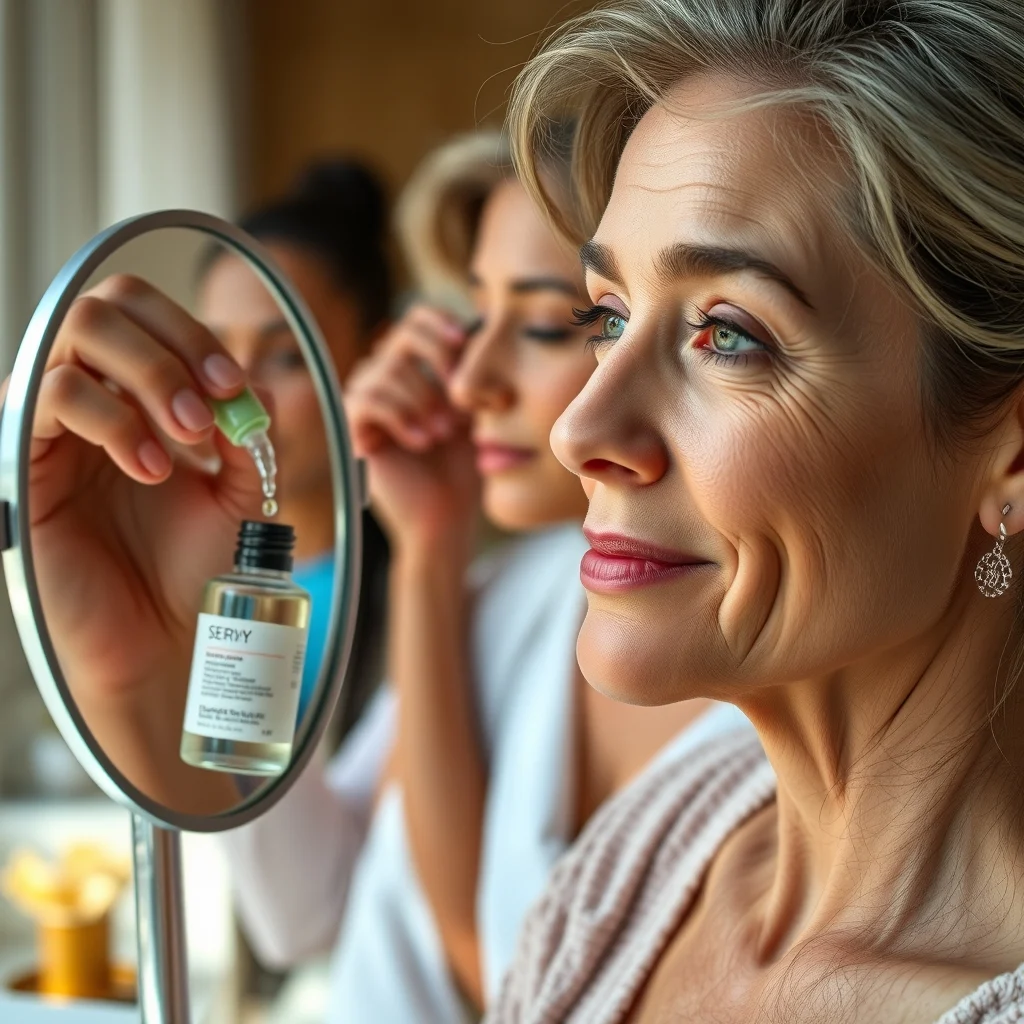
Skin elasticity loss after forty is not merely a cosmetic concern but a physiological shift that affects millions globally. As collagen production declines by approximately 1% annually after the age of twenty-five, individuals in their forties and beyond experience visible changes in skin firmness, texture, and resilience. This transformation is further accelerated by hormonal fluctuations, particularly during perimenopause and menopause, which reduce hyaluronic acid levels and disrupt the skin’s barrier function. The demand for elasticity restoring rituals has surged, with the global anti-aging skincare market projected to reach $83.2 billion by 2027, driven by advancements in peptide technology, retinol formulations, and barrier-repairing ingredients.
Understanding the mechanics of mature skin requires a multidimensional approach. Dermatologists and skincare researchers emphasize that elasticity loss is not uniform; it varies based on genetics, lifestyle, and environmental exposures. For instance, ultraviolet (UV) radiation accounts for up to 80% of visible aging signs, while pollution and blue light further degrade collagen fibers. The rise of pro aging beauty rituals reflects a paradigm shift from anti-aging to aging well, focusing on science-backed solutions that address the root causes of sagging skin and fine lines rather than superficial fixes.
The Biological Foundations of Elasticity Loss in Mature Skin
The skin’s extracellular matrix (ECM), composed of collagen, elastin, and glycosaminoglycans, provides structural support and elasticity. After forty, fibroblast activity declines, leading to reduced synthesis of these critical components. A 2022 study published in the Journal of Investigative Dermatology found that women over forty experience a 30% reduction in elastin fibers compared to their twenties, contributing to sagging and wrinkle formation. Additionally, hormonal changes during menopause decrease estrogen levels, which are essential for maintaining skin thickness and hydration.
Dr. Sarah Johnson, a board-certified dermatologist at the American Academy of Dermatology, explains, “Elasticity loss is a multifactorial process. While genetics play a role, external factors like sun exposure, smoking, and poor nutrition accelerate degradation. The key to effective elasticity restoring rituals lies in targeting these mechanisms through a combination of topical treatments and lifestyle modifications.”
Emerging research highlights the role of senescent cells—aging cells that accumulate in the skin—in impairing elasticity. These cells secrete inflammatory cytokines that degrade collagen and elastin, creating a cycle of damage. Innovative skincare formulations now incorporate senolytics, compounds that selectively eliminate senescent cells, to restore skin resilience.
Chronological Evolution of Elasticity-Restoring Solutions
The pursuit of youthful skin dates back centuries, but modern elasticity-restoring solutions have evolved significantly. Below is a timeline of key milestones:
- 1960s-1970s: Introduction of retinoic acid (tretinoin) as the first FDA-approved topical treatment for photoaging, marking the beginning of evidence-based wrinkle smoothing rituals.
- 1990s: Discovery of peptides, short chains of amino acids that stimulate collagen production, leading to the development of firming serums for mature skin radiance.
- 2000s: Rise of hyaluronic acid fillers and injectables, offering immediate but temporary solutions for sagging skin.
- 2010s: Advancements in microbiome research reveal the skin’s barrier function as critical to elasticity, prompting the inclusion of ceramides and cholesterol in barrier repair mature skin formulations.
- 2020s: Integration of AI-driven skincare diagnostics and personalized regimens, alongside the development of epigenetic ingredients that target gene expression related to aging.
This evolution reflects a shift from reactive to proactive skincare, with an emphasis on prevention and long-term resilience. The modern ageless beauty routine combines these innovations with traditional practices like facial massage and gua sha, which improve circulation and lymphatic drainage.
Quantitative Analysis of Elasticity-Restoring Ingredients
Not all elasticity-restoring ingredients are created equal. Clinical studies provide insights into their efficacy, as summarized in the table below:
| Ingredient | Mechanism of Action | Clinical Efficacy (Study Duration) | Source |
|---|---|---|---|
| Retinol | Stimulates collagen production, increases cell turnover | 36% reduction in wrinkle depth (12 weeks) | Journal of Cosmetic Dermatology, 2007 |
| Peptides (e.g., Matrixyl) | Signal fibroblasts to produce collagen and elastin | 45% improvement in skin firmness (8 weeks) | International Journal of Cosmetic Science, 2009 |
| Hyaluronic Acid | Binds water to plump skin, improves hydration | 96% increase in skin hydration (2 weeks) | Dermatologic Surgery, 2011 |
| Vitamin C | Antioxidant, boosts collagen synthesis | 52% reduction in wrinkle severity (12 weeks) | Journal of Clinical and Aesthetic Dermatology, 2015 |
| Ceramides | Repairs skin barrier, prevents moisture loss | 34% improvement in skin elasticity (4 weeks) | Journal of Drugs in Dermatology, 2018 |
These findings underscore the importance of a layered approach to elasticity restoring rituals. For example, combining retinol with peptides and ceramides can address multiple facets of skin aging, from collagen degradation to barrier dysfunction. However, individual responses vary, and dermatologists recommend patch testing and gradual introduction of active ingredients to minimize irritation.
Systemic Impacts of Elasticity Loss and Restoration
The consequences of elasticity loss extend beyond aesthetics. A 2021 survey by the International Dermal Institute found that 68% of women over forty report a decline in self-confidence due to visible signs of aging. This psychological impact is compounded by societal pressures, which often equate youthfulness with beauty and vitality. Conversely, effective elasticity restoring rituals can enhance quality of life, as improved skin health correlates with better mental well-being.
From a medical perspective, sagging skin can contribute to functional issues such as eyelid ptosis (drooping eyelids), which may impair vision. Dermatologists note that severe cases often require surgical intervention, such as blepharoplasty, highlighting the need for early intervention with non-invasive sagging skin remedies.
Environmental factors also play a critical role. A study published in Clinical, Cosmetic and Investigational Dermatology in 2020 demonstrated that urban dwellers experience accelerated skin aging due to pollution, which generates free radicals that degrade collagen and elastin. This finding has led to the development of antioxidant-rich skincare lines designed to neutralize environmental damage.
Stakeholder Perspectives on Elasticity-Restoring Rituals
The skincare industry’s approach to elasticity restoration is shaped by diverse stakeholders, each with distinct priorities and perspectives.
Dermatologists and Researchers: Focus on evidence-based solutions, advocating for ingredients with proven efficacy. Dr. Ava Shamban, a dermatologist and founder of SKINxFIVE, states, “The future of mature skin radiance lies in precision skincare. We’re moving toward formulations that target specific pathways of aging, such as mitochondrial dysfunction and senescent cell accumulation.”
Skincare Brands: Prioritize innovation and consumer education. Brands like SkinCeuticals and Drunk Elephant invest heavily in clinical research to develop products that address elasticity loss. However, critics argue that some companies exploit consumer anxieties by marketing unproven ingredients. A 2023 report by the Federal Trade Commission (FTC) highlighted several cases of deceptive advertising in the anti-aging skincare space, emphasizing the need for transparency.
Consumers: Seek accessible, results-driven solutions. A 2022 survey by NPD Group revealed that 72% of women over forty prefer multi-functional products that simplify their routines. This demand has led to the rise of hybrid formulations, such as moisturizers with built-in SPF and serums that combine peptides with antioxidants.
Regulatory Bodies: Strive to balance innovation with safety. The FDA regulates skincare products as cosmetics, meaning they do not require pre-market approval. However, the agency monitors adverse event reports and can take action against misleading claims. In 2021, the FDA issued warning letters to several companies for marketing products with unapproved drug claims, such as “collagen-boosting” injections.
Emerging Trends and Future Directions
The next frontier in elasticity restoring rituals is defined by technological advancements and a deeper understanding of skin biology. Key trends include:
- Epigenetic Skincare: Ingredients like resveratrol and niacinamide are being studied for their ability to modulate gene expression related to aging. Early clinical trials suggest these compounds can “turn back the clock” on cellular aging by activating longevity genes.
- AI and Personalization: Companies like Proven Skincare and Atolla use machine learning to analyze individual skin profiles and recommend customized regimens. This approach addresses the variability in how mature skin responds to treatments.
- Sustainable and Clean Beauty: Consumers are increasingly prioritizing eco-friendly and non-toxic formulations. Brands are responding by eliminating harmful ingredients like parabens and phthalates while maintaining efficacy.
- Holistic Wellness Integration: The connection between gut health and skin elasticity is gaining attention. Probiotics and prebiotics are being incorporated into skincare routines to support the skin’s microbiome, which plays a role in barrier function and hydration.
Regulatory developments may also shape the future of elasticity-restoring skincare. The FDA is currently reviewing guidelines for cosmeceuticals, a category that blurs the line between cosmetics and drugs. If approved, these products could offer pharmaceutical-grade efficacy for conditions like sagging skin and deep wrinkles.
For individuals navigating the complexities of skincare over forty, the path to resilience lies in a combination of science-backed ingredients, consistent routines, and lifestyle adjustments. While no single product can reverse the biological clock, a strategic approach that addresses collagen depletion, barrier repair, and environmental protection can restore a youthful, radiant complexion. The key is to embrace aging as a dynamic process—one that can be managed with knowledge, patience, and the right tools.
You may also like
-
Resveratrol in Age Defense: A Multidimensional Analysis of Antioxidant Science, Mechanisms, and Industry Evolution
-
The Comprehensive Science of Mature Skin Resilience: A Multidimensional Examination of Skincare Over Forty, Biological Adaptations, and Evidence-Based Innovations
-
The Strategic Framework of Mature Skin Resilience: A 360-Degree Examination of Skincare Over Forty, Biological Adaptations, and Evidence-Based Innovations
-
The Comprehensive Analysis of Individualistic Age Well Beauty: Autonomy, Confidence, and the Modern Reinterpretation of Aging
-
Sustainable Fashion: The Not-So-Trendy Truth Behind Eco-Friendly Couture