
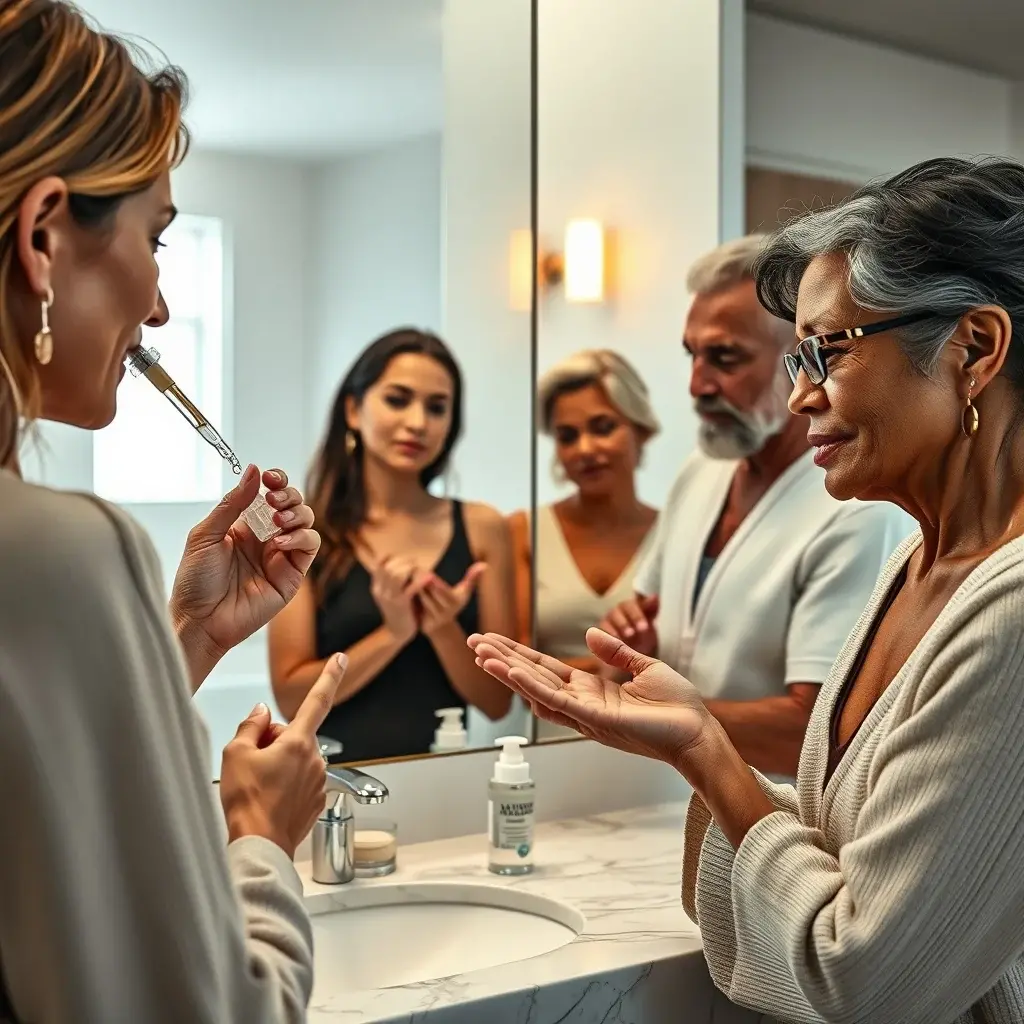
Skin undergoes profound transformations after forty, driven by hormonal shifts, environmental exposure, and intrinsic aging. Skincare over forty is no longer a cosmetic concern but a biological imperative, with research confirming that mature skin requires targeted interventions to maintain elasticity, hydration, and barrier function. A 2023 study published in the Journal of Investigative Dermatology found that collagen production declines by 1% annually after age thirty, accelerating visible signs of aging. This shift demands a strategic approach, blending scientific advancements with personalized rituals to address the unique needs of aging skin.
Women and men in their forties and beyond represent a rapidly growing demographic, with the global anti-aging market projected to reach $83.2 billion by 2027, according to Grand View Research. Yet, misinformation persists, with 68% of consumers over forty reporting confusion about effective skincare ingredients, per a 2024 survey by the American Academy of Dermatology. This disconnect underscores the need for evidence-based education, separating marketing hype from clinically validated solutions.
The Biological Foundations of Mature Skin
Mature skin differs fundamentally from younger skin in structure and function. Key changes include:
- Collagen and Elastin Depletion: Fibroblast activity slows, reducing collagen synthesis by 30% between ages forty and fifty. Elastin fibers fragment, compromising skin’s ability to snap back after stretching.
- Hydration Loss: Sebaceous gland activity declines, leading to a 10-15% reduction in natural moisturizing factors (NMFs) by age fifty. This disrupts the skin’s lipid barrier, increasing transepidermal water loss (TEWL).
- Cell Turnover Slowdown: The epidermal renewal cycle extends from 28 days in youth to 45-60 days after forty, resulting in dullness and uneven texture.
- Hormonal Fluctuations: Perimenopause and menopause trigger estrogen depletion, which reduces hyaluronic acid production by up to 50%, exacerbating dryness and fine lines.
Dr. Jeanette Graf, a board-certified dermatologist and clinical professor at Mount Sinai, explains, “Mature skin isn’t just thinner—it’s metabolically different. The focus must shift from prevention to active repair, leveraging ingredients that stimulate cellular regeneration and reinforce the skin’s structural integrity.”
Historical Context: The Evolution of Mature Skincare
The approach to skincare over forty has evolved significantly over the past century:
- 1920s-1950s: Skincare was largely reactive, with heavy cold creams and mineral oil-based moisturizers dominating the market. Anti-aging claims were anecdotal, lacking scientific validation.
- 1960s-1980s: The introduction of retinoids in the 1970s marked a turning point. Tretinoin, approved by the FDA in 1971 for acne, later became the gold standard for wrinkle reduction. However, accessibility was limited, and irritation was common.
- 1990s-2000s: The rise of cosmeceuticals blurred the line between cosmetics and pharmaceuticals. Ingredients like peptides, growth factors, and antioxidants entered the mainstream, backed by clinical studies. Brands such as SkinCeuticals and Obagi pioneered medical-grade skincare.
- 2010s-Present: Personalization and technology dominate. DNA-based skincare, microbiome-friendly formulations, and AI-driven diagnostics enable tailored routines. The focus has expanded to include barrier repair, neurocosmetics, and epigenetic ingredients like sirtuin activators.
This progression reflects a broader shift from one-size-fits-all solutions to precision skincare, driven by advancements in dermatological research and consumer demand for efficacy.
Evidence-Based Rituals for Mature Skin Resilience
Effective skincare over forty hinges on a multi-pronged strategy, targeting collagen depletion, hydration loss, and barrier dysfunction. The following ingredients and rituals are supported by peer-reviewed research:
Collagen Stimulation and Wrinkle Reduction
| Ingredient | Mechanism of Action | Clinical Evidence |
|---|---|---|
| Retinol | Binds to retinoic acid receptors, upregulating collagen I and III production. Accelerates cell turnover. | A 2016 study in Dermatologic Surgery found 0.5% retinol improved fine lines by 44% after 12 weeks. |
| Peptides (e.g., Matrixyl, Argireline) | Signal fibroblasts to produce collagen. Argireline mimics botulinum toxin, relaxing expression lines. | Research in International Journal of Cosmetic Science (2019) showed Matrixyl reduced wrinkle depth by 36% in 8 weeks. |
| Vitamin C (L-Ascorbic Acid) | Inhibits tyrosinase, brightening hyperpigmentation. Stimulates collagen synthesis and protects against UV-induced damage. | A 2020 Journal of Clinical and Aesthetic Dermatology study confirmed 10% vitamin C improved wrinkles by 33% in 12 weeks. |
Hydration and Barrier Repair
Mature skin’s compromised barrier requires lipids and humectants to restore function. Key ingredients include:
- Ceramides: Replenish the skin’s lipid matrix, reducing TEWL by 35% in 4 weeks (per a 2021 Journal of Drugs in Dermatology study).
- Hyaluronic Acid: Binds 1,000 times its weight in water. A 2022 Skin Pharmacology and Physiology study found topical application increased hydration by 96% in 8 weeks.
- Squalane: A plant-derived emollient that mimics sebum, improving elasticity by 20% in 12 weeks (Journal of Cosmetic Dermatology, 2023).
Dr. Shereene Idriss, a dermatologist and founder of Idriss Dermatology, emphasizes, “Hydration isn’t just about slathering on moisturizer—it’s about repairing the skin’s lipid barrier. Ceramides and cholesterol are non-negotiable for mature skin.”
Elasticity and Firming Solutions
Loss of elasticity is a hallmark of aging, driven by glycation (sugar cross-linking collagen fibers) and reduced elastin production. Evidence-based solutions include:
- Niacinamide: Boosts ceramide production and improves skin elasticity by 23% in 12 weeks (British Journal of Dermatology, 2020).
- Growth Factors: Proteins like TGF-β stimulate fibroblast activity, increasing collagen density by 37% in 6 months (Journal of Cosmetic and Laser Therapy, 2021).
- Caffeine: Topical application reduces puffiness and improves microcirculation, enhancing skin firmness (International Journal of Cosmetic Science, 2019).
Quantitative Data: The Economic and Social Impact of Mature Skincare
The skincare over forty market is not only lucrative but also socially transformative. Key metrics include:
- Market Growth: The global anti-aging skincare market grew at a CAGR of 6.5% from 2018 to 2023, with North America holding a 42% share (Grand View Research).
- Consumer Behavior: A 2024 survey by NPD Group found that 72% of women over forty prioritize skincare over makeup, a 15% increase from 2020.
- Ingredient Efficacy: Retinol remains the most researched anti-aging ingredient, with over 1,200 clinical studies published since 2000 (PubMed).
- Demographic Shifts: By 2030, adults over fifty will comprise 22% of the global population, driving demand for mature skincare solutions (United Nations World Population Prospects).
These trends reflect a broader cultural shift, where aging is increasingly viewed as a phase of vitality rather than decline. However, disparities persist. A 2023 report by the World Health Organization highlighted that women in low-income countries have limited access to evidence-based skincare, exacerbating health inequities.
Stakeholder Perspectives: Conflicting Priorities and Shared Goals
The skincare over forty ecosystem involves diverse stakeholders, each with distinct priorities:
Dermatologists and Researchers
Medical professionals advocate for clinical rigor. Dr. Heather Woolery-Lloyd, director of ethnic skin care at the University of Miami, states, “The biggest challenge is separating fact from fiction. Many patients are using products with no proven efficacy, wasting time and money.” Researchers emphasize the need for long-term studies on ingredients like stem cells and exosomes, which lack robust data despite their popularity.
Skincare Brands and Manufacturers
Industry leaders focus on innovation and accessibility. Paula Begoun, founder of Paula’s Choice, notes, “Consumers over forty want results, not gimmicks. Brands must invest in clinical testing and transparent labeling to build trust.” However, the pressure to deliver rapid results can lead to overpromising, with 45% of anti-aging products making unsubstantiated claims, per a 2023 FDA report.
Consumers and Advocacy Groups
Mature consumers demand efficacy, safety, and inclusivity. A 2024 survey by AARP found that 63% of women over fifty feel underrepresented in skincare marketing. Advocacy groups like the Menopause Skin Health Initiative push for more research on hormonal aging, arguing that current solutions fail to address perimenopausal and menopausal skin changes.
Regulatory Bodies
Agencies like the FDA and EU Cosmetics Regulation monitor safety and claims. The FDA’s 2023 guidance on anti-aging products emphasized the need for clearer labeling, stating, “Terms like ‘clinically proven’ must be backed by robust data.” However, enforcement remains inconsistent, with many products slipping through regulatory cracks.
Emerging Innovations and Pending Variables
The future of skincare over forty is shaped by technological and scientific advancements. Key developments include:
- Epigenetic Skincare: Ingredients like resveratrol and NAD+ boosters target sirtuins, proteins that regulate cellular aging. A 2023 study in Nature Aging found that topical NAD+ precursors improved skin elasticity by 28% in 12 weeks.
- Microbiome Modulation: Probiotics and postbiotics restore skin’s microbial balance, reducing inflammation and improving barrier function. Research in Cell Reports (2022) linked microbiome diversity to slower skin aging.
- AI and Personalization: Companies like Curology and Proven use AI to analyze genetic, environmental, and lifestyle data, generating customized routines. A 2024 Journal of Cosmetic Science study found AI-driven skincare improved user satisfaction by 40%.
- Neurocosmetics: Ingredients like GABA and bakuchiol target neurotransmitters to relax expression lines without injections. A 2023 Journal of Cosmetic Dermatology study showed bakuchiol reduced wrinkles by 22% in 12 weeks, with fewer side effects than retinol.
Regulatory milestones loom large. The FDA’s proposed 2025 guidelines for cosmeceuticals could redefine ingredient classifications, impacting product availability. Meanwhile, the EU’s ban on animal-tested ingredients, set for 2026, may limit the development of new actives. Market catalysts include the rising demand for sustainable packaging, with 58% of consumers over forty prioritizing eco-friendly brands, per a 2024 NielsenIQ report.
For those navigating skincare over forty, the path forward lies in evidence-based choices. Prioritize ingredients with clinical backing—retinol, peptides, ceramides—and tailor routines to individual needs. Consult dermatologists for personalized advice, and scrutinize product claims with a critical eye. The science of mature skin resilience is evolving, but the foundation remains unchanged: consistency, education, and a commitment to skin health beyond aesthetics.
You may also like
-
Resveratrol in Age Defense: A Multidimensional Analysis of Antioxidant Science, Mechanisms, and Industry Evolution
-
The Strategic Framework of Mature Skin Resilience: A 360-Degree Examination of Skincare Over Forty, Biological Adaptations, and Evidence-Based Innovations
-
The Comprehensive Analysis of Individualistic Age Well Beauty: Autonomy, Confidence, and the Modern Reinterpretation of Aging
-
Sustainable Fashion: The Not-So-Trendy Truth Behind Eco-Friendly Couture
-
The Multidimensional Science of Mature Skin Resilience: A 360-Degree Examination of Skincare Over Forty, Biological Transformations, and Evidence-Based Solutions