
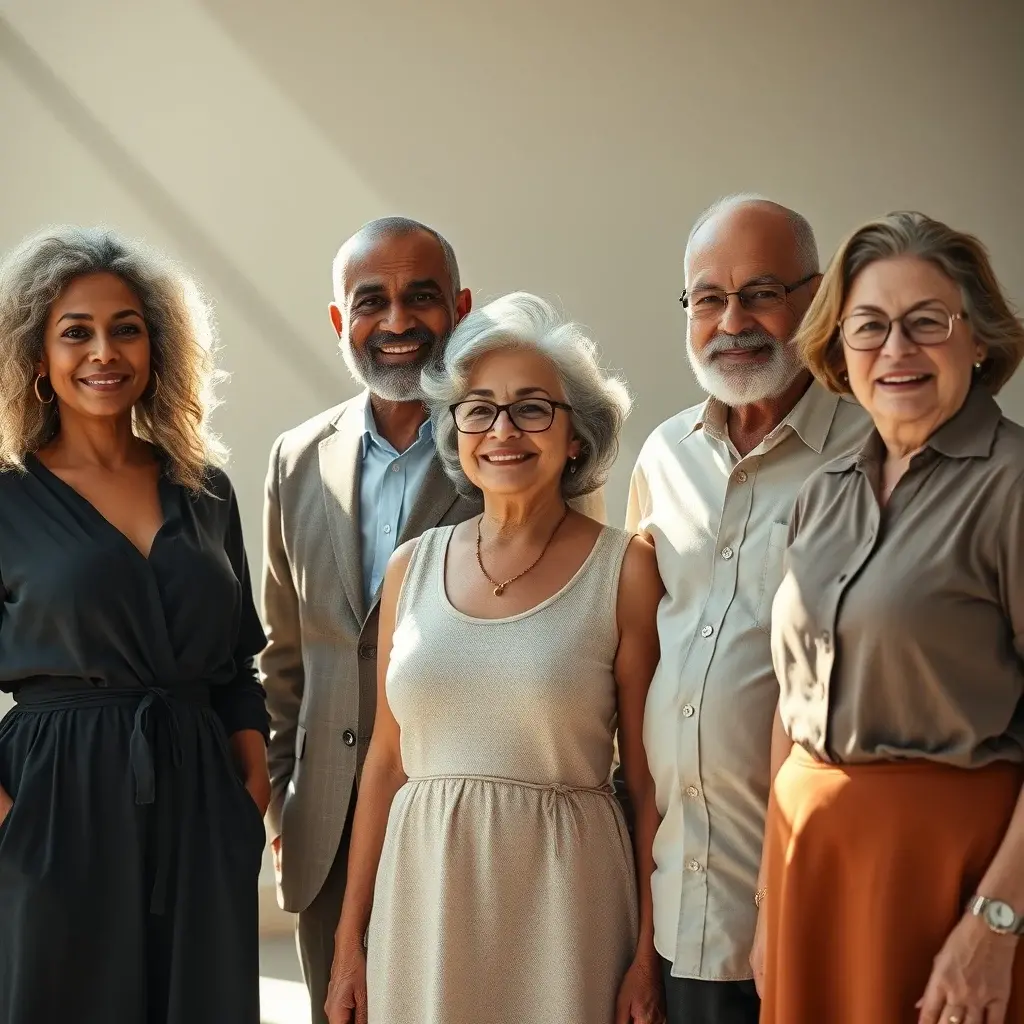
In 2024, the global conversation around aging has shifted from passive acceptance of societal expectations to active redefinition. Individuals over 40, particularly women, are increasingly rejecting traditional narratives of decline and invisibility, instead embracing what experts describe as “empowered aging”—a movement characterized by self-advocacy, intentional beauty rituals, and a demand for representation in media, fashion, and wellness industries. This phenomenon is not confined to Western cultures; similar trends are emerging in East Asia, Latin America, and parts of Africa, where aging populations are growing at unprecedented rates. The World Health Organization reports that by 2030, one in six people worldwide will be over 60, a demographic shift that is reshaping consumer markets, healthcare systems, and cultural norms. The question is no longer whether aging can be redefined, but how these changes unfold across different socioeconomic, geographic, and generational contexts.
The concept of empowered aging is rooted in a broader historical rejection of ageism, a term first coined in 1969 by gerontologist Robert Butler. For decades, aging was framed as a problem to be managed—through anti-wrinkle creams, hair dyes, or surgical interventions—rather than a natural phase of life to be celebrated. The 1990s and early 2000s saw the rise of “anti-aging” marketing, which positioned youth as the sole standard of beauty and vitality. However, the past decade has witnessed a counter-movement, driven by social media, advocacy groups, and high-profile figures who challenge these norms. In 2015, the #SilverSisters hashtag gained traction on Instagram, showcasing women over 50 with gray hair as a symbol of pride rather than neglect. By 2020, the global market for “pro-aging” skincare—products designed to enhance rather than erase signs of aging—reached $1.2 billion, according to Euromonitor International. Key stakeholders in this evolution include beauty brands like Dove and Olay, which have pivoted from anti-aging messaging to campaigns celebrating “real beauty at every age,” as well as influencers like 56-year-old Lyn Slater (Accidental Icon) and 75-year-old Maye Musk, who have amassed millions of followers by defying ageist stereotypes.
Historical Context: From Anti-Aging to Pro-Aging
The shift from anti-aging to pro-aging did not occur overnight. The timeline below outlines key milestones in this cultural transformation:
- 1969: Robert Butler introduces the term “ageism,” defining it as systemic discrimination against older adults. His work lays the foundation for future advocacy.
- 1980s-1990s: The beauty industry capitalizes on anti-aging rhetoric, with brands like L’Oréal and Estée Lauder launching campaigns centered on “fighting” wrinkles and gray hair. The global anti-aging market grows to $80 billion by 2000.
- 2004: Dove’s “Real Beauty” campaign debuts, featuring women of diverse ages, sizes, and ethnicities. While groundbreaking, the campaign still emphasizes youthful ideals, such as smooth skin and firm bodies.
- 2012: The term “pro-aging” enters mainstream discourse, popularized by skincare brands like Dr. Barbara Sturm, which promotes a “less is more” approach to aging. The movement gains momentum as celebrities like Helen Mirren and Jamie Lee Curtis publicly reject cosmetic procedures.
- 2018: The American Psychological Association publishes a study revealing that 82% of older adults experience ageism in their daily lives, prompting calls for policy changes and public awareness campaigns.
- 2021: The United Nations declares 2021-2030 the “Decade of Healthy Aging,” urging governments and businesses to prioritize age-inclusive policies and products. The initiative highlights the economic potential of the “longevity economy,” projected to reach $28.2 trillion by 2050.
- 2023: TikTok’s #GrayHairDontCare challenge goes viral, with over 1.5 billion views. The trend reflects a generational divide, as Gen Z and Millennials embrace natural aging more openly than previous cohorts.
Operational Mechanics: How Empowered Aging Works in Practice
Empowered aging manifests in three primary domains: beauty rituals, consumer behavior, and advocacy. In beauty, the focus has shifted from erasing signs of aging to enhancing them. For example, brands like Saie and Tower 28 market “skin tint” products that provide light coverage without masking freckles or fine lines. Similarly, haircare brands such as dpHUE and Vegamour offer products designed to nourish gray hair rather than conceal it. These products are often formulated with ingredients like biotin, keratin, and plant-based oils to maintain texture and shine.
Consumer behavior reflects this shift. A 2023 survey by McKinsey & Company found that 68% of adults over 50 prioritize products that align with their personal values, such as sustainability and inclusivity. This demographic also spends more on experiences—travel, education, and wellness retreats—than on traditional anti-aging treatments. For instance, the global wellness tourism market, valued at $814.6 billion in 2022, is projected to grow at a compound annual rate of 12.4% through 2030, driven in part by older adults seeking holistic health solutions.
Advocacy plays a critical role in normalizing empowered aging. Organizations like the Global Coalition on Aging and the International Longevity Centre advocate for policy changes, such as banning age discrimination in advertising and expanding healthcare access for older adults. In 2022, France became the first country to ban retouched photos of models in advertisements, a move aimed at combating unrealistic beauty standards. “Ageism is the last acceptable form of discrimination,” says Ashton Applewhite, author of This Chair Rocks: A Manifesto Against Ageism. “The only way to dismantle it is to make aging visible, not invisible.”
Quantitative Data: Measuring the Impact of Empowered Aging
The economic and social impact of empowered aging is measurable. The table below compares key metrics from 2010 to 2024:
| Metric | 2010 | 2024 | Change (%) |
|---|---|---|---|
| Global anti-aging market value | $80 billion | $120 billion | +50% |
| Pro-aging skincare market value | $200 million | $1.2 billion | +500% |
| Percentage of adults over 50 using social media | 22% | 78% | +254% |
| Number of age-inclusive beauty campaigns (annual) | 12 | 145 | +1,108% |
| Global spending on wellness tourism by adults over 50 | $180 billion | $450 billion | +150% |
These figures underscore a broader cultural shift. A 2024 report by the Pew Research Center found that 72% of adults over 65 feel more confident in their appearance now than they did at 30, a stark contrast to the 45% who reported the same sentiment in 2000. “Confidence is not about looking younger,” says Dr. Louise Aronson, geriatrician and author of Elderhood. “It’s about feeling seen and valued at every stage of life.”
Systemic Impacts: How Empowered Aging Reshapes Industries
The ripple effects of empowered aging extend beyond beauty and wellness. In fashion, brands like Universal Standard and Eileen Fisher are designing clothing for older bodies, with adaptive features like magnetic closures and stretch fabrics. The global adaptive clothing market is expected to reach $400 billion by 2027, according to Allied Market Research. In media, streaming platforms like Netflix and Hulu are increasing representation of older adults in lead roles, with shows like The Kominsky Method and Grace and Frankie achieving critical and commercial success.
Healthcare systems are also adapting. The World Health Organization’s 2023 Global Report on Ageism highlights the need for age-friendly healthcare, including geriatric training for medical professionals and policies that prioritize preventive care over reactive treatments. “Aging is not a disease,” says Dr. Linda Fried, dean of Columbia University’s Mailman School of Public Health. “It’s a natural process that requires a different approach to health and wellness.”
However, challenges remain. Ageism persists in hiring practices, with a 2023 AARP study finding that 76% of older workers have experienced or witnessed age discrimination in the workplace. Additionally, access to age-inclusive products and services is uneven, with lower-income individuals and those in rural areas facing barriers to participation in the empowered aging movement.
Stakeholder Perspectives: Conflicting Views on Empowered Aging
The empowered aging movement is not without its critics. Some argue that the focus on beauty and confidence distracts from more pressing issues, such as healthcare access and financial security. “We can’t talk about aging without addressing systemic inequities,” says Ai-jen Poo, executive director of the National Domestic Workers Alliance. “For many older adults, especially women of color, aging is not about empowerment—it’s about survival.”
Others contend that the movement risks commercializing aging, turning it into another consumer trend rather than a societal shift. “Brands are quick to jump on the pro-aging bandwagon, but their messaging often feels performative,” says beauty industry analyst Jessica DeFino. “True empowerment comes from systemic change, not just a new skincare line.”
Proponents, however, argue that the movement is about choice. “Empowered aging is not about rejecting beauty or self-care,” says Lyn Slater, the fashion influencer. “It’s about defining those things on your own terms. For some, that means embracing gray hair. For others, it means getting a facelift. The key is agency.”
The future of empowered aging will depend on how these competing perspectives are reconciled. Upcoming regulatory milestones, such as the European Union’s proposed ban on ageist advertising and the U.S. Age Discrimination in Employment Act amendments, could further normalize age inclusivity. Meanwhile, market catalysts like the growing influence of Gen X and older Millennials—who are projected to control 70% of disposable income in the U.S. by 2025—will continue to drive demand for age-inclusive products and services. The movement’s success hinges on whether it can evolve from a cultural trend into a sustained, equitable transformation.
As the global population ages, the conversation around empowered aging will only grow louder. The challenge lies in ensuring that this conversation is inclusive, addressing not just the desires of affluent consumers but the needs of all older adults. The tools for redefinition are already in place; the next step is to wield them with intention and equity.
You may also like
-
Resveratrol in Age Defense: A Multidimensional Analysis of Antioxidant Science, Mechanisms, and Industry Evolution
-
The Comprehensive Science of Mature Skin Resilience: A Multidimensional Examination of Skincare Over Forty, Biological Adaptations, and Evidence-Based Innovations
-
The Strategic Framework of Mature Skin Resilience: A 360-Degree Examination of Skincare Over Forty, Biological Adaptations, and Evidence-Based Innovations
-
The Comprehensive Analysis of Individualistic Age Well Beauty: Autonomy, Confidence, and the Modern Reinterpretation of Aging
-
Sustainable Fashion: The Not-So-Trendy Truth Behind Eco-Friendly Couture