
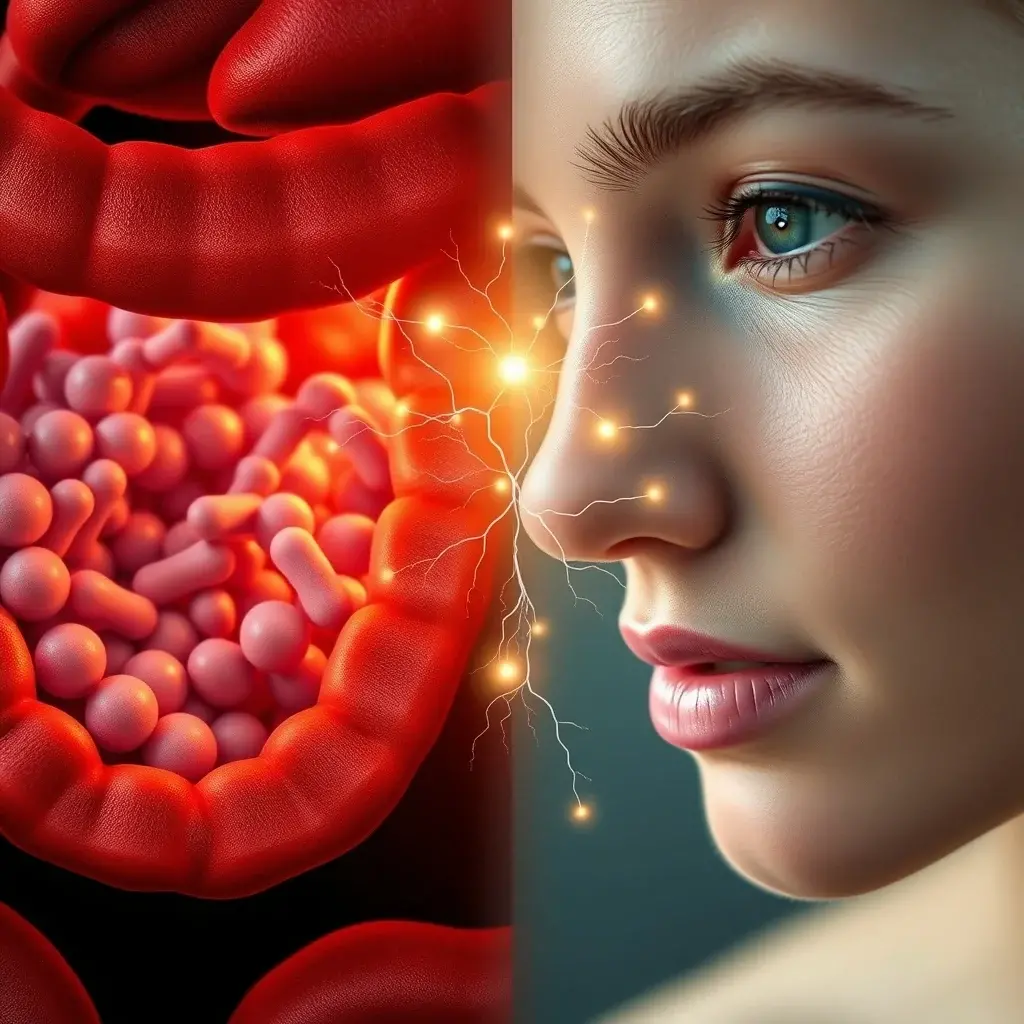
The gut-skin axis has emerged as a cornerstone of modern dermatological and nutritional science, bridging the gap between internal wellness and external beauty. Research conducted over the past decade reveals that the health of the gastrointestinal tract directly influences skin clarity, elasticity, and resilience. This connection is not merely anecdotal; it is rooted in empirical data, with studies published in journals such as Nature Communications and The Journal of Clinical Medicine demonstrating how microbial imbalances, inflammation, and nutrient absorption in the gut manifest as acne, eczema, rosacea, and premature aging. The implications are far-reaching, affecting individuals across age groups, from adolescents grappling with hormonal skin conditions to adults seeking to mitigate the visible effects of aging. As consumer interest in holistic health solutions surges—evidenced by a 42% increase in probiotic skincare product sales between 2020 and 2023, according to Grand View Research—the gut-skin axis has become a focal point for dermatologists, nutritionists, and wellness brands alike.
The Gut-Skin Connection: Defining the Scope and Stakeholders
The gut-skin axis refers to the bidirectional communication network linking the gastrointestinal system and the skin. This relationship is mediated by the immune system, endocrine pathways, and the microbiome, a complex ecosystem of trillions of microorganisms residing in the gut. Historically, the concept traces back to the early 20th century, when dermatologists first observed correlations between digestive disorders and skin conditions. However, it wasn’t until the advent of metagenomic sequencing in the 2010s that researchers could map the microbiome’s role in skin health with precision. Today, the primary stakeholders in this field include dermatologists, gastroenterologists, nutritionists, biotech firms specializing in probiotics and prebiotics, and consumers increasingly prioritizing preventive and integrative health approaches.
Dr. Whitney Bowe, a board-certified dermatologist and author of The Beauty of Dirty Skin, emphasizes the axis’s significance: “We’re moving beyond the era of treating the skin as an isolated organ. The gut microbiome acts as a control center, influencing everything from collagen production to inflammatory responses. When the gut is out of balance, the skin often reflects that dysfunction.” This perspective is echoed by the skincare industry, where brands like Tula, Mother Dirt, and Gallinée have launched product lines targeting the gut-skin connection, blending probiotics, postbiotics, and microbiome-friendly ingredients.
Chronological Evolution of the Gut-Skin Axis Research
- 1930s-1950s: Early observational studies, such as those by dermatologist John H. Stokes, noted correlations between gastrointestinal disorders (e.g., hypochlorhydria) and skin conditions like acne and rosacea. These findings were largely anecdotal due to limited technological capabilities.
- 1980s-1990s: The discovery of Helicobacter pylori and its association with peptic ulcers and rosacea provided the first mechanistic link between gut bacteria and skin health. Research published in The Lancet in 1994 demonstrated that eradicating H. pylori improved rosacea symptoms in 80% of patients.
- 2000s: Advances in molecular biology enabled researchers to identify specific gut bacteria strains influencing skin health. A 2008 study in The Journal of Allergy and Clinical Immunology found that children with atopic dermatitis had lower gut microbial diversity compared to healthy controls.
- 2010s-Present: The Human Microbiome Project (2007-2016) and subsequent metagenomic studies revolutionized the field. A 2019 study in Cell Reports Medicine identified Akkermansia muciniphila as a key bacterium promoting skin hydration and barrier function. Concurrently, the rise of probiotic skincare and nutricosmetics has turned scientific insights into commercial applications.
Operational Mechanics: How the Gut Influences Skin Health
The gut-skin axis operates through three primary pathways: immune modulation, metabolic signaling, and neuroendocrine communication. The gut microbiome regulates immune responses by producing short-chain fatty acids (SCFAs) like butyrate, which reduce systemic inflammation. Chronic inflammation, a known driver of skin aging and conditions like psoriasis, can be exacerbated by gut dysbiosis—a state of microbial imbalance. Metabolically, the gut processes nutrients critical for skin health, such as vitamins A, C, D, and E, as well as zinc and omega-3 fatty acids. Deficiencies in these nutrients, often resulting from poor gut absorption, manifest as dryness, hyperpigmentation, or impaired wound healing.
Neuroendocrine pathways further illustrate the axis’s complexity. The gut produces over 90% of the body’s serotonin, a neurotransmitter that influences mood and, indirectly, skin health. Stress-induced alterations in gut permeability—often referred to as “leaky gut”—can trigger inflammatory cascades that exacerbate acne and eczema. Dr. Emeran Mayer, a gastroenterologist and author of The Mind-Gut Connection, explains: “The gut and brain are in constant dialogue, and this conversation extends to the skin. Stress disrupts the gut barrier, leading to systemic inflammation that accelerates skin aging and impairs repair mechanisms.”
Quantitative data underscores the axis’s impact. A 2022 meta-analysis published in JAMA Dermatology reviewed 16 studies involving over 12,000 participants and found that individuals with acne were 37% more likely to exhibit gut dysbiosis compared to controls. Similarly, a 2021 study in Scientific Reports demonstrated that oral probiotic supplementation reduced wrinkle depth by 13% and improved skin elasticity by 21% over 12 weeks in women aged 40-60. These findings align with market trends: the global probiotic skincare market is projected to reach $1.2 billion by 2027, growing at a compound annual growth rate (CAGR) of 11.8%, according to Data Bridge Market Research.
| Study | Year | Sample Size | Key Finding | Source |
|---|---|---|---|---|
| Gut Microbiome and Atopic Dermatitis | 2008 | 200 children | Lower gut microbial diversity in children with atopic dermatitis | Journal of Allergy and Clinical Immunology |
| Probiotics and Skin Aging | 2021 | 110 women | 13% reduction in wrinkle depth with oral probiotics | Scientific Reports |
| Gut Dysbiosis and Acne | 2022 | 12,000+ participants | 37% higher likelihood of gut dysbiosis in acne patients | JAMA Dermatology |
Systemic Impacts: Beyond Skin Deep
The gut-skin axis’s influence extends beyond cosmetic concerns, intersecting with broader health outcomes. Chronic skin conditions like psoriasis and eczema are associated with increased risks of metabolic syndrome, cardiovascular disease, and depression. A 2020 study in The American Journal of Clinical Dermatology found that individuals with psoriasis had a 46% higher risk of developing type 2 diabetes, a correlation partly attributed to systemic inflammation originating in the gut. This underscores the axis’s role in preventive medicine, where interventions targeting gut health could mitigate both dermatological and systemic diseases.
From an economic standpoint, the gut-skin axis presents opportunities and challenges. The global skincare market, valued at $145.3 billion in 2023, is increasingly incorporating gut-health-focused products. However, regulatory hurdles persist. The U.S. Food and Drug Administration (FDA) and the European Food Safety Authority (EFSA) have yet to establish standardized guidelines for probiotic skincare claims, leading to variability in product efficacy and labeling. Dr. Rajani Katta, a dermatologist and clinical faculty member at McGovern Medical School, cautions: “While the science is promising, the market is flooded with products making unsubstantiated claims. Consumers need to look for peer-reviewed studies and third-party certifications when selecting gut-skin axis products.”
Competing stakeholder perspectives further complicate the landscape. Dermatologists often advocate for a balanced approach, combining topical treatments with dietary and lifestyle modifications. In contrast, some wellness influencers promote extreme dietary restrictions or unproven supplements, which can lead to nutrient deficiencies or disordered eating patterns. Nutritionists, meanwhile, emphasize the importance of individualized plans, as gut microbiome compositions vary widely among individuals. “There’s no one-size-fits-all solution,” notes Dr. Megan Rossi, a registered dietitian and author of Eat Yourself Healthy. “What works for one person’s gut—and skin—may not work for another. Personalized testing and gradual dietary changes are key.”
Emerging Trends and Future Directions
The gut-skin axis is poised to shape the future of dermatology and wellness. Emerging research areas include the role of postbiotics—metabolic byproducts of probiotics—in skin health, and the potential of fecal microbiota transplantation (FMT) for treating severe skin conditions. A 2023 pilot study published in Frontiers in Immunology reported that FMT improved psoriasis symptoms in 60% of participants, though larger trials are needed to validate these findings. Additionally, advancements in artificial intelligence (AI) are enabling personalized skincare and nutrition plans based on microbiome analysis. Companies like Viome and DayTwo offer at-home gut microbiome testing kits, providing tailored dietary recommendations to optimize skin health.
Regulatory developments are also on the horizon. The FDA’s 2023 draft guidance on probiotics aims to clarify labeling requirements and substantiation standards for probiotic products, which could enhance consumer trust and product efficacy. Meanwhile, the European Union’s EFSA Panel on Nutrition is evaluating health claims related to probiotics and skin health, with potential updates to regulations expected by 2025.
The gut-skin axis represents a paradigm shift in how we approach beauty and wellness, moving from superficial treatments to systemic, root-cause solutions. As research continues to unravel the complexities of this connection, the integration of gut health into skincare routines and medical treatments will likely become standard practice. However, the pace of progress will depend on addressing regulatory gaps, combating misinformation, and ensuring that scientific advancements translate into accessible, evidence-based solutions for consumers worldwide. The intersection of dermatology, nutrition, and microbiology holds immense promise, but its full potential remains contingent on collaborative efforts across disciplines and industries.
You may also like
-
Resveratrol in Age Defense: A Multidimensional Analysis of Antioxidant Science, Mechanisms, and Industry Evolution
-
The Comprehensive Science of Mature Skin Resilience: A Multidimensional Examination of Skincare Over Forty, Biological Adaptations, and Evidence-Based Innovations
-
The Strategic Framework of Mature Skin Resilience: A 360-Degree Examination of Skincare Over Forty, Biological Adaptations, and Evidence-Based Innovations
-
The Comprehensive Analysis of Individualistic Age Well Beauty: Autonomy, Confidence, and the Modern Reinterpretation of Aging
-
Sustainable Fashion: The Not-So-Trendy Truth Behind Eco-Friendly Couture