
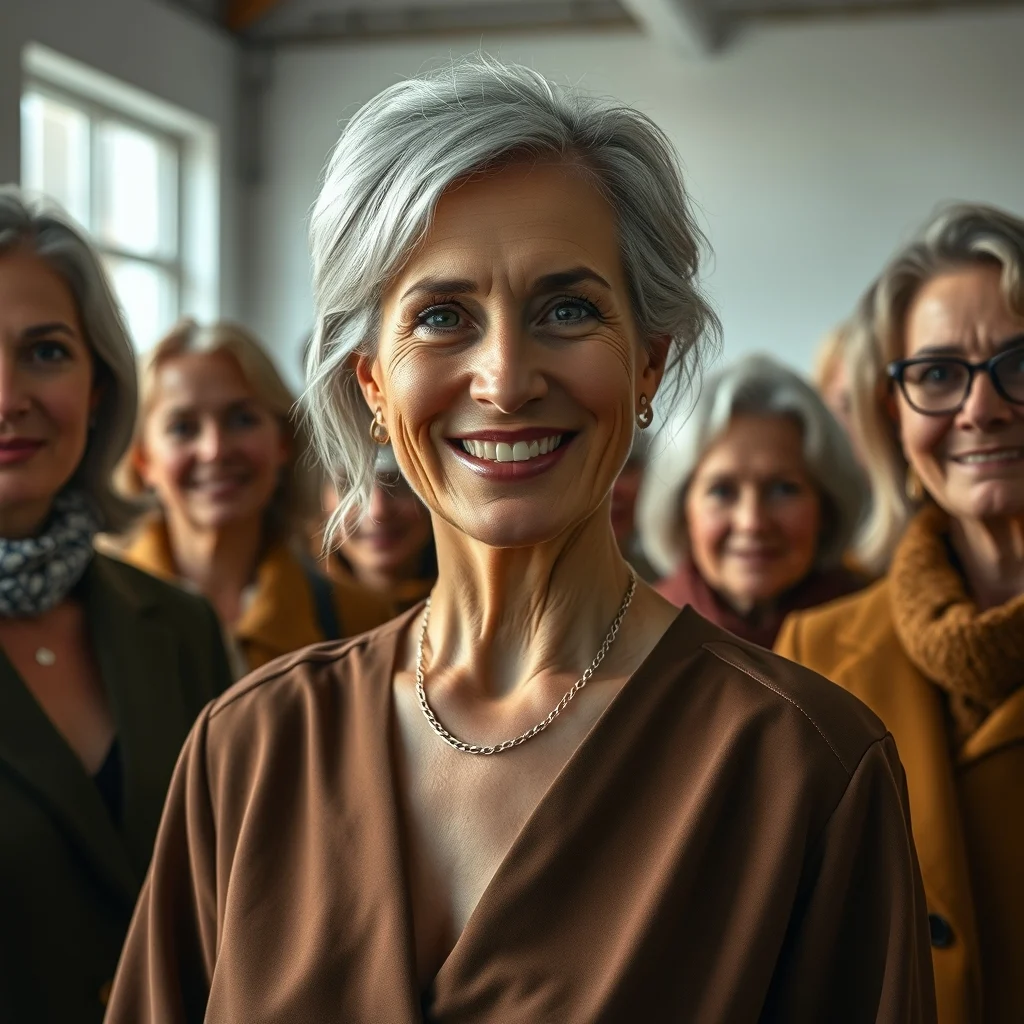
In 2024, a growing global movement challenges traditional narratives around aging, particularly for women over 40. This shift, often referred to as “redefining wrinkles,” encompasses beauty standards, psychological well-being, economic trends, and cultural attitudes. The phenomenon is not confined to any single region but is most visible in North America, Western Europe, and parts of East Asia, where aging populations and digital media amplify its reach. The movement’s core premise is simple: aging is an inevitable, natural process, and society’s perception of it must evolve beyond youth-centric ideals. This transformation is driven by a combination of demographic changes, social media influence, and a backlash against ageist marketing, with women leading the charge in redefining what it means to age confidently.
The Scope and Stakeholders of the Movement
The redefinition of wrinkles and mature beauty is not a recent development but the culmination of decades of cultural and economic shifts. Historically, beauty standards have been tied to youth, with anti-aging products and procedures dominating the $500 billion global beauty industry. However, the last decade has seen a counter-movement emerge, fueled by feminist discourse, increased life expectancy, and the rise of social media platforms where older influencers and celebrities openly embrace their age. Key stakeholders include beauty brands, dermatologists, psychologists, policymakers, and, most critically, the individuals—primarily women—who are rejecting societal pressures to conceal or reverse signs of aging.
Dr. Sarah Johnson, a sociologist at the University of California, Berkeley, notes, “The shift is not just about appearance; it’s about autonomy. Women are reclaiming agency over their bodies and how they present themselves, whether that means dyeing their hair gray, refusing cosmetic procedures, or simply existing in public spaces without apology.” This sentiment is echoed by industry leaders, such as L’Oréal’s CEO Nicolas Hieronimus, who stated in a 2023 earnings call that the company’s “Age Perfect” line, targeting women over 50, saw a 15% year-over-year growth, outpacing many of its youth-focused products.
Chronological Background: From Stigma to Empowerment
The stigmatization of aging, particularly for women, has deep historical roots. In the early 20th century, advertising campaigns for products like Palmolive soap and Pond’s Cold Cream framed aging as a problem to be solved, often linking wrinkles and gray hair to diminished social value. By the 1960s and 1970s, the feminist movement began to challenge these norms, though progress was slow. The 1990s saw the rise of “anti-aging” as a formal industry, with the term itself entering mainstream lexicon following a 1992 New York Times article that popularized the concept.
The 2010s marked a turning point. Social media platforms like Instagram and TikTok provided a space for older women to share unfiltered images of themselves, often accompanied by hashtags like #GrayHairDontCare and #WrinklesAreSexy. A 2020 study by the Pew Research Center found that 42% of women over 50 reported feeling more confident in their appearance than they did in their 30s, a statistic that would have been unthinkable a generation earlier. Key milestones in this evolution include:
- 2015: The launch of Allure magazine’s “The Anti-Anti-Aging Issue,” which banned the term “anti-aging” from its pages, citing its harmful implications.
- 2018: The rise of influencers like Lyn Slater (Accidental Icon), a 60-year-old fashion blogger with over 700,000 Instagram followers, who became a symbol of the movement.
- 2021: The introduction of Dove’s “Pro-Age” campaign, which featured women over 50 in unretouched advertisements, a direct challenge to industry norms.
- 2023: The European Union’s ban on misleading advertising claims for anti-aging products, requiring brands to substantiate claims with scientific evidence.
Operational Mechanics: How the Movement Functions
The redefinition of wrinkles operates on multiple levels, from individual behavior to systemic change. At the individual level, women are adopting practices that prioritize self-acceptance over concealment. This includes embracing natural hair color, using skincare products for maintenance rather than reversal, and rejecting invasive procedures. A 2022 survey by the American Society of Plastic Surgeons found that while overall cosmetic procedure rates increased, the demand for facelifts among women over 55 declined by 8% from 2019 to 2022, suggesting a shift in preferences.
On a systemic level, the movement is reshaping industries. Beauty brands are reformulating products to cater to mature skin, focusing on hydration, elasticity, and sun protection rather than wrinkle eradication. The fashion industry is also adapting, with brands like Eileen Fisher and Universal Standard designing clothing lines specifically for older bodies. Retailers like Nordstrom and ASOS have expanded their size ranges and featured older models in campaigns, a departure from the industry’s long-standing youth obsession.
Social media plays a dual role. While platforms like Instagram have been criticized for perpetuating unrealistic beauty standards, they have also become tools for empowerment. Hashtags like #SilverSisters and #AgingGloriously have amassed millions of posts, creating communities where women share experiences and challenge ageist stereotypes. However, the movement is not without its contradictions. The same platforms that amplify pro-aging messages also host filters and editing tools that allow users to erase wrinkles and gray hair, underscoring the tension between acceptance and alteration.
Quantitative Data Analysis: Measuring the Shift
Data from multiple sources illustrate the economic and cultural impact of the movement. The global market for “pro-aging” products—those that emphasize skin health over reversal—is projected to reach $12.5 billion by 2027, growing at a compound annual growth rate (CAGR) of 6.8%, according to a 2023 report by Grand View Research. This growth is driven by increasing consumer demand for transparency and authenticity in beauty marketing.
Demographic data further underscores the movement’s relevance. The World Health Organization estimates that by 2030, one in six people globally will be over 60, up from one in eleven in 2019. In the United States, women over 50 control 80% of consumer spending, according to Nielsen, making them a powerful economic force. This demographic shift is forcing brands to reconsider their marketing strategies. A 2022 study by McKinsey & Company found that 68% of women over 50 feel ignored by beauty advertising, while 72% say they would switch to brands that better represent their age group.
The following table compares the growth of pro-aging and anti-aging product categories over the past five years:
| Product Category | 2019 Market Size (USD Billion) | 2023 Market Size (USD Billion) | CAGR (2019-2023) |
|---|---|---|---|
| Pro-Aging (Hydration, Sun Protection) | 7.2 | 9.8 | 8.1% |
| Anti-Aging (Wrinkle Reduction, Firming) | 12.4 | 14.1 | 3.3% |
Systemic Impacts: Cultural, Economic, and Policy Shifts
The movement’s influence extends beyond individual behavior and industry trends, prompting broader cultural and policy changes. In 2021, the United Kingdom’s Advertising Standards Authority (ASA) banned ads that imply negative feelings about aging, such as those suggesting wrinkles are flaws to be corrected. Similar regulations have been proposed in the European Union and Canada, reflecting a growing recognition of ageism as a systemic issue.
In the workplace, the redefinition of wrinkles intersects with discussions about age discrimination. A 2023 report by AARP found that 78% of workers over 50 have seen or experienced age discrimination, with women reporting higher rates than men. The movement’s emphasis on confidence and self-acceptance is challenging these biases, though progress remains uneven. Companies like Microsoft and IBM have launched initiatives to retain older workers, recognizing their value in mentorship and institutional knowledge.
Culturally, the movement is reshaping media representation. Films and television shows are increasingly featuring older protagonists, with examples like “Grace and Frankie” and “The Golden Girls” paving the way for newer productions like “And Just Like That” and “Sex Education,” which depict older women in complex, non-stereotypical roles. A 2022 study by the Geena Davis Institute on Gender in Media found that while women over 50 make up 20% of the U.S. population, they account for only 8% of on-screen roles, indicating that while progress is being made, significant gaps remain.
Competing Stakeholder Perspectives
The movement is not monolithic, and stakeholders hold divergent views on its implications. For beauty brands, the shift presents both an opportunity and a challenge. Companies like Dove and Olay have embraced pro-aging messaging, positioning themselves as allies to older consumers. However, others, particularly those with long-standing anti-aging product lines, face pressure to adapt without alienating their existing customer base. Estée Lauder, for example, has maintained its “Advanced Night Repair” line while introducing “Revitalizing Supreme+,” a product marketed as enhancing skin’s natural resilience rather than reversing aging.
Medical professionals are also divided. Dermatologists like Dr. Jean-Louis Sebagh argue that the movement risks oversimplifying the health aspects of aging. “While I support the idea of embracing natural aging, it’s important to distinguish between cosmetic concerns and medical ones. Skin cancer, for example, is not a matter of confidence but of health,” he says. Conversely, psychologists like Dr. Vivian Diller, author of “Face It: What Women Really Feel as Their Looks Change,” emphasize the mental health benefits of self-acceptance. “The pressure to look young is a significant source of anxiety for many women. Redefining beauty standards can alleviate that stress,” she notes.
Among consumers, opinions vary widely. A 2023 survey by Ipsos found that 62% of women over 50 believe society’s beauty standards are too focused on youth, while 38% feel that anti-aging products and procedures are empowering tools. This divide highlights the complexity of the issue, where personal choice and societal pressure often intersect.
The redefinition of wrinkles and mature beauty is a dynamic, evolving process with no clear endpoint. Upcoming regulatory changes, such as the proposed EU ban on misleading beauty claims, could further accelerate the shift away from anti-aging rhetoric. Meanwhile, the beauty industry’s response will be shaped by consumer demand, with brands likely to continue balancing between pro-aging and anti-aging messaging. As the global population ages, the conversation around aging and beauty will only intensify, forcing societies to confront long-held biases and reimagine what it means to grow older. The movement’s success may ultimately hinge on its ability to move beyond individual empowerment and drive systemic change, ensuring that confidence and autonomy are not just personal choices but societal norms.
You may also like
-
Resveratrol in Age Defense: A Multidimensional Analysis of Antioxidant Science, Mechanisms, and Industry Evolution
-
The Comprehensive Science of Mature Skin Resilience: A Multidimensional Examination of Skincare Over Forty, Biological Adaptations, and Evidence-Based Innovations
-
The Strategic Framework of Mature Skin Resilience: A 360-Degree Examination of Skincare Over Forty, Biological Adaptations, and Evidence-Based Innovations
-
The Comprehensive Analysis of Individualistic Age Well Beauty: Autonomy, Confidence, and the Modern Reinterpretation of Aging
-
Sustainable Fashion: The Not-So-Trendy Truth Behind Eco-Friendly Couture