
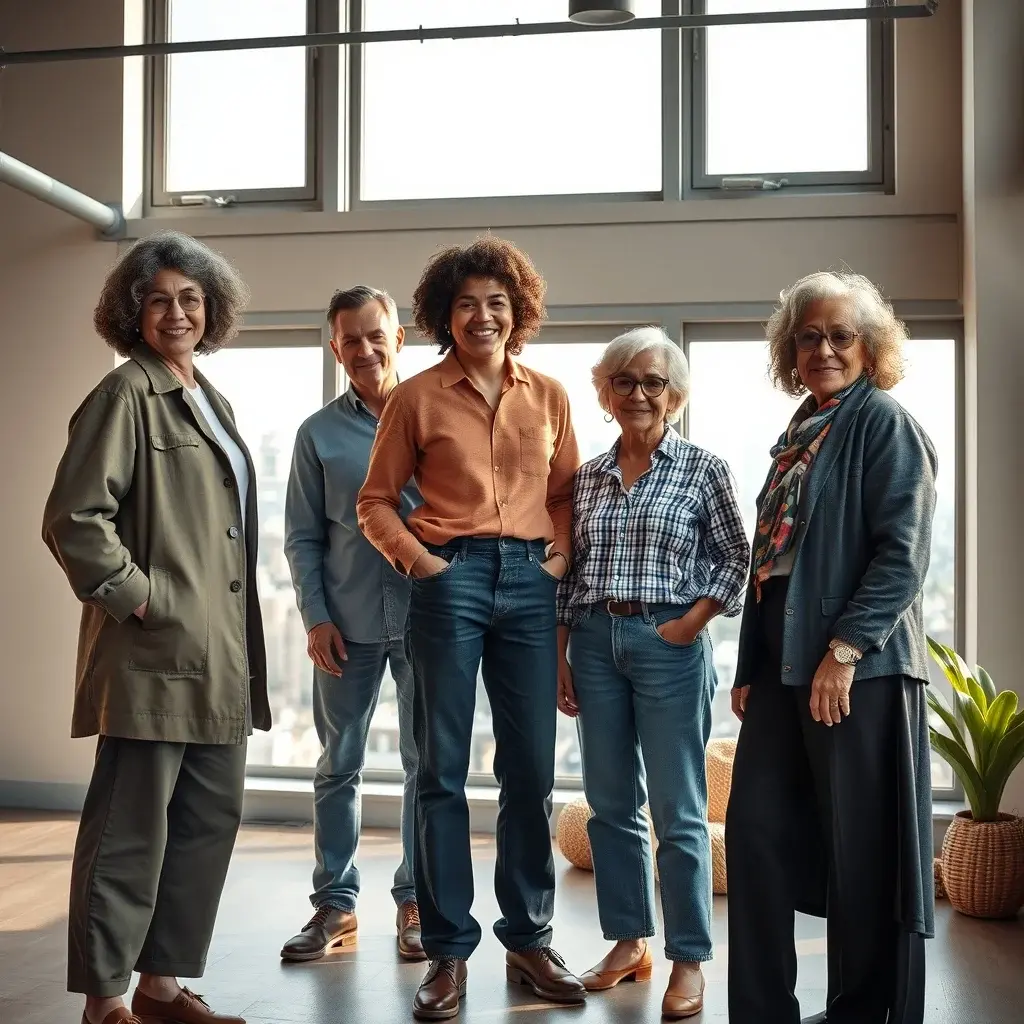
In 2024, the global discourse surrounding aging has undergone a seismic shift, with individuals over forty increasingly rejecting traditional narratives of decline and embracing a philosophy of self-love, confidence, and autonomy. This movement, often referred to as “Self-Love Over Forty,” transcends mere beauty routines or anti-aging products, instead advocating for a holistic redefinition of mature beauty that prioritizes mental well-being, physical health, and societal empowerment. The phenomenon is not confined to any single geographic region but is gaining traction across North America, Europe, and parts of Asia, particularly in urban centers where digital literacy and access to diverse media narratives are high. The driving force behind this shift is a confluence of demographic changes, economic realities, and cultural evolution, with women and men alike challenging ageist stereotypes and demanding representation that reflects their lived experiences.
The concept of “Self-Love Over Forty” emerged as a counter-narrative to the youth-centric beauty standards that have dominated global media for decades. Historically, aging has been framed as a process of inevitable deterioration, with marketing campaigns and cultural narratives emphasizing the need to “fight” or “reverse” the signs of aging. However, by the early 2020s, a growing segment of the population began to push back against these norms, leveraging social media platforms to amplify alternative perspectives. Key stakeholders in this movement include beauty industry disruptors, such as brands like Typology and The Ordinary, which have eschewed traditional anti-aging marketing in favor of “pro-aging” messaging. Additionally, influencers, gerontologists, and mental health professionals have played pivotal roles in reshaping public perception, while policymakers in countries like France and the United Kingdom have introduced legislation to combat age discrimination in advertising and employment.
The Historical Evolution of Mature Beauty Standards
The modern understanding of mature beauty is the result of decades of cultural, economic, and technological transformation. In the mid-20th century, aging was largely associated with retirement, reduced social visibility, and a decline in physical attractiveness. Beauty standards were rigidly tied to youth, with little representation of individuals over fifty in mainstream media. However, several key milestones have since redefined these norms:
- 1960s-1970s: The feminist movement began challenging traditional gender roles, including the pressure on women to maintain a youthful appearance. However, the beauty industry largely ignored these shifts, continuing to market products as tools to “preserve” youth.
- 1990s: The rise of the internet provided a platform for alternative voices, though mainstream media remained dominated by youth-centric narratives. The term “anti-aging” entered the lexicon, reflecting the industry’s focus on combating rather than embracing aging.
- 2000s: The proliferation of social media platforms like Facebook and Instagram allowed older adults to create and share content, though algorithms initially favored younger demographics. Brands like Dove began experimenting with inclusive campaigns, such as the 2004 “Real Beauty” initiative, which featured women of diverse ages and body types.
- 2010s: The #MeToo movement and growing awareness of ageism spurred further change. In 2018, the World Health Organization (WHO) officially recognized ageism as a global health concern, prompting public health campaigns to address its impact. Influencers like Lyn Slater (Accidental Icon) and Helen Mirren became symbols of confident aging, amassing large followings by rejecting traditional beauty norms.
- 2020s: The COVID-19 pandemic accelerated the adoption of digital tools among older adults, increasing their visibility in online spaces. Brands like Fenty Beauty and Gucci began featuring older models in campaigns, while the term “pro-aging” gained traction as a counterpoint to “anti-aging.” In 2023, a survey by AARP found that 78% of adults over fifty believed society’s perception of aging had improved over the past decade, though 62% still reported experiencing age-based discrimination.
The Mechanics of Self-Love Over Forty
The operational framework of “Self-Love Over Forty” is multifaceted, encompassing beauty routines, mental health practices, and societal advocacy. At its core, the movement emphasizes three key principles: autonomy, authenticity, and empowerment. Autonomy refers to the right of individuals to define beauty and aging on their own terms, free from external pressures. Authenticity involves embracing one’s natural appearance, including gray hair, wrinkles, and other signs of aging, as markers of experience rather than flaws. Empowerment focuses on leveraging personal agency to challenge systemic ageism and demand equitable representation.
In practice, these principles manifest in several ways. Beauty routines have shifted from concealment to enhancement, with many individuals opting for skincare products that prioritize hydration and skin health over invasive procedures. The global skincare market for adults over forty is projected to reach $216.8 billion by 2027, according to a report by Grand View Research, with a growing demand for “clean” and sustainable products. Mental health practices, such as mindfulness and therapy, have also become integral to the movement, with studies showing that self-compassion is strongly correlated with higher life satisfaction among older adults. A 2022 study published in the Journal of Gerontology found that individuals who practiced self-compassion reported 30% lower levels of anxiety related to aging.
Societal advocacy has taken the form of grassroots campaigns, legislative efforts, and corporate accountability. Organizations like the Global Alliance for Rights of Older People (GAROP) have lobbied for international policies to combat ageism, while brands like L’Oréal have faced scrutiny for perpetuating ageist stereotypes in their advertising. In 2023, the European Union introduced the “Age Equality Strategy,” which includes provisions to ban discriminatory language in job postings and media representations.
Quantitative Data: Measuring the Impact of the Movement
The rise of “Self-Love Over Forty” is supported by a growing body of empirical data that highlights its societal and economic impact. The following table presents key statistics from recent studies:
| Metric | Data Point | Source |
|---|---|---|
| Global skincare market for adults over 40 (2027 projection) | $216.8 billion | Grand View Research (2023) |
| Percentage of adults over 50 who believe society’s perception of aging has improved | 78% | AARP (2023) |
| Percentage of adults over 50 who have experienced age-based discrimination | 62% | AARP (2023) |
| Reduction in aging-related anxiety among individuals practicing self-compassion | 30% | Journal of Gerontology (2022) |
| Percentage of social media users over 50 who follow “pro-aging” influencers | 45% | Pew Research Center (2023) |
| Projected growth of the global wellness industry for adults over 40 (2024-2030) | 8.1% CAGR | McKinsey & Company (2023) |
These statistics underscore the movement’s growing influence, especially among digital-savvy older adults. However, disparities persist across socioeconomic and geographic lines. For example, a 2023 report by the World Economic Forum found that individuals in high-income countries were twice as likely to engage with pro-aging content as those in low- and middle-income countries, highlighting the role of digital access in shaping perceptions of aging.
Systemic Impacts and Stakeholder Perspectives
The “Self-Love Over Forty” movement has had far-reaching implications for industries, policymakers, and individuals alike. For the beauty industry, the shift has necessitated a reevaluation of marketing strategies and product development. Dr. Anita Sturnham, a dermatologist and founder of the skincare brand Decree, notes, “The demand for pro-aging products is not just a trend; it’s a fundamental shift in how consumers view aging. Brands that fail to adapt risk alienating a growing and influential demographic.” This sentiment is echoed by market analysts, who predict that companies embracing pro-aging messaging will capture a larger share of the $500 billion global beauty market.
Policymakers are also grappling with the movement’s implications. In 2023, the United Nations released a report titled Aging in the 21st Century, which called for greater investment in age-inclusive policies, including healthcare, employment, and media representation. The report’s lead author, Dr. Asghar Zaidi, stated, “Ageism is not just a social issue; it’s an economic one. Countries that fail to address age discrimination risk stifling innovation and productivity among their older populations.” In response, several governments have introduced initiatives to promote age diversity, such as tax incentives for companies that hire older workers and grants for media projects that feature mature talent.
For individuals, the movement has provided a framework for navigating aging with confidence. However, perspectives vary widely depending on cultural context and personal experiences. In Japan, where aging is often framed as a natural and respected part of life, the concept of “ikigai” (a reason for being) has gained popularity as a tool for maintaining purpose in later years. Conversely, in the United States, where youth culture dominates, many individuals report feeling pressure to “age gracefully” while simultaneously rejecting traditional beauty standards. “It’s a double-edged sword,” says 52-year-old marketing executive Priya Mehta. “On one hand, I feel empowered to embrace my gray hair and wrinkles. On the other, I still face judgment for not looking ‘young enough.’ The movement has given me a community, but the work is far from over.”
Healthcare providers have also weighed in on the movement’s impact, particularly regarding mental health. Dr. Louise Aronson, a geriatrician and author of Elderhood, argues that the emphasis on self-love over forty has had a positive effect on older adults’ well-being. “When individuals feel seen and valued, they are more likely to engage in preventive healthcare and seek support for mental health challenges,” she says. However, she cautions that the movement must address systemic barriers, such as access to affordable healthcare and age-friendly urban design, to achieve lasting change.
The trajectory of “Self-Love Over Forty” will depend on several pending variables, including technological advancements, regulatory developments, and cultural shifts. In the coming years, the rise of artificial intelligence and virtual reality could further democratize access to pro-aging narratives, allowing individuals in underserved regions to engage with the movement. Meanwhile, regulatory bodies are expected to introduce stricter guidelines on ageist advertising, with the European Union’s Age Equality Strategy serving as a potential model for other regions. Culturally, the movement’s success will hinge on its ability to transcend generational divides, fostering intergenerational dialogue about beauty, confidence, and autonomy. As the global population continues to age—with the number of people over sixty projected to double by 2050, according to the WHO—the principles of self-love over forty may well become the new standard for how society views aging.
You may also like
-
Resveratrol in Age Defense: A Multidimensional Analysis of Antioxidant Science, Mechanisms, and Industry Evolution
-
The Comprehensive Science of Mature Skin Resilience: A Multidimensional Examination of Skincare Over Forty, Biological Adaptations, and Evidence-Based Innovations
-
The Strategic Framework of Mature Skin Resilience: A 360-Degree Examination of Skincare Over Forty, Biological Adaptations, and Evidence-Based Innovations
-
The Comprehensive Analysis of Individualistic Age Well Beauty: Autonomy, Confidence, and the Modern Reinterpretation of Aging
-
Sustainable Fashion: The Not-So-Trendy Truth Behind Eco-Friendly Couture