
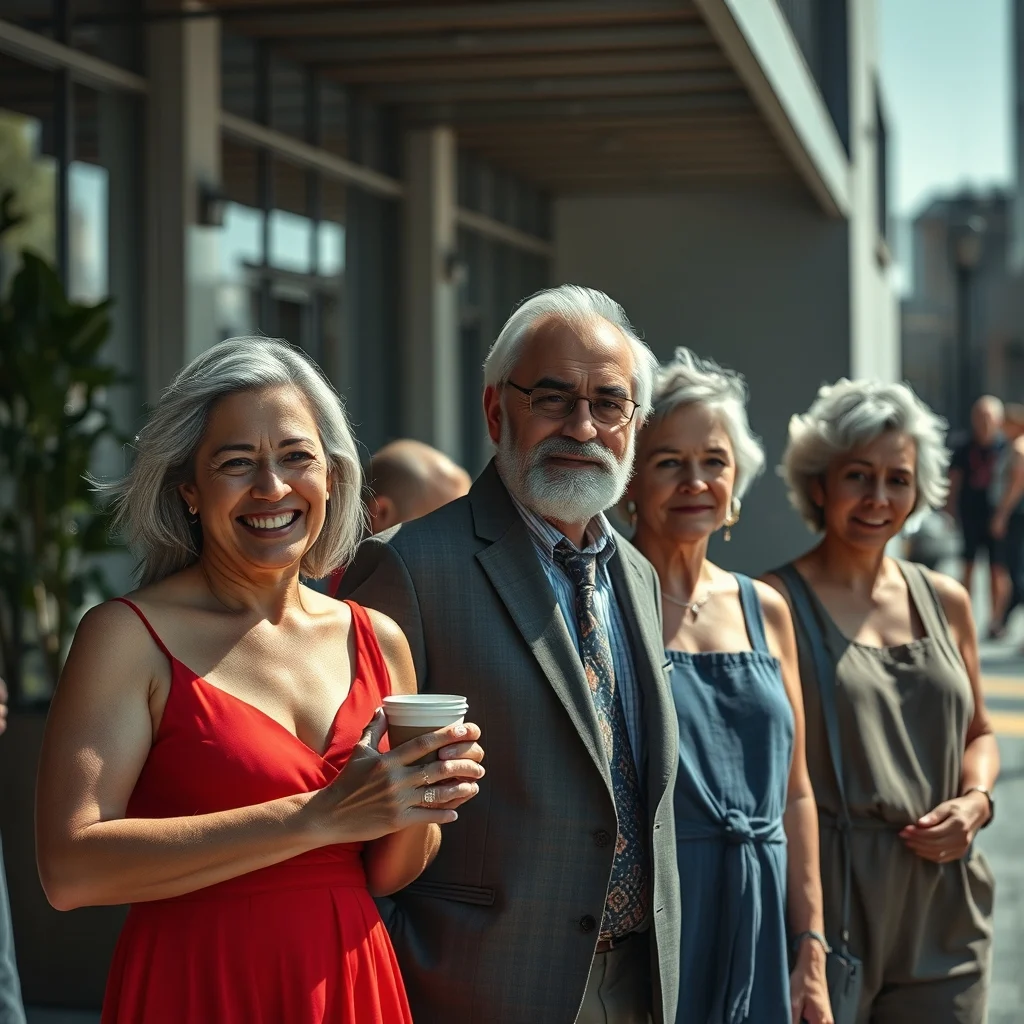
In 2024, the global discourse surrounding aging has undergone a seismic shift, with individuals over 40 increasingly rejecting traditional narratives of decline and embracing a pro-aging mindset. This movement, characterized by terms like unapologetic aging beauty and silver beauty empowerment, is not confined to any single demographic or geographic region. It spans continents, cultures, and socioeconomic backgrounds, driven by a confluence of factors: the rise of social media as a platform for visibility, the commercialization of mature beauty products, and a growing body of scientific research challenging ageist stereotypes. The who includes a diverse cohort of individuals—from celebrities like Helen Mirren and Andie MacDowell to everyday professionals and retirees—who are redefining what it means to age with confidence. The what is a cultural recalibration, where gray hair confidence and embracing mature skin are no longer niche trends but mainstream conversations. The when is now, accelerated by the post-pandemic reckoning with mortality and the prioritization of self-love over forty. The where is everywhere, from beauty campaigns in New York and Paris to grassroots movements in Seoul and São Paulo. The why is rooted in a collective exhaustion with youth-centric beauty standards and a demand for authenticity. The how involves a mix of personal rituals, advocacy, and corporate adaptation, with brands like Dove and L’Oréal pivoting to inclusive marketing strategies that celebrate beauty beyond age.
The pro-aging mindset is not a monolith but a spectrum of beliefs and practices united by a common goal: to dismantle the stigma associated with aging. Historically, aging has been framed as a process of loss—of vitality, relevance, and beauty. Ancient Greek and Roman societies idealized youth, while 19th-century industrialization reinforced the notion that older adults were less productive. The 20th century saw the rise of anti-aging industries, with the first commercial anti-wrinkle cream, Erno Laszlo’s Active Phelityl, launching in 1930. By the 1990s, the global anti-aging market was valued at $42 billion, perpetuating the idea that aging was a condition to be treated rather than a natural part of life. The primary stakeholders in this shift include consumers, who are increasingly vocal about their desire for representation; beauty brands, which are recalibrating their messaging; policymakers, who are beginning to address ageism as a public health issue; and healthcare providers, who are rethinking how they discuss aging with patients. The pro-aging mindset challenges these stakeholders to redefine success, not as the absence of wrinkles or gray hair, but as the presence of timeless self-confidence and autonomy.
The Historical Trajectory of Aging Narratives
The evolution of societal attitudes toward aging can be traced through distinct eras, each marked by shifting cultural, economic, and technological influences. Below is a chronological breakdown of key milestones:
- Pre-Industrial Era (Pre-1800s): Aging was often revered, particularly in agrarian societies where elders held knowledge and authority. However, youth was still idealized in art and literature, with figures like the Greek goddess Hebe symbolizing eternal youth.
- Industrial Revolution (1800s–Early 1900s): The rise of factories and urbanization marginalized older adults, who were seen as less adaptable to new labor demands. This period also saw the emergence of the first anti-aging products, such as Pond’s Cold Cream, marketed as a way to preserve youthful skin.
- Post-War Boom (1950s–1970s): The advent of television and advertising accelerated the commodification of youth. Brands like Revlon and Max Factor targeted younger consumers, while older adults were largely invisible in media. The term anti-aging entered the lexicon, with dermatologists promoting procedures like chemical peels to erase signs of aging.
- Digital Age (1990s–2010s): The internet democratized access to information, allowing older adults to challenge stereotypes. However, social media platforms initially amplified youth-centric beauty standards, with filters and editing tools reinforcing unrealistic ideals. The 2010s saw the first cracks in this narrative, with movements like #SilverSisters on Instagram gaining traction.
- Present Day (2020s): The pro-aging mindset has entered the mainstream, driven by a combination of generational shifts and economic realities. Millennials, now in their 40s, are rejecting the anti-aging rhetoric of their youth, while Gen Z consumers are demanding authenticity from brands. The COVID-19 pandemic further accelerated this shift, with many individuals reevaluating their priorities and embracing freedom in aging.
The Mechanics of the Pro-Aging Movement
The pro-aging mindset operates on multiple levels, from individual behaviors to systemic changes in industries and institutions. At its core, it is a rejection of the idea that aging is a problem to be solved. Instead, it reframes aging as a dynamic process that can be navigated with confidence and autonomy. Key components of this movement include:
- Personal Rituals: Individuals are adopting empowered aging routines that prioritize self-care over anti-aging. This includes skincare regimens focused on hydration and protection rather than eradication of wrinkles, as well as embracing natural hair transitions. A 2023 survey by Allure found that 68% of women over 40 had stopped using anti-aging products in favor of pro-aging alternatives.
- Advocacy and Representation: Social media has become a powerful tool for visibility, with influencers like @grayandgorgeous and @advanced.style amassing millions of followers. These platforms provide a counter-narrative to traditional media, which has historically underrepresented older adults. In 2022, the #AgeMyWay campaign by AARP reached over 50 million people, highlighting stories of individuals who are aging on their own terms.
- Corporate Adaptation: Beauty brands are responding to consumer demand by reformulating their messaging and product lines. L’Oréal’s Age Perfect line, for example, was rebranded in 2021 to focus on mature beauty empowerment rather than anti-aging. Similarly, Dove’s Pro-Age campaign, launched in 2007, was one of the first to feature older models in its advertisements. These shifts are not merely symbolic; they reflect a broader recognition that the 50+ demographic represents a $15 trillion global market, according to a 2023 report by Boston Consulting Group.
- Policy and Healthcare: Governments and healthcare providers are beginning to address ageism as a public health issue. The World Health Organization (WHO) launched the Global Report on Ageism in 2021, which found that one in two people globally hold ageist attitudes. In response, countries like Canada and the UK have introduced legislation to combat age discrimination in the workplace. Healthcare providers are also shifting their language, with organizations like the American Geriatrics Society advocating for terms like older adult instead of elderly.
Quantitative Data: Measuring the Shift
The pro-aging mindset is not just a cultural phenomenon; it is backed by empirical data that highlights its growing influence. Below are key statistics that illustrate the scale and impact of this movement:
| Metric | Data Point | Source | Year |
|---|---|---|---|
| Global Anti-Aging Market Value | $62.6 billion | Grand View Research | 2023 |
| Pro-Aging Product Market Growth | 12% CAGR (2023–2030) | Statista | 2023 |
| Percentage of Women Over 40 Embracing Gray Hair | 45% | Allure Survey | 2023 |
| Social Media Engagement with Pro-Aging Content | 300% increase in hashtags like #ProAging and #SilverFox | Hootsuite | 2022 |
| Consumer Spending on Mature Beauty Products | $1.2 trillion (global) | Boston Consulting Group | 2023 |
| Workplace Age Discrimination Complaints | 20,857 (U.S. alone) | EEOC | 2022 |
These numbers underscore a fundamental shift in how society perceives aging. The decline of the anti-aging market, coupled with the rise of pro-aging alternatives, suggests that consumers are no longer willing to buy into the idea that youth is the only standard of beauty. Instead, they are investing in products and practices that align with their values of authentic mature beauty and individualistic age-well beauty.
Systemic Impacts: From Beauty to Broader Society
The pro-aging mindset is not limited to beauty and personal care; it is reshaping industries and institutions across the board. Its systemic impacts can be observed in the following areas:
- Media and Advertising: The representation of older adults in media has improved, but challenges remain. A 2023 study by the Geena Davis Institute on Gender in Media found that only 8% of advertisements featured people over 50, despite this demographic making up 35% of the global population. However, brands that have embraced pro-aging messaging, such as Nike’s Dream Crazier campaign featuring Serena Williams, have seen a 20% increase in brand loyalty among older consumers.
- Fashion: The fashion industry has historically excluded older adults, but this is changing. Designers like Iris Apfel and brands like Universal Standard are challenging size and age norms. In 2022, the Council of Fashion Designers of America (CFDA) launched an initiative to promote age diversity on runways, resulting in a 15% increase in models over 50 in New York Fashion Week.
- Workplace Dynamics: Ageism in the workplace remains a significant barrier, with a 2023 AARP survey finding that 78% of older workers have experienced or witnessed age discrimination. However, companies that prioritize intergenerational collaboration are seeing tangible benefits. A study by Deloitte found that organizations with age-diverse teams are 1.5 times more likely to innovate and 1.7 times more likely to be profitable.
- Healthcare: The healthcare industry is slowly adapting to the pro-aging mindset, with a shift toward preventive care and holistic wellness. The Blue Zones project, which studies regions with the highest life expectancy, has identified purpose and social connection as key factors in healthy aging. This aligns with the pro-aging ethos, which emphasizes confident aging rituals that go beyond physical appearance.
- Technology: Tech companies are developing products tailored to older adults, from wearable devices that monitor health to social platforms that combat isolation. In 2023, Apple introduced Health for Aging, a suite of features designed to help users track mobility, cognitive function, and fall risk. These innovations reflect a growing recognition that aging is not a uniform experience but a highly individualized one.
Stakeholder Perspectives: A Multifaceted Debate
The pro-aging mindset has sparked a range of responses from stakeholders, each with their own interests and agendas. Below are key perspectives from diverse voices in the conversation:
Dr. Ashton Applewhite, Author of This Chair Rocks: A Manifesto Against Ageism:
“The pro-aging movement is not about denying the realities of aging; it’s about rejecting the idea that those realities are inherently negative. Ageism is the last socially acceptable prejudice, and it’s time we dismantle it. The beauty industry has spent decades telling us that wrinkles are a problem to be fixed, but what if they’re not? What if they’re just a part of life? The shift we’re seeing now is long overdue, but it’s not enough to change the narrative—we need to change the systems that perpetuate ageism.”
Dr. Jeanette McCarthy, Geneticist and Founder of Precision Medicine Advisors:
“From a scientific standpoint, aging is a complex biological process that we’re only beginning to understand. The pro-aging mindset aligns with the growing field of geroscience, which seeks to extend healthspan—not just lifespan. However, we must be cautious about oversimplifying the conversation. Aging comes with real health challenges, and while confidence and self-love are important, they’re not a substitute for evidence-based medical care. The key is to strike a balance between embracing aging and addressing its physiological impacts.”
Linda Wells, Former Editor-in-Chief of Allure and Founder of The Beauty of Aging:
“The beauty industry is at a crossroads. For decades, we’ve sold insecurity, and now consumers are pushing back. The pro-aging movement is forcing brands to rethink their messaging, but it’s also creating opportunities for innovation. We’re seeing a rise in products that celebrate mature skin, from foundations that don’t settle into wrinkles to skincare that enhances rather than erases. The challenge for brands is to move beyond performative inclusivity and truly listen to what older consumers want. It’s not about aging gracefully—it’s about aging unapologetically.”
James Wright, CEO of Gray & Co., a Consulting Firm Specializing in the 50+ Market:
“The economic power of the 50+ demographic is undeniable, but many brands still don’t understand how to engage with this audience. The pro-aging mindset is not just a cultural shift; it’s a business imperative. Companies that fail to adapt will be left behind. The key is authenticity—older consumers can spot insincerity from a mile away. They don’t want to be pandered to; they want to be seen. This means featuring older models in campaigns, designing products that address their specific needs, and creating marketing that reflects their lived experiences.”
The debate among these stakeholders highlights the complexity of the pro-aging mindset. While there is broad agreement that ageism must be addressed, there are differing opinions on how to achieve this goal. Some advocate for systemic change, while others focus on individual empowerment. What unites them is a shared recognition that the status quo is no longer tenable.
The pro-aging mindset is not a fleeting trend but a fundamental reorientation of how society perceives aging. Its trajectory will depend on a multitude of factors, including regulatory changes, technological advancements, and the continued advocacy of individuals who refuse to be defined by their age. The upcoming decade will likely see further integration of pro-aging principles into healthcare, workplace policies, and media representation. However, the movement’s success will hinge on its ability to balance celebration with pragmatism, ensuring that the push for confident aging does not overshadow the very real challenges that come with growing older. The conversation is far from over, but the direction is clear: aging is not a decline to be feared but a journey to be navigated with autonomy and pride.
You may also like
-
Resveratrol in Age Defense: A Multidimensional Analysis of Antioxidant Science, Mechanisms, and Industry Evolution
-
The Comprehensive Science of Mature Skin Resilience: A Multidimensional Examination of Skincare Over Forty, Biological Adaptations, and Evidence-Based Innovations
-
The Strategic Framework of Mature Skin Resilience: A 360-Degree Examination of Skincare Over Forty, Biological Adaptations, and Evidence-Based Innovations
-
The Comprehensive Analysis of Individualistic Age Well Beauty: Autonomy, Confidence, and the Modern Reinterpretation of Aging
-
Sustainable Fashion: The Not-So-Trendy Truth Behind Eco-Friendly Couture