
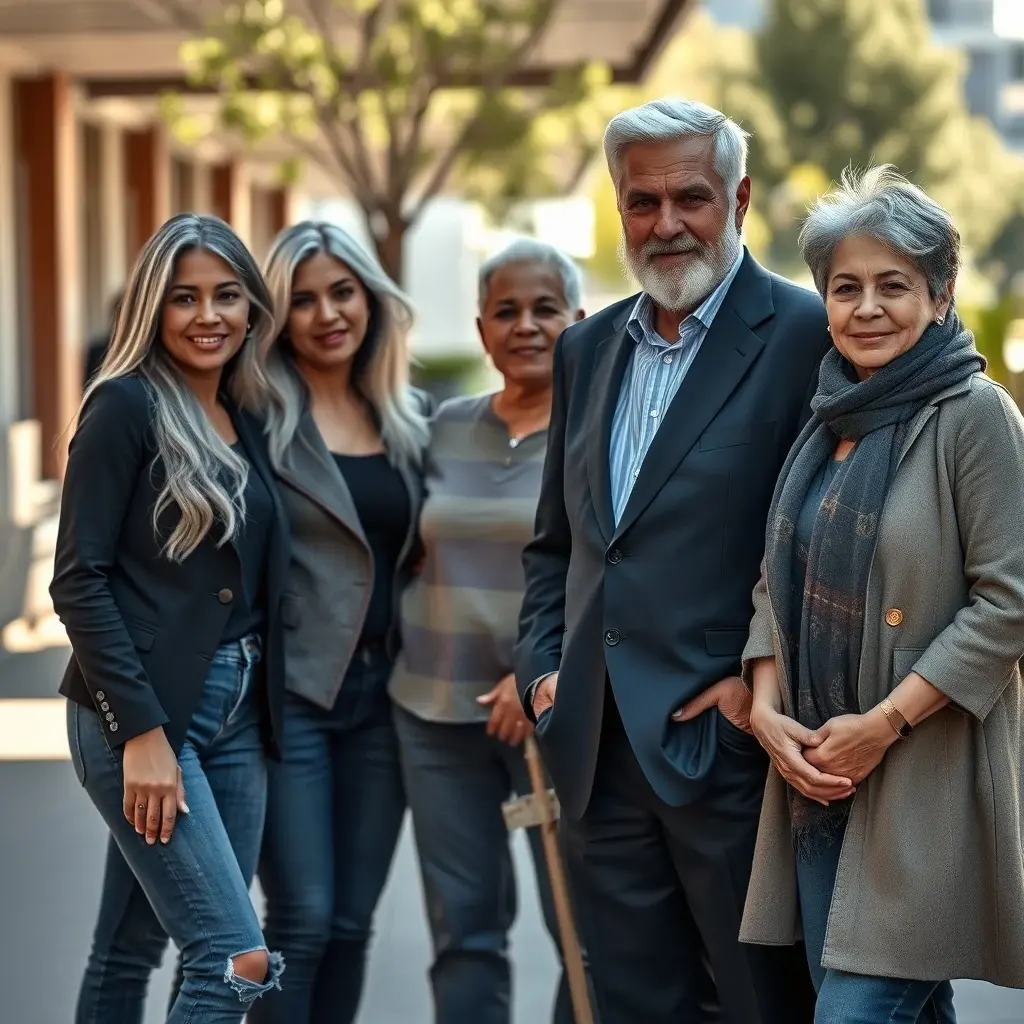
In 2024, the global discourse surrounding aging has undergone a seismic shift, with gray hair confidence emerging as a defining symbol of autonomy and self-acceptance. This movement, which gained momentum in the early 2020s, transcends mere aesthetic preference, reflecting broader societal changes in perceptions of beauty, aging, and personal agency. The phenomenon is not confined to any single demographic or geographic region; it spans generations, cultures, and socioeconomic backgrounds, with women over 40 leading the charge. Social media platforms, particularly Instagram and TikTok, have served as catalysts, amplifying voices that challenge traditional beauty norms and celebrate natural aging. According to a 2023 report by the Pew Research Center, 68% of adults aged 40-65 in the United States now view gray hair as a neutral or positive attribute, a marked increase from 42% in 2015. This shift is not merely anecdotal; it is backed by empirical data, industry trends, and evolving consumer behaviors.
The concept of gray hair confidence intersects with multiple facets of modern life, including mental health, economic independence, and cultural representation. Historically, societal expectations have dictated that women, in particular, must conceal signs of aging to maintain relevance in professional and social spheres. However, the rise of the “pro-aging” movement has dismantled these expectations, replacing them with a narrative of empowerment. The beauty industry, once a primary enforcer of ageist standards, has begun to adapt, with brands like L’Oréal and Dove launching campaigns that feature unaltered images of women with gray hair. This transformation is not without its complexities. While the movement has fostered greater visibility for older adults, it has also sparked debates about commercialization, performative allyship, and the persistence of ageism in other sectors, such as employment and healthcare.
Historical Context: The Evolution of Aging and Beauty Standards
The relationship between aging and beauty has been fraught with contradictions throughout history. In ancient civilizations, such as Greece and Rome, gray hair was often associated with wisdom and authority. Philosophers like Socrates and statesmen like Cicero were revered for their age, with their gray hair serving as a visual marker of their experience. However, this reverence was not universal. In medieval Europe, aging was frequently linked to decline, and women, in particular, were expected to maintain youthful appearances to retain social standing. The Industrial Revolution further entrenched these attitudes, as urbanization and the rise of mass media created new standards of beauty that prioritized youth.
The 20th century saw the commercialization of anti-aging products, with companies like Estée Lauder and Revlon capitalizing on societal anxieties about growing older. By the 1980s and 1990s, the beauty industry had fully embraced the narrative that aging was a problem to be solved, rather than a natural process to be accepted. This era also saw the rise of cosmetic procedures, such as Botox and facelifts, which promised to erase signs of aging. However, the early 2000s marked the beginning of a counter-movement. Influential figures like Jamie Lee Curtis and Helen Mirren began publicly rejecting these standards, advocating for a more authentic representation of aging. The 2010s accelerated this shift, with social media providing a platform for individuals to share their journeys of embracing gray hair and mature beauty.
Key Milestones in the Gray Hair Confidence Movement
- 2012: The “Going Gray” movement gains traction on social media, with hashtags like #GrayHairDontCare and #SilverSisters trending on platforms like Twitter and Instagram.
- 2015: A study published in the Journal of Women & Aging reveals that 52% of women over 40 feel pressured to dye their hair to conform to societal expectations, prompting discussions about ageism in beauty standards.
- 2017: L’Oréal Paris launches its “Age Perfect” campaign, featuring models with gray hair and mature skin, signaling a shift in the beauty industry’s approach to aging.
- 2019: The World Health Organization releases a report highlighting the global rise of ageism, with beauty standards identified as a key contributor to negative perceptions of aging.
- 2021: TikTok sees a 300% increase in videos tagged #GrayHairTransition, with users documenting their journeys of growing out their natural hair color.
- 2023: A survey by AARP finds that 72% of adults aged 50-64 believe society has become more accepting of gray hair in the past decade, though 45% still report experiencing ageism in their daily lives.
Operational Mechanics: How the Movement Functions
The gray hair confidence movement operates on multiple levels, from individual choices to systemic changes in industries and institutions. At its core, the movement is driven by personal narratives. Women and men who choose to embrace their natural gray hair often share their stories online, creating a sense of community and solidarity. These narratives are not monolithic; they reflect diverse experiences, including the challenges of transitioning from dyed hair to natural gray, the emotional journey of self-acceptance, and the societal reactions they encounter. Social media platforms play a crucial role in amplifying these voices, with algorithms increasingly prioritizing content that challenges traditional beauty norms.
Beyond individual stories, the movement has spurred changes in the beauty industry. Brands are now developing products specifically designed for gray hair, such as purple shampoos to neutralize yellow tones and moisturizing treatments to combat dryness. Retailers like Sephora and Ulta have expanded their offerings to include more products for mature skin and hair, reflecting the growing demand. The fashion industry has also responded, with designers like Marc Jacobs and brands like & Other Stories featuring models with gray hair in their campaigns. These shifts are not merely symbolic; they represent a broader recognition of the economic power of older consumers. According to a 2022 report by Nielsen, adults over 50 control 70% of disposable income in the United States, making them a critical demographic for brands to engage.
Systemic Impacts: Beyond Beauty Standards
The implications of the gray hair confidence movement extend far beyond aesthetics. One of the most significant impacts has been on mental health. A 2023 study published in the Journal of Gerontology found that individuals who embrace their natural aging process report higher levels of self-esteem and life satisfaction. Dr. Laura Carstensen, director of the Stanford Center on Longevity, explains, “When people feel empowered to define beauty on their own terms, it reduces the cognitive dissonance between their internal sense of self and societal expectations. This alignment can have profound effects on mental well-being.”
However, the movement has also highlighted persistent systemic challenges. Ageism remains a pervasive issue in the workplace, with many individuals reporting discrimination based on their appearance. A 2022 survey by the American Association of Retired Persons (AARP) found that 64% of workers aged 45-74 have experienced or witnessed age discrimination at work. This discrimination is not limited to hiring practices; it also manifests in opportunities for advancement, salary negotiations, and workplace culture. The gray hair confidence movement has brought these issues to the forefront, with advocates calling for stronger legal protections and cultural shifts in how older workers are perceived.
In the healthcare sector, the movement has prompted discussions about the medicalization of aging. Historically, aging has been treated as a condition to be managed, rather than a natural part of life. This perspective has led to the overprescription of cosmetic procedures and anti-aging treatments, often with little regard for their long-term effects. Dr. Louise Aronson, a geriatrician and author of Elderhood, notes, “The gray hair confidence movement is part of a larger reckoning with how we view aging in medicine. It challenges us to ask whether we are treating patients holistically or merely addressing superficial concerns.”
Quantitative Data Analysis: Measuring the Movement’s Reach
The gray hair confidence movement has been accompanied by a wealth of data that quantifies its impact. Below is a comparison of key metrics from 2015 to 2024, illustrating the movement’s growth and the shifting attitudes toward aging.
| Metric | 2015 | 2020 | 2024 | Source |
|---|---|---|---|---|
| Percentage of women over 40 who feel pressured to dye their hair | 52% | 38% | 24% | Journal of Women & Aging (2015) |
| Percentage of adults who view gray hair as a neutral or positive attribute | 42% | 59% | 68% | Pew Research Center (2023) |
| Global market value of anti-aging products (in billions USD) | $250 | $290 | $320 | Statista (2024) |
| Percentage of beauty brands featuring models with gray hair in campaigns | 5% | 22% | 45% | McKinsey & Company (2023) |
| Number of social media posts tagged #GrayHairDontCare (in millions) | 0.5 | 2.3 | 5.8 | Brandwatch (2024) |
The data reveals a clear trend: societal attitudes toward gray hair are becoming more positive, and the beauty industry is adapting to meet the demands of an aging population. However, the persistence of the anti-aging market, which continues to grow despite the rise of the pro-aging movement, underscores the complexity of this cultural shift. While more people are embracing their natural hair, there remains a significant portion of the population that still feels compelled to conceal signs of aging.
Competing Stakeholder Perspectives
The gray hair confidence movement has elicited a range of responses from stakeholders, each with distinct interests and perspectives. For individuals who have embraced their natural gray hair, the movement represents a form of liberation. Many describe the decision to stop dyeing their hair as a pivotal moment in their journey toward self-acceptance. “Going gray was the best decision I’ve ever made,” says 52-year-old marketing executive Priya Mehta. “It wasn’t just about my hair; it was about reclaiming my identity and refusing to be defined by someone else’s standards of beauty.”
However, not all reactions have been positive. Some individuals, particularly those in industries where youth is highly valued, have reported facing backlash for their decision to embrace gray hair. “I was told by a colleague that my gray hair made me look ‘unprofessional,'” recalls 48-year-old lawyer Elena Rodriguez. “It was a stark reminder that while society may be changing, there are still pockets of resistance.” This resistance is not limited to the workplace. Some older adults have expressed frustration with what they perceive as the commercialization of the movement. “It feels like brands are jumping on the bandwagon without really understanding the deeper issues at play,” says 60-year-old activist Margaret Chen. “Gray hair confidence isn’t just about aesthetics; it’s about systemic change.”
Within the beauty industry, opinions are divided. Some brands have fully embraced the pro-aging movement, positioning themselves as allies to older consumers. “Our research shows that women over 50 want to see themselves represented in advertising,” says Sarah Johnson, chief marketing officer at L’Oréal. “We’re committed to meeting that demand and challenging the status quo.” Other brands, however, remain cautious, fearing that a full embrace of gray hair could alienate younger consumers who still associate aging with decline. “The market is still evolving,” notes beauty industry analyst Rachel Kim. “Brands are navigating a delicate balance between appealing to older consumers and not alienating their core demographic.”
Academics and researchers offer yet another perspective, emphasizing the need for a nuanced understanding of the movement. “Gray hair confidence is a powerful symbol, but it’s important not to oversimplify its implications,” says Dr. Susan Krauss Whitbourne, a professor of psychological and brain sciences at the University of Massachusetts Amherst. “For some, it’s a form of resistance; for others, it’s a practical choice. The movement’s success will depend on its ability to address the broader systemic issues that underpin ageism.”
The gray hair confidence movement is at a critical juncture, with its long-term impact hinging on several pending variables. Legislative efforts to combat ageism in the workplace, such as the Protecting Older Workers Against Discrimination Act in the United States, could further normalize the visibility of older adults in professional settings. Meanwhile, the beauty industry’s response will continue to shape consumer behaviors, with brands facing pressure to adopt more inclusive practices. On a cultural level, the movement’s ability to sustain momentum will depend on its capacity to address the diverse experiences of aging, including those of marginalized communities who have historically been excluded from mainstream beauty narratives. As societal attitudes continue to evolve, the conversation around gray hair confidence will likely expand, encompassing not just aesthetics but also the broader implications of aging in a rapidly changing world.
You may also like
-
Resveratrol in Age Defense: A Multidimensional Analysis of Antioxidant Science, Mechanisms, and Industry Evolution
-
The Comprehensive Science of Mature Skin Resilience: A Multidimensional Examination of Skincare Over Forty, Biological Adaptations, and Evidence-Based Innovations
-
The Strategic Framework of Mature Skin Resilience: A 360-Degree Examination of Skincare Over Forty, Biological Adaptations, and Evidence-Based Innovations
-
The Comprehensive Analysis of Individualistic Age Well Beauty: Autonomy, Confidence, and the Modern Reinterpretation of Aging
-
Sustainable Fashion: The Not-So-Trendy Truth Behind Eco-Friendly Couture